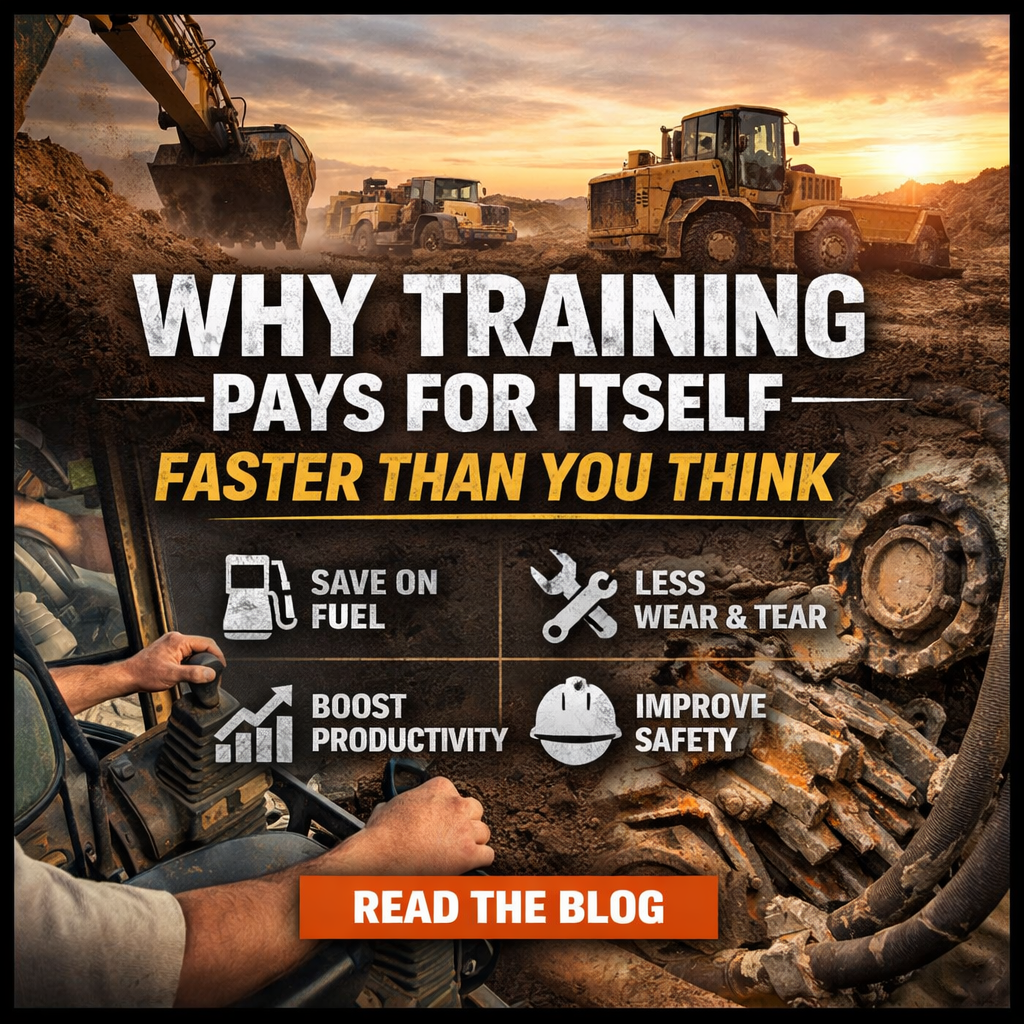
Why Training Pays for Itself Faster Than You Think
In heavy equipment, margins are tight, timelines are tighter, and every hour of downtime costs real money. Training is often seen as an expense—something to “get to later” when things slow down. But the reality is the opposite: training is one of the fastest-return investments you can make on any jobsite.
Let’s break down why.
1. Reduced Fuel Burn Adds Up Fast
Operator technique has a direct impact on fuel consumption. Small habits—like excessive idling, aggressive throttle use, or inefficient digging patterns—can quietly drive up costs day after day.
A properly trained operator understands:
- How to match engine speed to workload
- Efficient cycle timing
- When to idle down vs. stay in power
Even a modest 5–10% reduction in fuel burn across a fleet can translate into thousands of dollars saved annually per machine.
2. Less Wear and Tear on Equipment
Poor operation doesn’t just waste fuel—it beats up iron.
Harsh movements, improper loading, and lack of machine awareness accelerate wear on:
- Pins and bushings
- Undercarriages
- Hydraulic systems
- Tires or tracks
Training teaches operators to run machines smoothly and within their limits. That means fewer breakdowns, longer service intervals, and extended machine life.
3. Increased Productivity Per Hour
A skilled operator simply gets more done.
Training improves:
- Cycle efficiency
- Precision (less rework)
- Jobsite awareness
- Material handling technique
When operators can move more material in less time—and do it right the first time—you’re effectively lowering your cost per yard or ton without adding more equipment.
4. Fewer Mistakes and Rework
Rework is one of the most expensive hidden costs on any job.
Untrained or undertrained operators are more likely to:
- Overdig or undercut
- Misgrade surfaces
- Damage underground utilities
- Create safety risks
Training reduces these errors dramatically. And every mistake avoided is time, fuel, and labor saved.
5. Improved Safety (and Lower Risk Costs)
Accidents don’t just hurt people—they hurt the bottom line.
Training helps operators:
- Recognize hazards earlier
- Understand machine limitations
- Work safely around crews and utilities
- Follow proper procedures under pressure
Fewer incidents mean lower insurance costs, less downtime, and a stronger reputation on the jobsite.
6. Faster Onboarding for New Operators
The industry is constantly bringing in new talent. Without structured training, new operators take longer to become productive—and may pick up bad habits along the way.
A solid training program:
- Shortens the learning curve
- Builds confidence faster
- Standardizes performance across crews
That means new hires start contributing sooner—and at a higher level.
7. Better Operator Retention
Good operators want to get better. When companies invest in their development, it shows.
Training leads to:
- Higher job satisfaction
- Greater loyalty
- Stronger team culture
Replacing an operator is expensive. Keeping a skilled one is far more cost-effective.
8. The ROI Is Faster Than You Think
Here’s the key point: training doesn’t take years to pay off.
In many cases, the return shows up in weeks through:
- Fuel savings
- Increased output
- Reduced maintenance issues
By the time you factor in avoided repairs, improved efficiency, and fewer mistakes, training often pays for itself multiple times over within a single season.
Training isn’t a luxury—it’s a performance multiplier.
If you’re running heavy equipment and looking to improve profitability, the answer isn’t always more machines or longer hours. Sometimes it’s simply getting more out of the operators and equipment you already have.
Invest in your people, and the numbers will follow.
Whether you’re upgrading your tools, making repairs, handling unexpected expenses, or investing in your next project, having access to the right financing options can make a difference. Explore personal loan options that can help you manage your goals with flexibility and confidence.