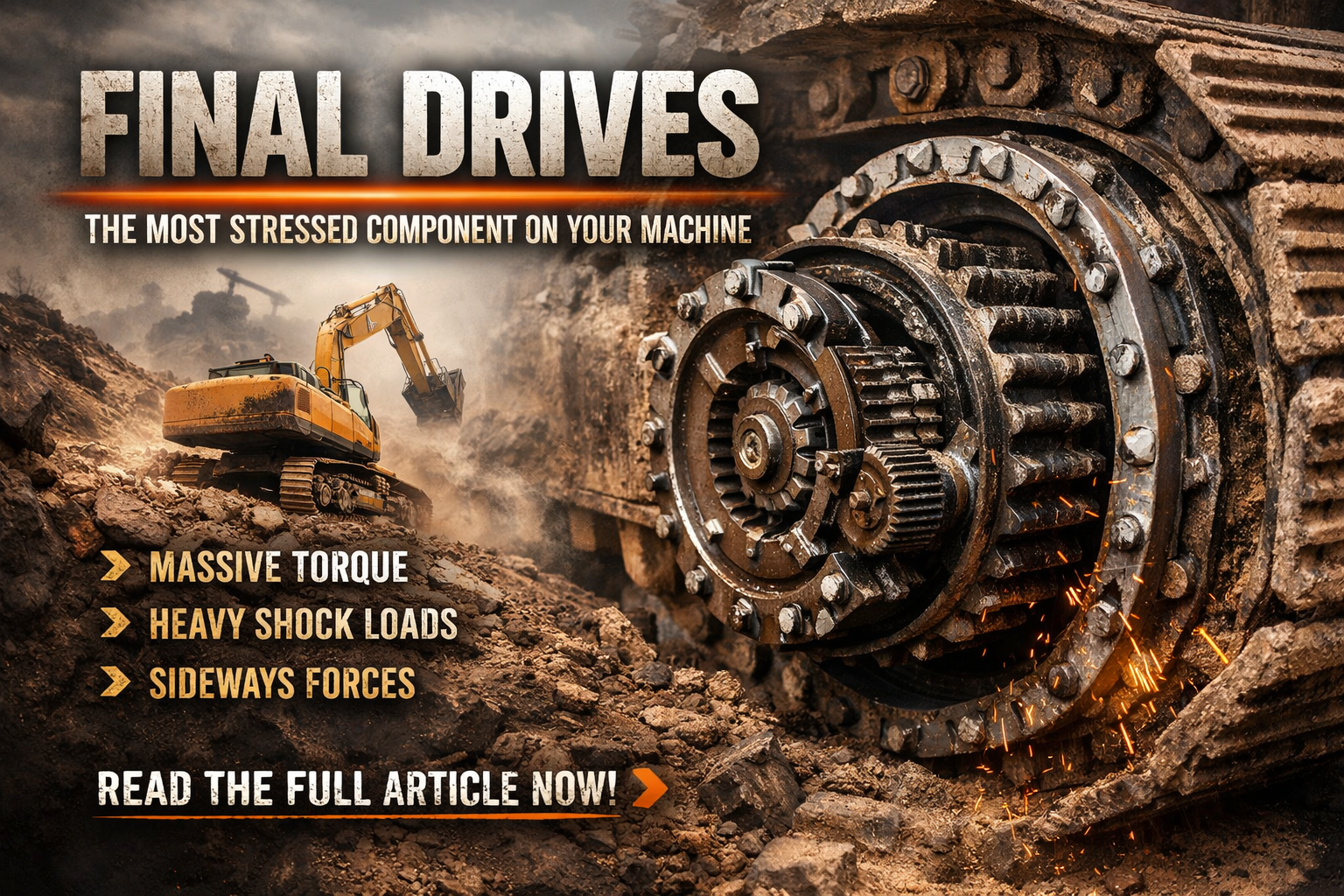
Why Final Drives Are One of the Most Stressed Components on a Machine
When most people think about heavy equipment, engines and hydraulics often steal the spotlight. But for tracked machines, the final drive quietly bears some of the harshest forces imaginable. Understanding why these components are so stressed—and how to protect them—can help operators appreciate the engineering behind every movement.
What Is a Final Drive?
A final drive is the last set of gears in a machine’s powertrain before the tracks (or wheels) move. It takes torque from the hydraulic motor or transmission and multiplies it to drive the tracks with enough force to push, pull, and lift heavy loads. In short: it’s where raw power meets the ground.
Because of this, final drives are subjected to extreme forces, including:
- High torque from heavy loads
- Shock loads from obstacles or uneven terrain
- Lateral stress during turns on slopes
- Repeated cyclical forces during normal operation
Torque Multiplication = Stress Amplification
Final drives don’t just pass power along—they multiply torque. That multiplication is crucial for moving tons of steel across mud, gravel, or rubble. But it also means:
- A small spike in hydraulic pressure can produce massive gear and bearing loads
- Continuous operation under high torque accelerates wear
- Shock loading (like dropping a loaded bucket onto uneven ground) can instantly stress internal components
Even short periods of heavy-duty use can significantly impact lifespan if the machine isn’t operated carefully.
Lateral and Shock Loads: The Hidden Enemies
Final drives aren’t just spinning—they’re also pushed sideways, tilted, and jarred with every uneven surface. Examples include:
- Turning sharply on a slope
- Maneuvering through rocks, stumps, or debris
- Operating with partially raised implements
These forces can create bearing fatigue or gear tooth damage, often without any external signs until failure occurs.
Heat and Lubrication Challenges
Friction generates heat, and in a compact housing, heat has nowhere to go. That makes lubrication critical:
- Insufficient or degraded oil increases wear and risk of seizing
- Contaminants like dirt and water can compromise gear surfaces
- Extreme cold or heat changes viscosity, affecting protection
Even small lapses in maintenance can drastically reduce final drive life.
Why Operators Often Underestimate Final Drive Stress
To most eyes, tracks move smoothly, and the machine seems “easy.” But every bucket load, every slope, and every hard turn transmits forces directly to the final drive. Common mistakes that accelerate wear include:
- Skipping warm-up before heavy digging
- Turning on slopes with a loaded bucket
- Overloading the machine beyond design limits
- Ignoring unusual noises, leaks, or vibration
Final drives are often the first major component to fail in tracked machines—not because they’re poorly made, but because they absorb so much abuse silently.
Design Solutions to Reduce Stress
Manufacturers engineer final drives to withstand these forces, using:
- Planetary gear systems to distribute torque evenly
- High-strength steel for gears and shafts
- Sealed, pressurized housings to protect bearings and gears
- Integrated shock-absorbing components in some models
But even the best design can’t compensate for chronic misuse or neglected maintenance.
Maintenance: The Key to Longevity
To protect final drives:
- Check oil levels and quality regularly
- Avoid sudden or extreme torque spikes
- Keep the tracks tensioned correctly
- Inspect for leaks, wear, and unusual noise
Operators who respect these components often see final drives outlast most other parts of the machine.
The Bottom Line
Final drives may be out of sight, but they endure some of the heaviest stress on any tracked machine. They take torque, shocks, lateral forces, and heat all at once, making them critical to performance and expensive to repair if neglected. Understanding how and why they’re stressed helps operators protect their machines and extend their lifespan—because when a final drive fails, the whole machine comes to a halt.