Why Does Improper Bucket Technique Cost More Fuel Than Bad Ground Conditions?
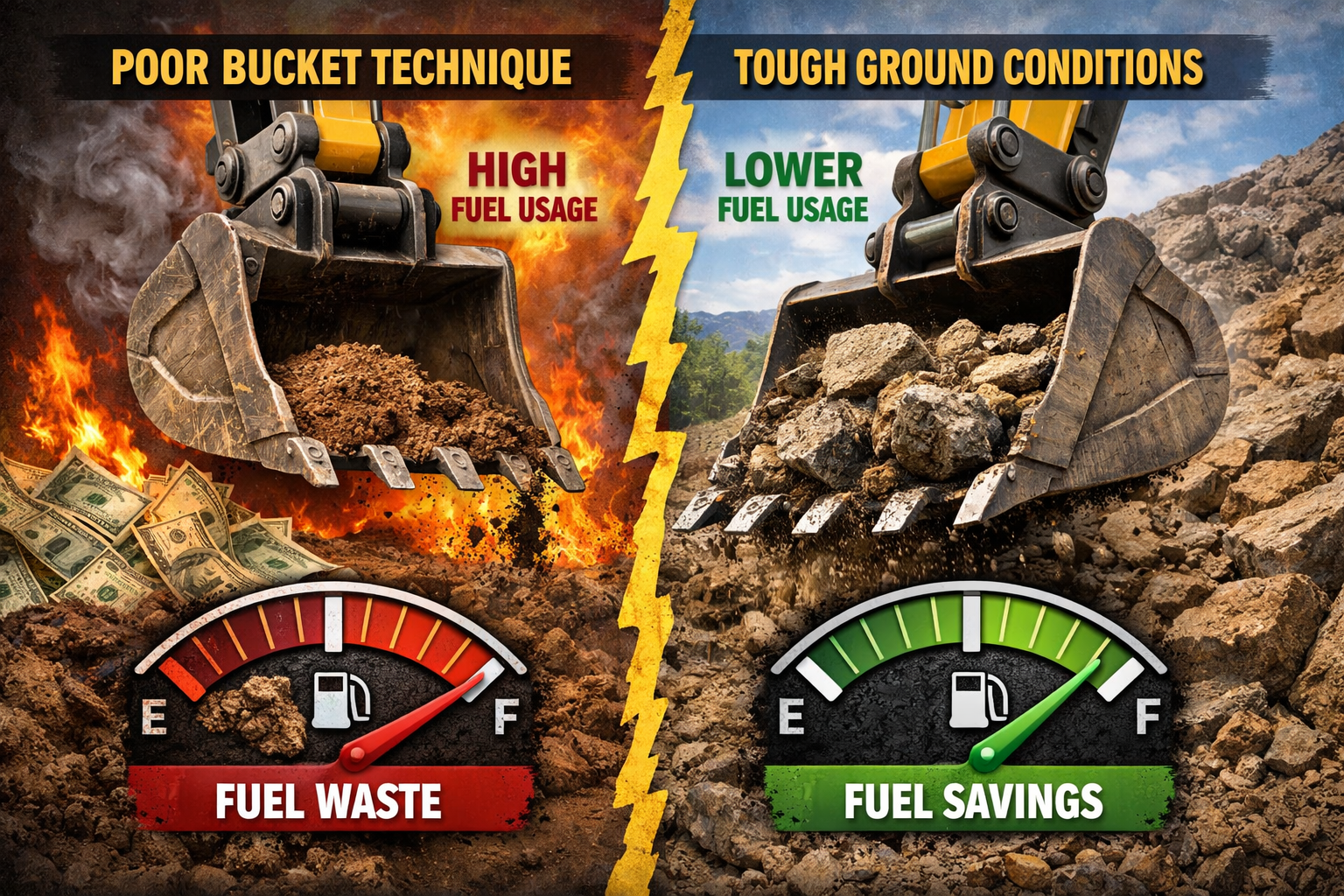
When it comes to moving earth efficiently, operators often blame tough terrain—rocky soil, sticky clay, or wet ground—for high fuel consumption. While challenging ground conditions do play a role, the truth is that improper bucket technique often has a far greater impact on fuel use than the surface you’re working on.
Let’s break down why.
Fuel Wasted on Inefficient Digging
The bucket is the machine’s connection to the ground, and how you use it matters. Digging too aggressively, scooping with the bucket not fully loaded, or dragging it across the surface can all force the engine to work harder than necessary. This constant extra strain burns more fuel than simply working in rough terrain.
Overreaching and Unnecessary Swinging
Operators sometimes try to extend the reach of the bucket too far to avoid repositioning the machine. Each swing, lift, and drop uses hydraulic power and engine torque. If the bucket isn’t loaded properly or moves inefficiently, you’re burning fuel to move dirt you didn’t need to move—or worse, moving less dirt than the machine could handle efficiently.
Excessive Breakout Force
Breakout force is the power required to pry material from the ground. Improper bucket angles, digging too deep at once, or trying to force the bucket into compacted soil without leveraging the machine’s weight properly can spike engine load. That extra effort means more fuel burned—sometimes more than what bad ground conditions themselves would cause.
Continuous Small Loads
It’s tempting to make multiple small scoops to avoid overloading the machine. But every small scoop adds swings, lifts, and drops—and each cycle consumes fuel. Efficient bucket technique means loading closer to capacity with smooth, deliberate movements, reducing the total cycles and conserving fuel.
Operator Awareness Beats Terrain
Experienced operators know that proper bucket technique can dramatically reduce fuel use even in the toughest ground. Keeping the bucket at the right angle, filling it efficiently, avoiding unnecessary swings, and respecting machine limits allows the equipment to do more with less fuel. Conversely, poor technique can make even soft soil expensive to move.
The Bottom Line
Next time fuel costs spike on a project, don’t automatically blame the mud or rocks. Often, improving bucket technique—through operator training, attention to angles, and smarter digging—can save more fuel than waiting for better ground conditions. The terrain might be tough, but the biggest fuel drain is usually in the operator’s hands.