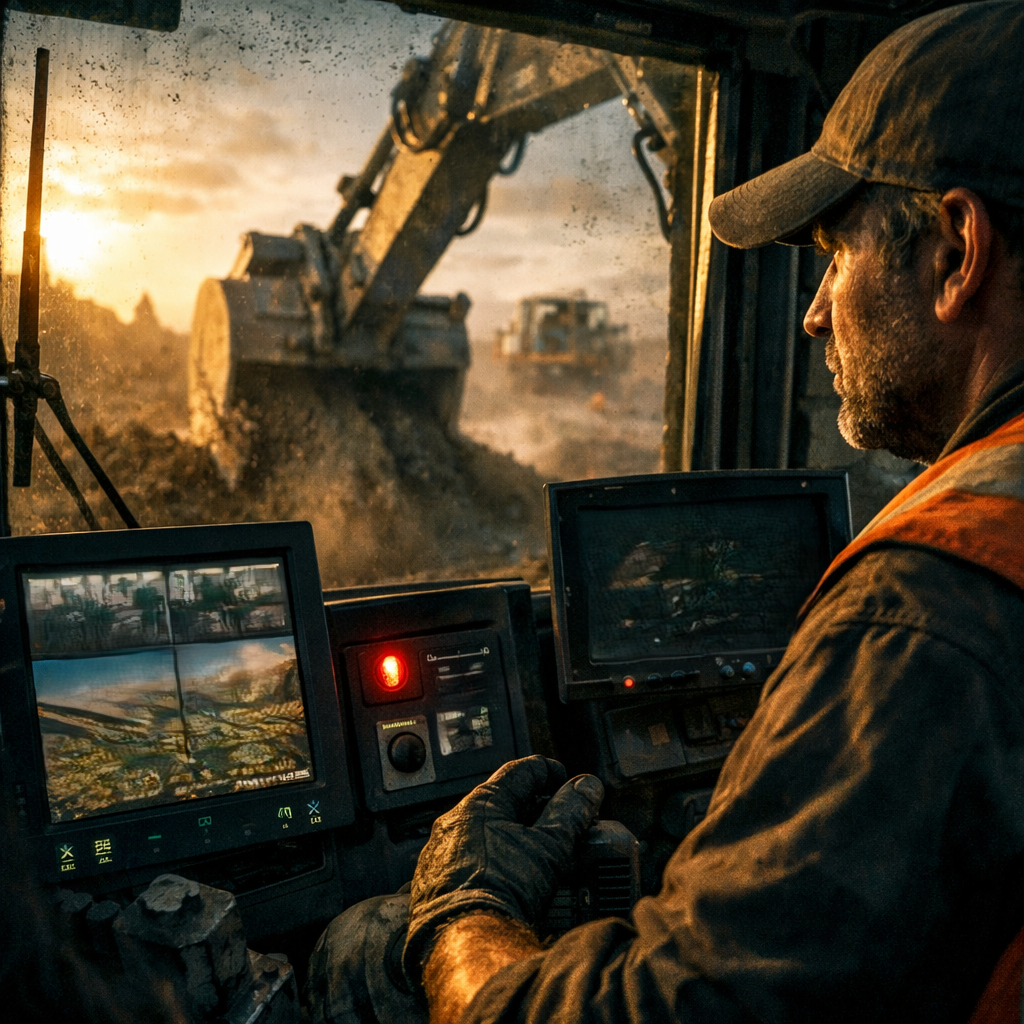
Why Does Automation Still Need Skilled Operators?
Automation is everywhere in modern equipment. Grade control, auto-dig, auto-steer, payload monitoring, machine guidance, collision avoidance—the list keeps growing. Marketing material often implies that machines are becoming operator-proof, that skill is being replaced by software.
But anyone who’s actually worked around automated equipment knows the truth: automation doesn’t replace skilled operators—it exposes the lack of them.
In many cases, automation raises the bar rather than lowering it.
Automation Handles Tasks—Operators Handle Reality
Automation excels at repeatable, well-defined tasks:
• Holding grade
• Maintaining a set slope
• Following a predefined path
• Controlling hydraulic flow within programmed limits
What it cannot do is understand context.
The machine doesn’t know:
• When the ground is about to change
• When material is reacting differently than expected
• When a cut looks right but isn’t
• When pushing harder will cause damage later
• When backing off saves time instead of losing it
That judgment still belongs to the operator.
A skilled operator doesn’t just run automation—they supervise it. They know when to trust it, when to override it, and when to shut it off entirely.
Automation Magnifies Operator Inputs—Good and Bad
One of the biggest misconceptions is that automation corrects poor operation. In reality, it often does the opposite.
If:
• Your setup is wrong
• Your initial cut is sloppy
• Your machine position is poor
• Your tool angle is incorrect
Automation will repeat those mistakes perfectly and consistently.
A skilled operator understands that automation doesn’t start when the button is pressed—it starts with:
• Proper machine positioning
• Correct attachment setup
• Clean reference surfaces
• Logical work sequencing
Without those fundamentals, automation becomes a fast way to make bad work look precise.
Machines Still Feel Forces—Even If You Don’t
Automation can smooth movements and reduce fatigue, but it doesn’t eliminate mechanical stress.
Side loads still exist. Shock loads still happen. Hydraulic pressure spikes still occur. Structural fatigue doesn’t care whether a joystick or an algorithm caused it.
Experienced operators feel when:
• A cylinder is being overloaded
• A linkage is binding
• The machine is being twisted
• Traction is about to break
• Momentum is working against them
Automation may mask those sensations, which makes operator awareness even more important—not less. Skilled operators listen to the machine beyond what the screen says.
Automation Needs Interpretation, Not Obedience
Modern machines provide massive amounts of data:
• Grade deviation
• Load weight
• Cycle time
• Fuel burn
• Slip percentage
• Assist modes engaged
A skilled operator doesn’t blindly follow the display—they interpret it.
For example:
• Just because grade is “green” doesn’t mean the finish is acceptable
• Just because payload is optimal doesn’t mean material flow is efficient
• Just because automation is available doesn’t mean it’s appropriate for the situation
Knowing why the machine is behaving a certain way matters more than knowing which button activates it.
Edge Cases Break Automation First
Automation is designed for the average case. Skilled operators are built for the exceptions.
Think about:
• Uneven or mixed material
• Confined workspaces
• Weather changes
• Obstructions not in the model
• Wear in pins, bushings, and cutting edges
• Attachments that don’t match factory assumptions
These are the moments where automation reaches its limits—and where operator skill becomes critical.
When things go wrong, the operator doesn’t just take over controls. They take over decision-making, often under pressure and with consequences.
Training Still Matters—It Just Looks Different Now
Automation has changed what operators need to know, not whether they need to know it.
Modern skilled operators must understand:
• Machine systems, not just controls
• Sensor limitations and calibration
• How software interacts with hydraulics
• When automation increases efficiency—and when it reduces it
• How wear and machine condition affect automated performance
In many ways, today’s skilled operator is closer to a technician than ever before.
The Best Operators Use Automation as a Tool, Not a Crutch
The most productive operators don’t fight automation—but they don’t depend on it either.
They use it to:
• Reduce fatigue
• Improve consistency
• Maintain accuracy over long shifts
• Free mental capacity for situational awareness
And they turn it off when:
• Conditions are unpredictable
• Precision requires “feel”
• Machine feedback matters more than numbers
• The task demands adaptability
That judgment is learned, not programmed.
Automation Didn’t End Skill—It Changed Its Shape
Automation didn’t make operators less important. It made bad operators more obvious and good operators more valuable.
The future isn’t machines replacing people—it’s machines amplifying the capability of people who understand them.
At the end of the day, automation still needs someone who knows:
• What should happen
• What might happen
• And what to do when neither occurs
And that’s something no software update has replaced yet.