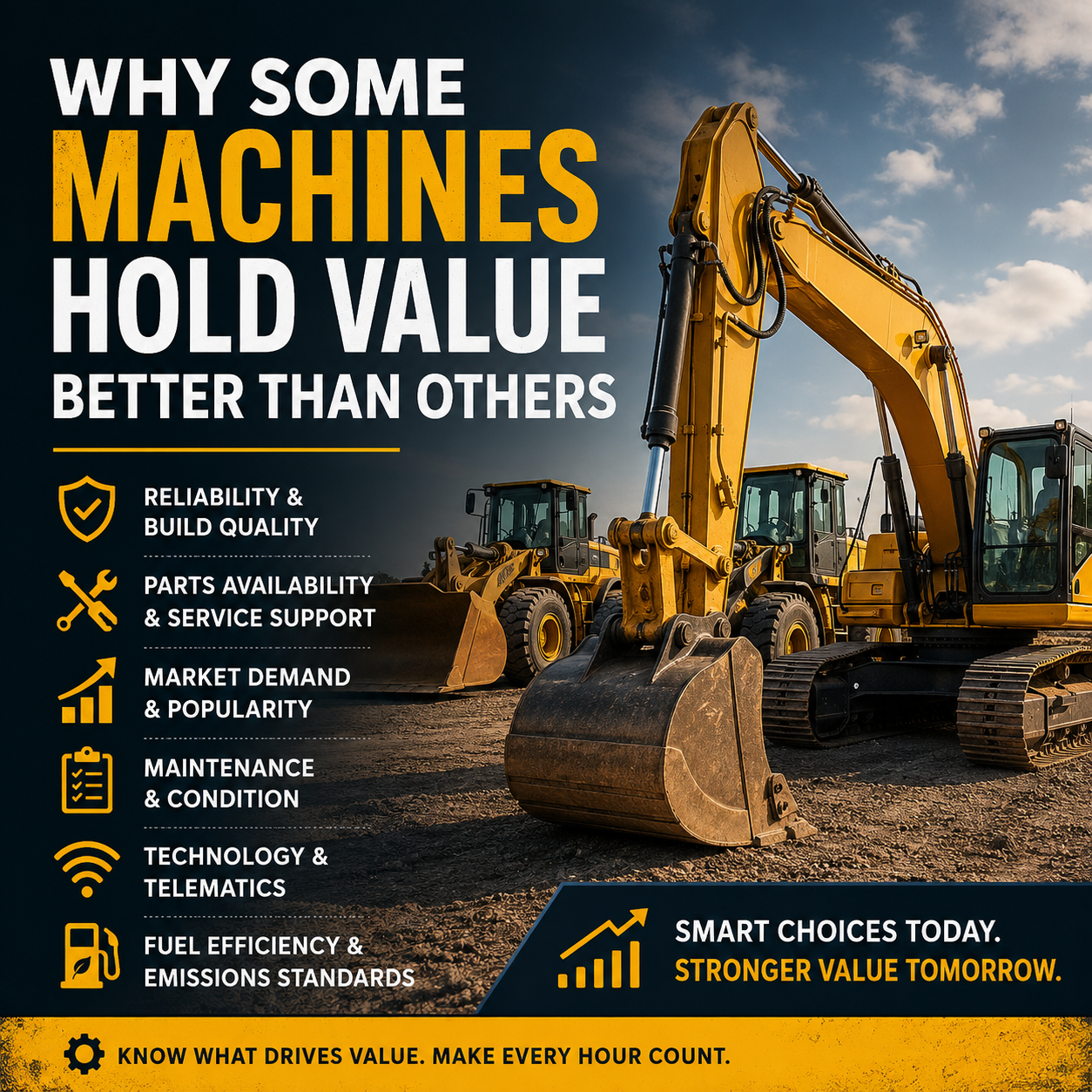
Why Do Some Machines Hold Value Better Than Others?
In the heavy equipment world, not all machines depreciate at the same rate. Some excavators, loaders, and dozers retain strong resale value for years, while others drop sharply the moment they leave the yard. Understanding why this happens can help buyers make smarter purchasing decisions and help owners protect long-term value.
Brand Reputation and Build Quality
One of the biggest factors in resale value is brand trust. Machines built by manufacturers known for durability, service networks, and parts availability tend to hold value better over time.
Brands like Caterpillar, Komatsu, John Deere, Volvo Construction Equipment, and Hitachi Construction Machinery have built reputations over decades for producing machines that can withstand harsh job site conditions.
When buyers see these names on the used market, they’re not just buying steel and hydraulics, they’re buying confidence that the machine will keep running with fewer surprises.
Reliability and Total Cost of Ownership
Machines that consistently perform with fewer breakdowns naturally hold value better. Downtime is expensive, so equipment known for reliability becomes more desirable in the resale market.
Total cost of ownership (TCO) plays a big role here. Even if two machines have similar purchase prices, the one with lower fuel consumption, fewer repairs, and longer service intervals will usually retain higher resale value because it costs less to operate over its lifespan.
Parts Availability and Service Support
A machine is only as valuable as the support behind it. Equipment with widely available parts and strong dealer networks is easier to maintain, which directly increases resale appeal.
Buyers on the secondary market often ask:
- Can I get parts quickly?
- Are repairs expensive or complicated?
- Is there a dealer nearby who can service it?
Machines from manufacturers with strong global support networks tend to win this category easily.
Application Popularity and Market Demand
Some machines hold value simply because they stay in demand. Common equipment types like mid-size excavators, wheel loaders, and dozers often have strong resale markets because they fit a wide range of jobs.
Specialized machines, on the other hand, may lose value faster due to a smaller buyer pool. If only a niche industry uses a certain configuration, resale options become limited.
Hours, Maintenance, and Condition
No matter the brand, condition is everything. A well-maintained machine with higher hours can sometimes sell for more than a neglected low-hour unit.
Key value-retaining factors include:
Consistent service records
Clean hydraulics and engine systems
No major structural repairs
Proper storage and operator care
Buyers are increasingly data-driven and will often pay a premium for documented maintenance history.
Technology Integration
Modern machines equipped with telematics and smart diagnostics often hold value better than older, “dumb iron” equipment. Fleet tracking systems allow buyers to verify usage, idle time, and maintenance compliance.
This transparency reduces risk for buyers and helps justify higher resale prices.
Fuel Efficiency and Emissions Standards
Fuel efficiency has become a major factor in equipment value retention. Machines that meet modern emissions standards without sacrificing performance are more desirable, especially in regulated markets.
Older machines that are expensive to operate or upgrade for compliance tend to depreciate faster.
Heavy equipment holds value based on a combination of brand reputation, reliability, serviceability, and market demand. While operator care and maintenance play a major role, choosing the right machine from the start can significantly reduce depreciation over time.
In simple terms: strong brands, strong support, and strong demand equal stronger resale value.