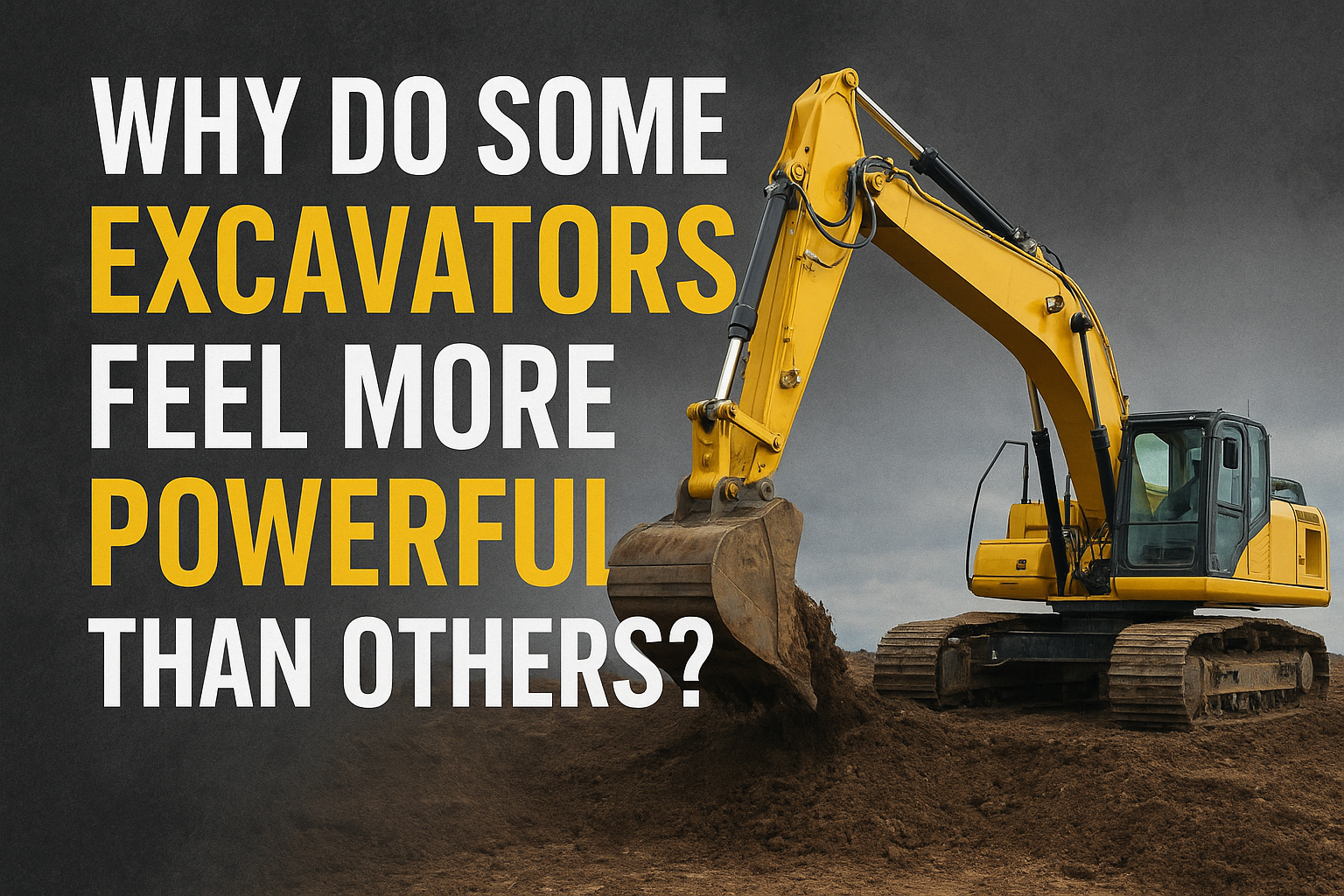
Why Do Some Excavators Feel More “Powerful” Than Others—Even When the Specs Look the Same?
If you spend enough time around iron, you’ve likely had this moment: two excavators, same weight class, same bucket size, same advertised horsepower… yet one feels like it could chew through a shale bank while the other bogs down in soft clay.
So why does one machine feel more powerful than another when the spec sheets look nearly identical?
Let’s dig into the real reasons.
1. Hydraulic Systems: The Real Muscle Behind the Machine
Horsepower gets all the attention, but hydraulics are where the magic happens.
Two machines may share similar specs, but if one has a more efficient hydraulic pump, larger lines, better flow control, or tighter tolerances, it’ll outperform the other every time.
What actually makes the difference:
- Pump type and displacement
- Hydraulic flow rate (GPM or L/min)
- System pressure
- Hydraulic efficiency under load
A machine with a high-efficiency hydraulic system responds faster, lifts smoother, and digs harder—even if its horsepower isn’t technically higher.
2. Operator Controls and Response Tuning
OEMs tune their joysticks differently. Some prioritize smoothness, others prioritize snap and speed.
Things that change how “powerful” a machine feels:
- Valve responsiveness
- Electronic assist tuning
- Joystick sensitivity
- Boom and stick regeneration cycles
A machine that responds instantly to your inputs will feel stronger even if it’s not doing any more work per cycle.
3. Weight Distribution and Counterbalance
Two machines can have the same operating weight, but where that weight sits matters.
Example:
A machine with a heavier counterweight can lift more confidently at full reach, making it feel more capable in real-world scenarios.
Other factors:
- Undercarriage length
- Track stance width
- Boom/stick configuration
- Accessory weight
Better balance = better digging and lifting force.
4. Operator Experience and Setup
A seasoned operator can make a mediocre machine look heroic. But even skilled operators can only do so much if the machine is poorly set up.
Small setup items make a big difference:
- Using the right work mode (power vs economy)
- Proper bucket size
- Keeping cutting edges sharp
- Maintaining correct hydraulic oil viscosity
- Using the right attachments for the job
A well-tuned machine always feels stronger.
5. Software and Efficiency Modes
Modern heavy equipment is basically rolling computers.
Manufacturers tune:
- Pump control maps
- Engine speed settings
- Auto-idle behavior
- Power delivery
- Load-sensing thresholds
One machine may be more “aggressive” in how it holds RPM under load, giving the impression of more power.
6. Wear and Maintenance Differences
Specs don’t show:
- Worn hydraulic pumps
- Leaky lines
- Sloppy main pins
- Dirty fuel systems
- Poor lubrication
- Clogged filters
A machine with tired hydraulics or loose pins will always feel weaker.
The Bottom Line
A machine is more than its spec sheet.
What makes an excavator feel powerful—or weak—comes down to a combination of engineering decisions, hydraulic efficiency, operator setup, and machine condition.
So next time someone tells you two machines are “the same,” you’ll know the truth:
The numbers on the brochure only tell half the story. The dirt tells the rest.