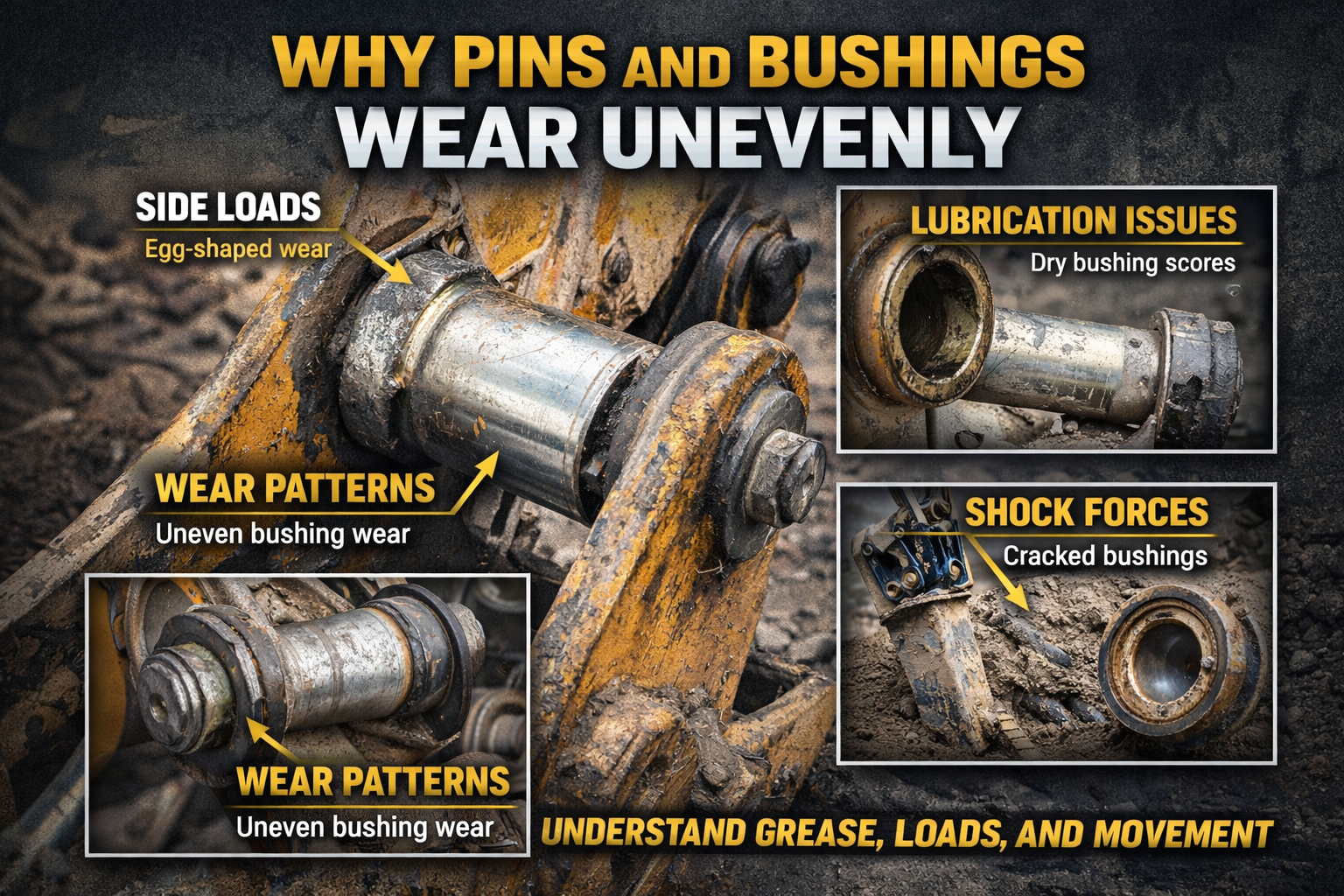
Why Do Pins and Bushings Wear Unevenly?
Pins and bushings are some of the most critical—and most abused—components on any heavy machine. They connect the boom, stick, and attachments, and transfer enormous forces through a tiny interface. Yet operators, mechanics, and even engineers often wonder why some pins last years while others fail in months.
The answer isn’t always obvious, but it comes down to load paths, motion patterns, lubrication, and maintenance practices. Let’s break it down.
Uneven Loading Is the Main Culprit
Pins and bushings are designed to rotate under load, but they rarely experience perfectly even pressure. Factors that contribute to uneven wear include:
- Side loading: When attachments or buckets are used off-center, one side of the pin takes more stress than the other.
- Shock loads: Dropping heavy material or striking a hard surface sends sudden spikes of force through a small section of the bushing.
- Ground conditions: Working on slopes, in soft soil, or with uneven terrain can shift the load from one side of the pin to the other.
Over time, these small imbalances wear down metal faster on one side, producing a tapered or “egg-shaped” pin profile.
Motion Patterns Affect Contact
How the machine is operated also changes wear patterns:
- Repetitive movements: Constantly swinging in one direction or lifting at the same angle puts more cycles on certain parts of the bushing.
- Partial articulation: Operating in tight spaces where the boom or stick never travels through its full range can concentrate wear on a limited surface area.
- Attachment misuse: Using a hammer, compactor, or heavy bucket at extreme angles adds additional forces that pins weren’t optimized for.
Operators often notice this as play in one direction of movement before the other.
Lubrication Matters More Than You Think
Even small gaps or inconsistencies in grease coverage can accelerate uneven wear:
- Insufficient lubrication: A dry spot on one side of a pin takes a higher percentage of the load.
- Contamination: Dirt, sand, or grit trapped in the joint can create microabrasion, which eats away metal unevenly.
- Over-greasing: It might seem counterintuitive, but excess grease can push contaminants into the pin joint, creating concentrated wear points.
Proper daily greasing and keeping joints clean is critical to even wear and longer life.
Material and Manufacturing Variations
Pins and bushings are made to tight tolerances, but even small variations in hardness, alignment, or heat treatment can affect wear:
- Hardness mismatch: A softer bushing against a harder pin can wear faster.
- Misalignment: Even a slight offset during assembly or after heavy use shifts load paths.
- Surface finish: Rough machining or damaged plating can concentrate stress in tiny areas.
This is why two seemingly identical machines in the same fleet can have wildly different pin life.
How to Minimize Uneven Wear
While you can’t eliminate it entirely, you can slow it down:
- Follow proper attachment alignment: Avoid side-loading and work within design limits.
- Vary movement patterns: Swing, lift, and dig in multiple directions to distribute wear evenly.
- Maintain lubrication: Clean, inspect, and grease pins daily. Check for leaks or damage to seals.
- Inspect and rotate: If your machine allows for bushings that can be rotated or pins that can be repositioned, use that to even out wear patterns.
- Monitor load and shock: Avoid dropping heavy materials or using attachments beyond their intended design.
Pins and bushings may seem simple, but they are at the intersection of mechanical design, operator behavior, and maintenance discipline. Uneven wear is a natural consequence of how machines operate—but with careful attention, it can be minimized, saving downtime, money, and headaches.
A pin may look small, but its performance affects everything else on the machine. Understanding why they wear unevenly is the first step toward keeping your iron strong and your jobsite productive.