Why Do Construction Workers and Heavy Equipment Operators Need Auto Insurance?
If you work in construction or operate heavy equipment, your day already revolves around risk management—jobsite safety, machine maintenance, and protecting your crew. But one area that often gets overlooked is something much more routine: driving to and from work, or moving between sites. Auto insurance isn’t just a legal requirement in most places—it’s a critical layer of financial protection for construction workers.
Driving Is Part of the Job (Even When You’re Not on Site)
Most heavy equipment operators don’t spend the entire day inside a single machine. You’re often commuting early in the morning, driving pickup trucks loaded with tools, or traveling between multiple job locations. Some workers even transport small equipment or tow trailers.
That means your personal or work-related driving exposure is higher than the average commuter. More time on the road naturally increases the chance of accidents, theft, or damage.
Even if your employer provides insurance for company vehicles, that coverage usually stops the moment you’re in your personal truck.
Employer Insurance Doesn’t Always Cover You
A common misconception in construction is that “the company has insurance, so I’m covered.” In reality, most employer policies are limited to:
- Company-owned vehicles
- Equipment on job sites
- Liability tied directly to work activities
If you’re driving your own vehicle—even for work-related errands—you may not be covered unless you have a personal auto policy or specific “business use” endorsement.
This gap is where many workers get caught off guard. One accident in your personal truck while heading to a site can become a major out-of-pocket expense if you’re uninsured or underinsured.
Protecting Your Income and Equipment
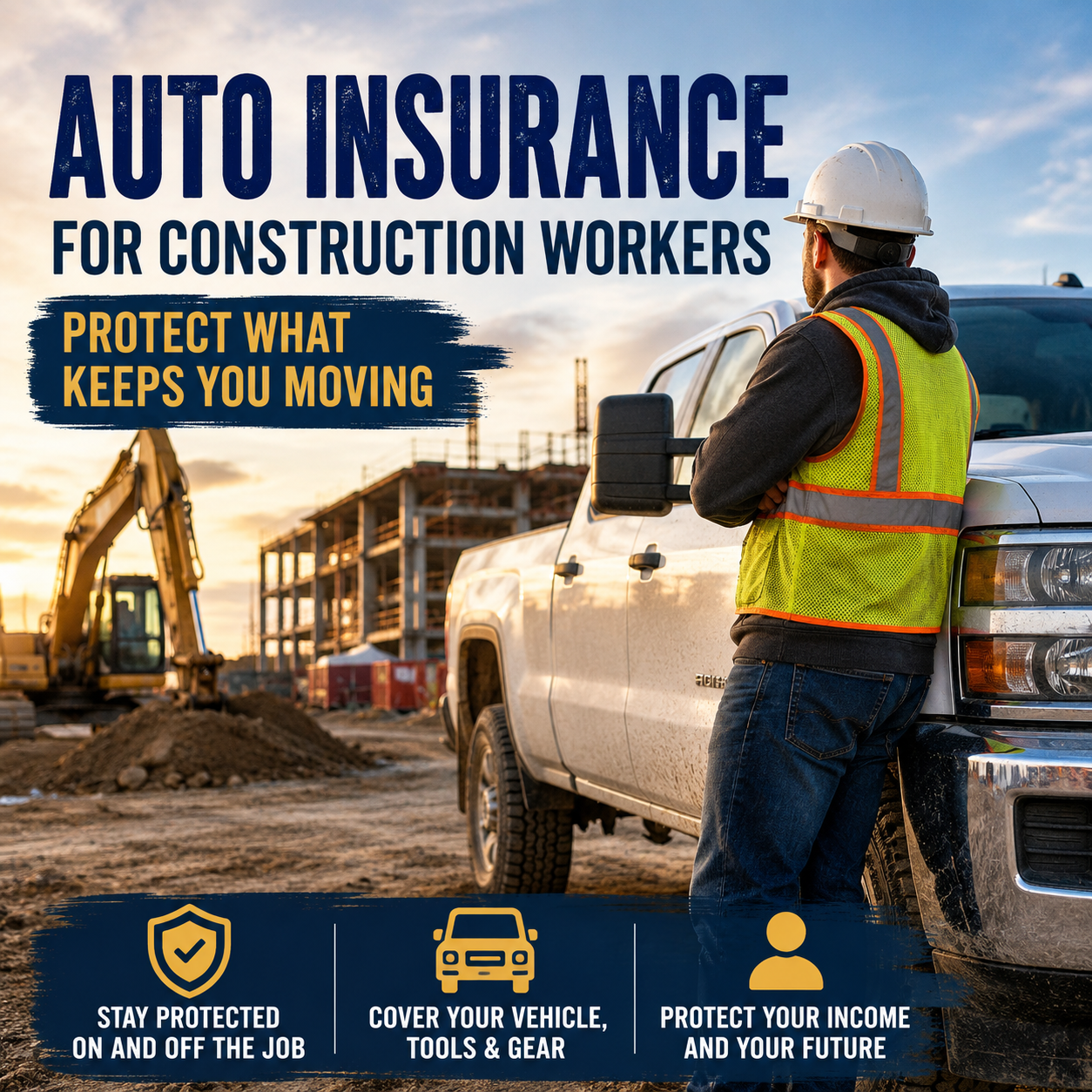
For many operators, a pickup truck isn’t just transportation—it’s part of the job. Tools, GPS units, toolboxes, and attachments often ride in the vehicle daily. Without proper auto insurance, you could be paying out of pocket to replace thousands of dollars in gear after theft or collision damage.
Auto insurance can also help protect your ability to work. If your vehicle is damaged and you can’t get to the jobsite, you’re not earning. Coverage helps reduce downtime and financial disruption.
Liability Protection Matters More Than You Think
If you’re ever found at fault in an accident, liability coverage helps protect you from paying for:
- Damage to another vehicle
- Injuries to other drivers or passengers
- Legal costs if someone files a claim
For construction workers who often drive larger trucks or tow trailers, the potential for significant damage is higher than average.
A strong policy can be the difference between a manageable claim and long-term financial strain.
Personal vs. Commercial Use: Know the Difference
One of the most important distinctions in auto insurance is how your vehicle is classified.
- Personal auto insurance covers everyday driving and commuting
- Commercial auto insurance is needed if the vehicle is owned by a business or heavily used for work
- Some workers fall in between and may need a “business use” endorsement
If you’re unsure, it’s worth reviewing your policy with an insurer to make sure your actual driving matches your coverage.
The Bottom Line
Construction work already comes with enough risk—your auto insurance coverage shouldn’t be an afterthought. Whether you’re hauling tools, commuting to a remote site, or simply driving your personal truck after a long shift, auto insurance helps protect your finances, your livelihood, and your ability to keep working.
Skipping coverage or relying solely on employer insurance can leave dangerous gaps that only show up after something goes wrong.
If your job involves wheels, roads, or even occasional hauling, auto insurance isn’t optional—it’s part of the jobsite toolkit.