Why Did Tonka Trucks Become One of the Most Iconic Toys Ever Made?
Few childhood toys have captured the imagination quite like a Tonka truck. Built from sturdy steel, painted in bright colours, and designed to resemble the powerful machines found on construction sites, these miniature workhorses became a familiar sight in backyards, sandboxes, and living rooms across North America.
For generations of children, a Tonka dump truck wasn't simply a toy. It was their first piece of heavy equipment.
Children could haul dirt, dig imaginary foundations, build miniature roads, and operate their own construction companies, all without leaving the backyard.
But how did a small Minnesota toy manufacturer become one of the most recognizable names in toy history? And what made its miniature construction machines so appealing to children and heavy equipment enthusiasts alike?
The story begins in postwar America, when construction was booming, machinery was evolving, and three entrepreneurs stumbled into an industry they hadn't originally intended to enter.
Tonka Trucks Weren't Originally Part of the Plan
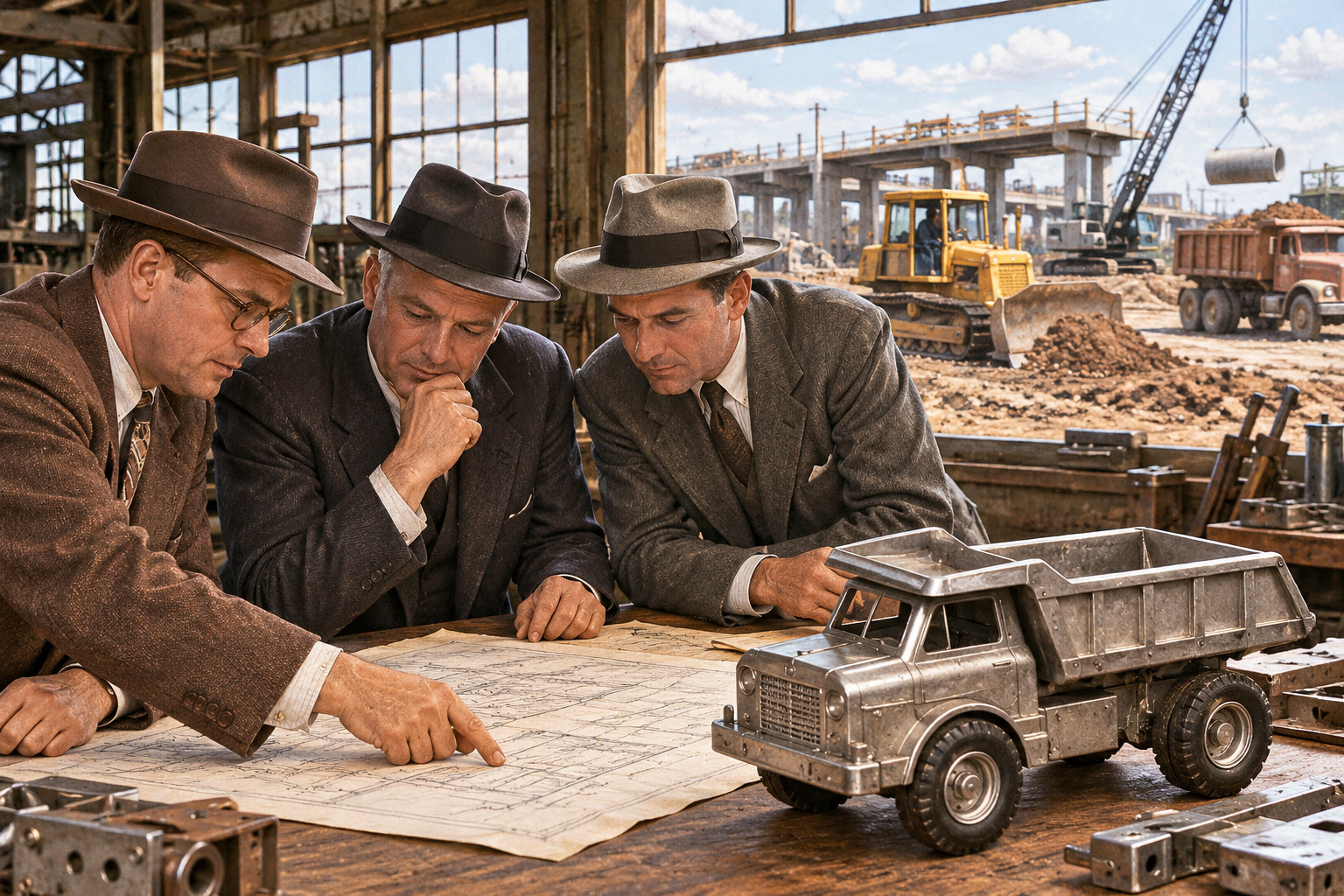
The story of Tonka begins in 1946 in Mound, Minnesota, a small community near Lake Minnetonka.
Three entrepreneurs, Lynn Everett Baker, Avery F. Crounse, and Alvin F. Tesch, established a company called Mound Metalcraft. Their original intention wasn't to manufacture children's toys. Instead, the business focused on metal products, including gardening implements.
However, the founders soon became interested in producing metal toys.
They acquired tooling associated with a small toy manufacturing operation and began developing miniature vehicles using their metalworking capabilities.
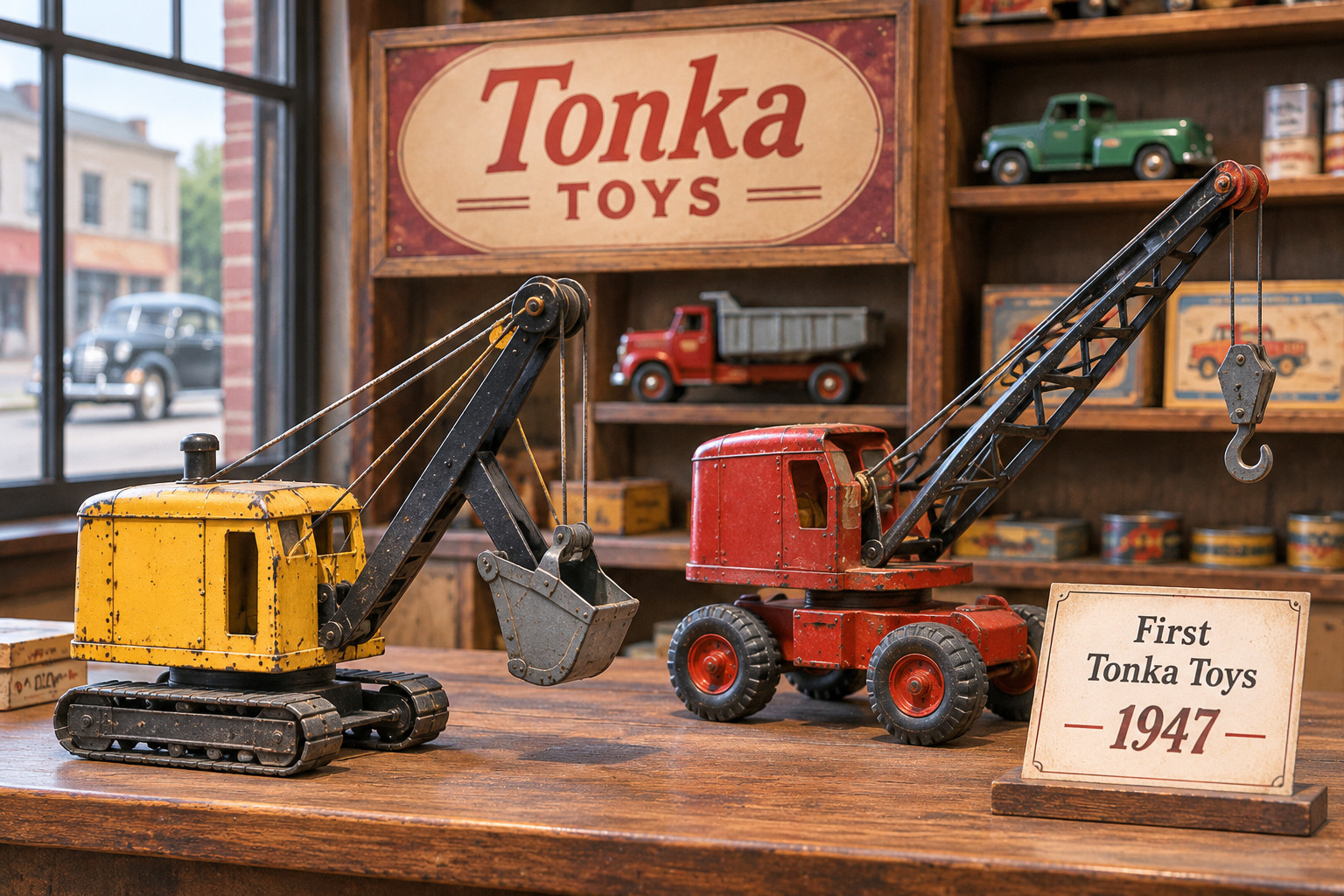
In 1947, the company introduced its first toy vehicles, including a steam shovel and a crane.
These early products were relatively simple, but they demonstrated something important: children were fascinated by machines that could lift, dig, and move materials.
The company adopted the name Tonka, inspired by nearby Lake Minnetonka. The word Tonka is commonly associated with a Dakota word meaning "great" or "big."
It was a fitting name for a company that would eventually become famous for miniature versions of some of the world's largest working machines.
Why Construction Equipment Was the Perfect Inspiration
To understand Tonka's success, it helps to consider what was happening across North America during the late 1940s and 1950s.
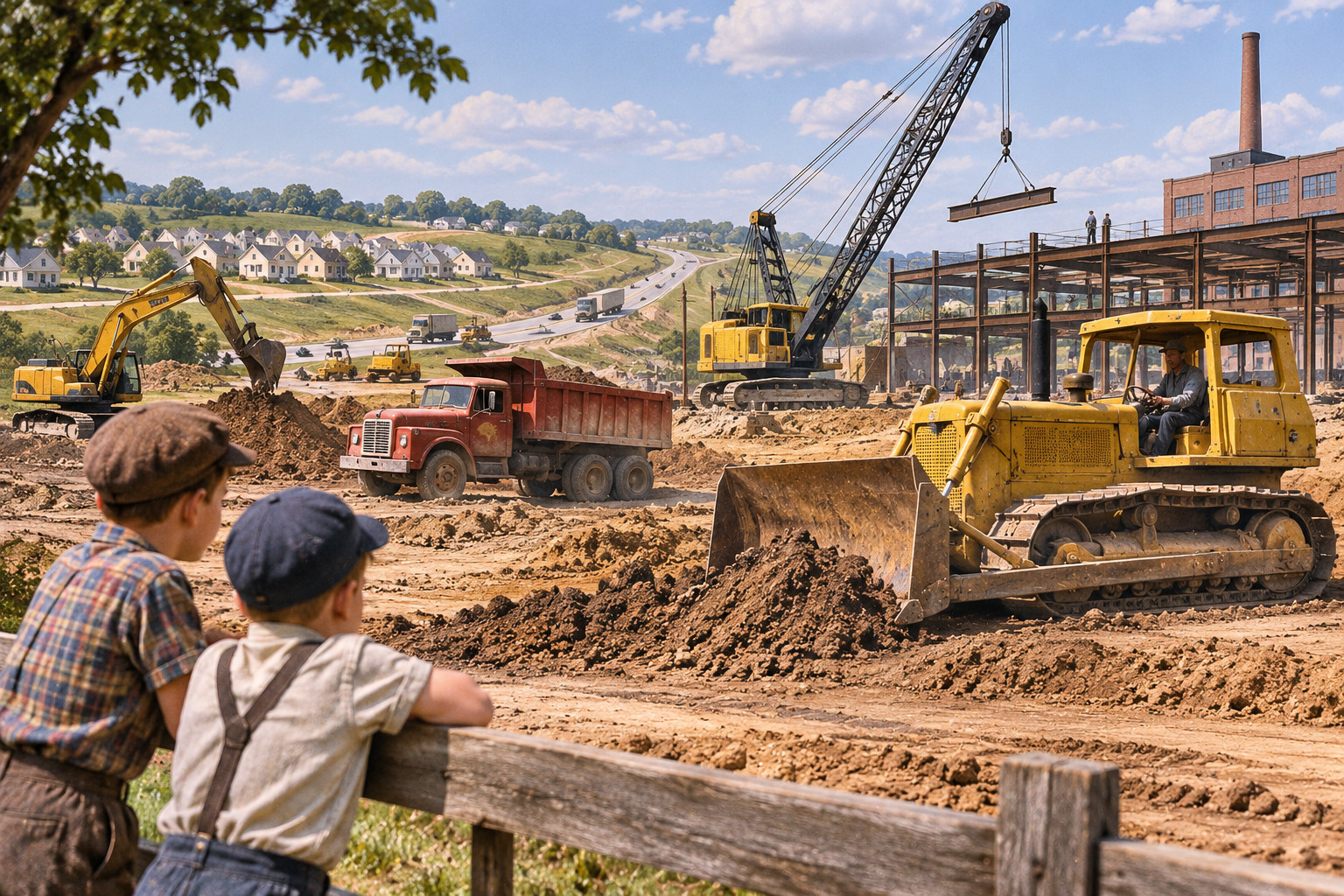
The Second World War had ended, and construction activity was expanding rapidly.
New highways were being built, suburbs were spreading, factories were expanding, and major infrastructure projects were transforming communities.
Bulldozers, cranes, excavators, and dump trucks were becoming increasingly familiar sights.
For children growing up during this period, construction equipment represented power, progress, and excitement.
Unlike ordinary passenger vehicles, heavy equipment performed visible, dramatic work.
A bulldozer could push an enormous pile of earth. A crane could lift materials high above a construction site. A dump truck could carry heavy loads and release them with the movement of its bed.
These were machines with obvious purposes, and their functions could be reproduced surprisingly well in miniature.
Tonka recognized the opportunity to turn that fascination into toys that children could actually operate.
Rather than simply producing vehicles that rolled across the floor, the company developed toys with working mechanical features.
A child could raise a dump bed, reposition a crane boom, or move a loader bucket.
The equipment might have been small, but the imaginary construction projects could be enormous.
The First Tonka Trucks Were Made From Real Automotive Steel
One of the most important reasons for Tonka's success was its choice of materials.
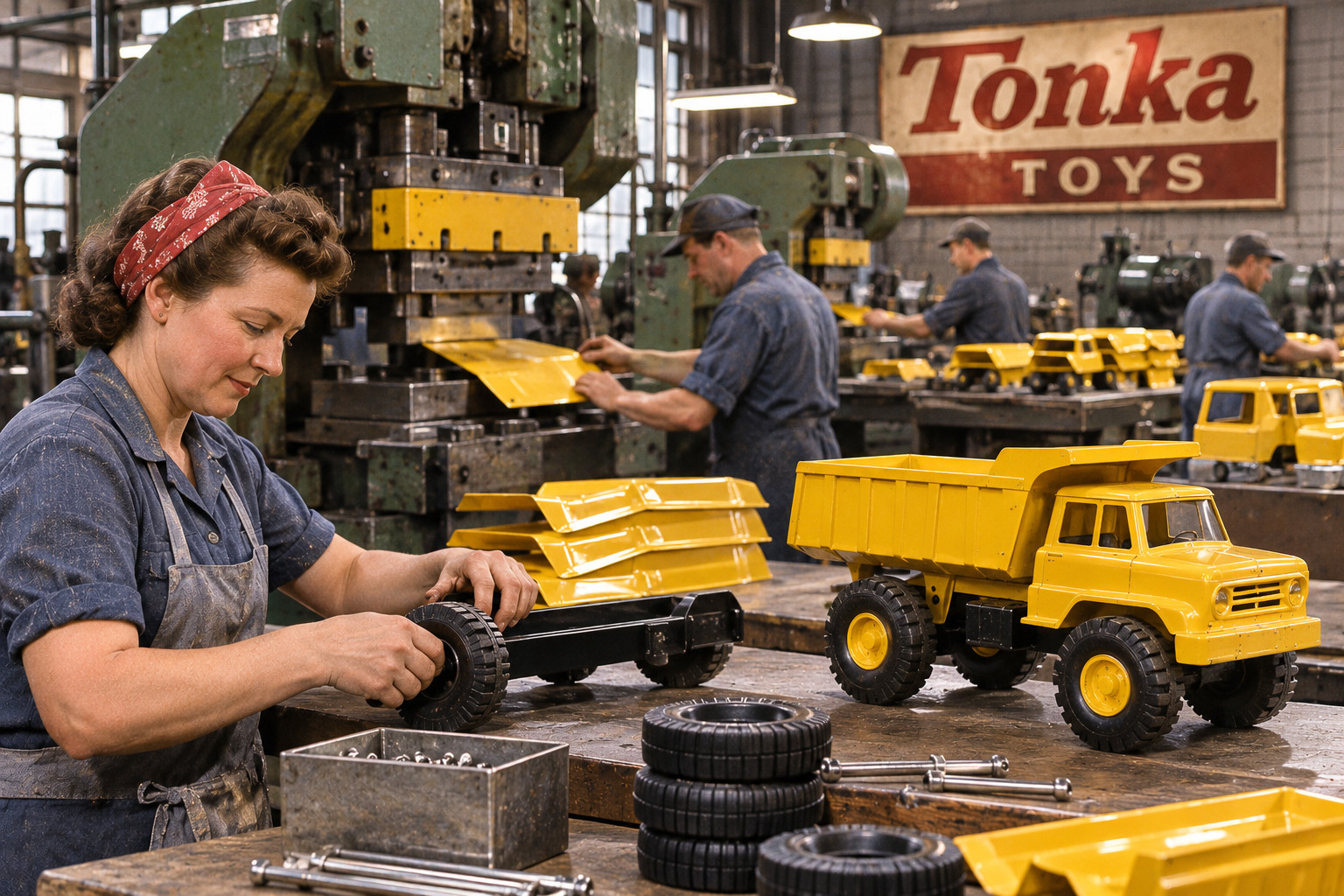
The earliest Tonka vehicles were manufactured using pressed steel, rather than the lightweight plastics commonly associated with modern toys.
According to the Hennepin History Museum, early Tonka trucks were constructed from 20-gauge automotive steel and fitted with solid rubber tires.
This gave the toys a substantial weight and a level of durability that became central to the company's reputation.
The manufacturing process shared some basic principles with the production of full-sized vehicle body panels.
Sheets of steel were cut, shaped, and pressed into components that could be assembled into recognizable vehicle bodies.
The finished toys were painted and fitted with wheels, axles, and mechanical features.
Of course, Tonka trucks weren't engineered to withstand the same forces as real construction machinery.
But their metal construction made them particularly well suited to the rough treatment they received.
They could be pushed through gravel, loaded with stones, dragged through mud, and left outdoors.
Scratches, dents, and worn paint often became part of their character.
For many children, the more battered their Tonka truck became, the more it resembled a real working machine.
The Mighty Dump Truck Changed Everything
Although Tonka had been manufacturing toys since 1947, one particular vehicle would become synonymous with the brand.
The Mighty Dump Truck.
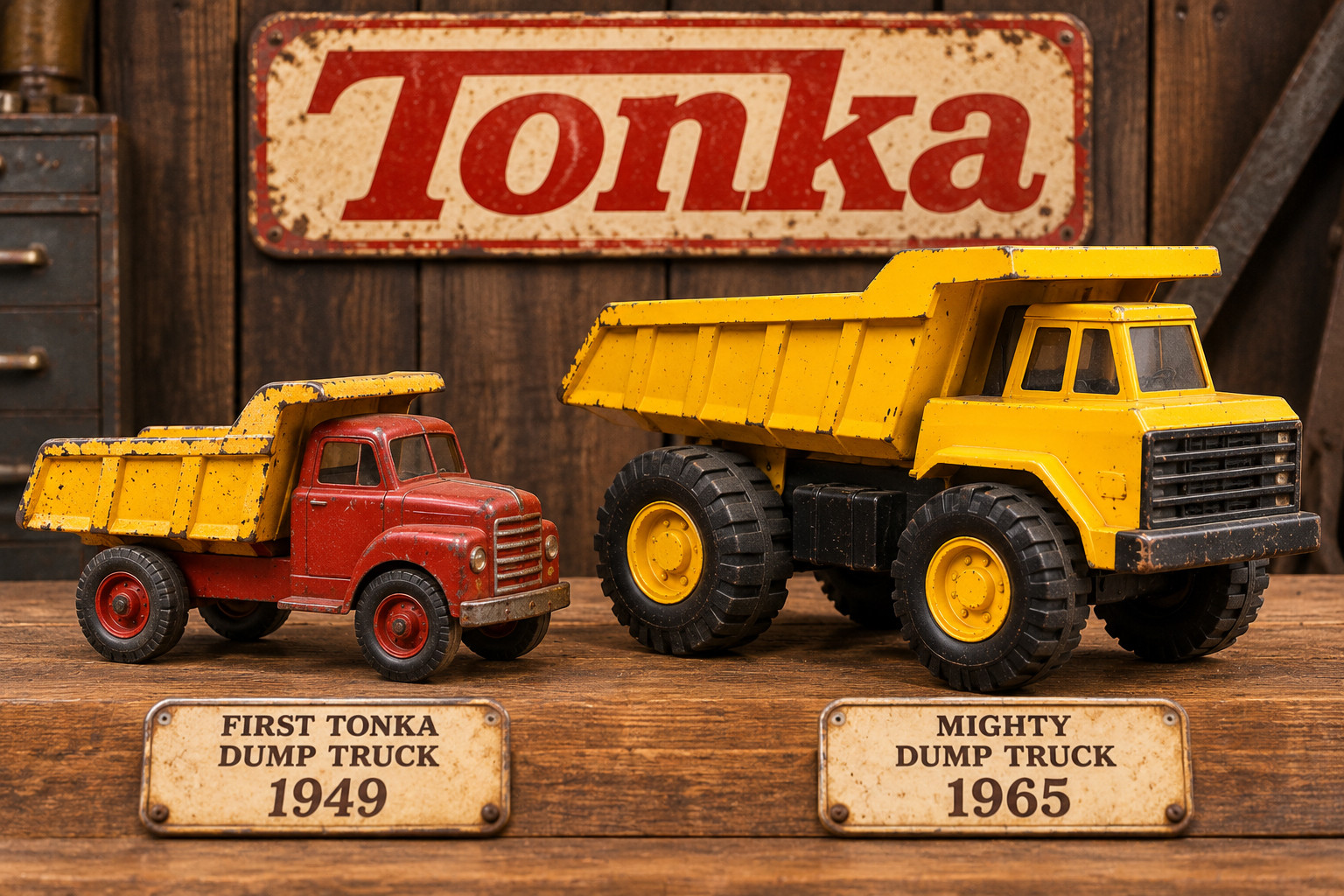
Tonka introduced its first dump truck in 1949, but the larger Mighty Dump Truck arrived in the mid-1960s.
Historical sources differ slightly on whether its introduction should be dated to 1964 or 1965.
Its design was straightforward.
A large yellow truck featured a sturdy chassis, oversized wheels, and a dump bed that could be raised to unload its contents.
There were no complicated electronics, batteries, or remote controls.
Children supplied the power themselves.
They could fill the bed with sand, transport the load across the yard, and raise the box to deposit the material exactly where they wanted it.
The experience closely resembled the basic operating cycle of a real dump truck.
And that was precisely what made it so appealing.
Why Was the Mighty Dump Truck So Popular?
The Mighty Dump Truck combined several characteristics that made it particularly successful.
• Recognizable design: Its large tires, cab, and tipping bed immediately identified it as construction equipment.
• Working features: Children could perform a realistic hauling and dumping operation.
• Durability: Its steel construction helped it withstand demanding outdoor play.
• Simplicity: It required no batteries or complicated instructions.
• Versatility: It could transport sand, dirt, stones, blocks, and practically anything else a child could fit inside.
The Mighty Dump Truck became Tonka's best-selling vehicle and helped establish the company's reputation for producing exceptionally rugged toys.
How Closely Did Tonka Trucks Resemble Real Construction Equipment?
Tonka's appeal went beyond simply making miniature vehicles.
The company understood that the appearance and operation of real heavy equipment were essential parts of the attraction.
Many Tonka vehicles featured recognizable elements of the machines used on construction sites.
|
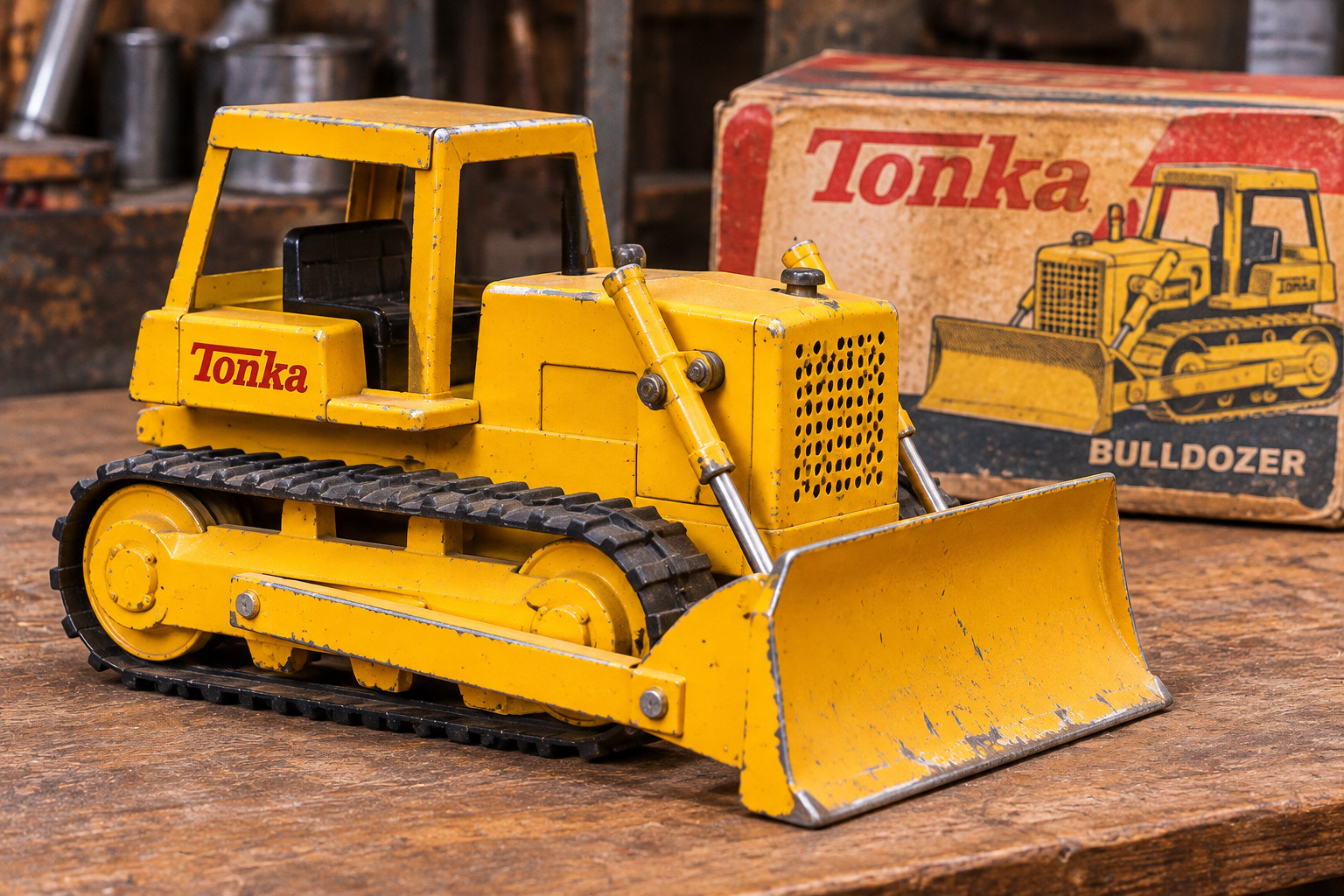
Bulldozers Real bulldozers use a front-mounted blade to push earth, rock, and other materials. Tonka reproduced the distinctive appearance of these machines in miniature, including their wide blades and crawler-style undercarriages. Children could push piles of sand, clear imaginary roads, and prepare building sites. The toy versions were mechanically simplified, but their basic purpose remained recognizable. |
 |
|
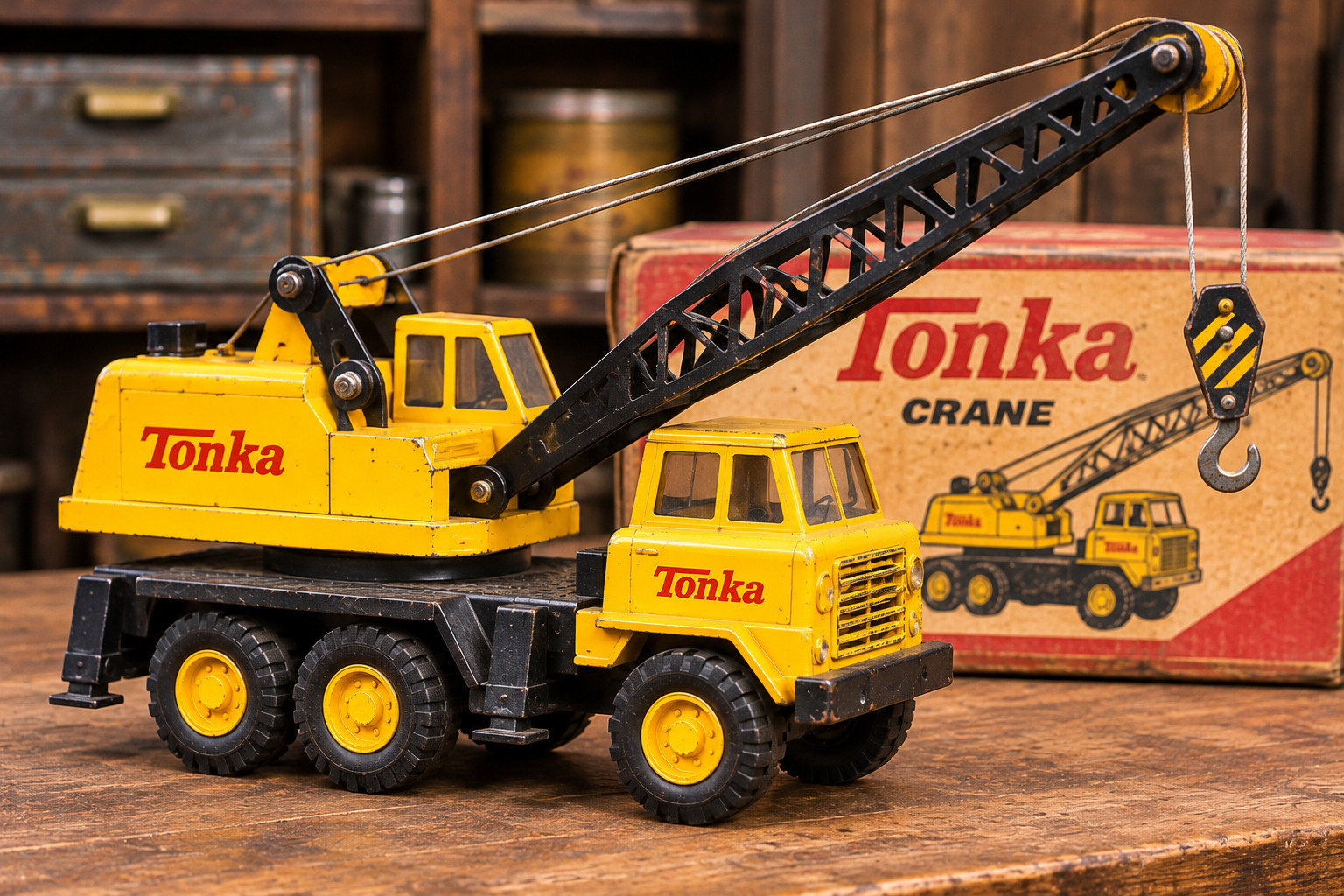
Cranes Cranes were among Tonka's earliest products, and their moving booms and lifting attachments offered an especially engaging form of mechanical play. Some models incorporated cables, hooks, or clamshell-style attachments that could be raised and lowered. These features introduced children to the basic principles of lifting equipment, even though the mechanisms were far simpler than those used on actual cranes. |
 |
|
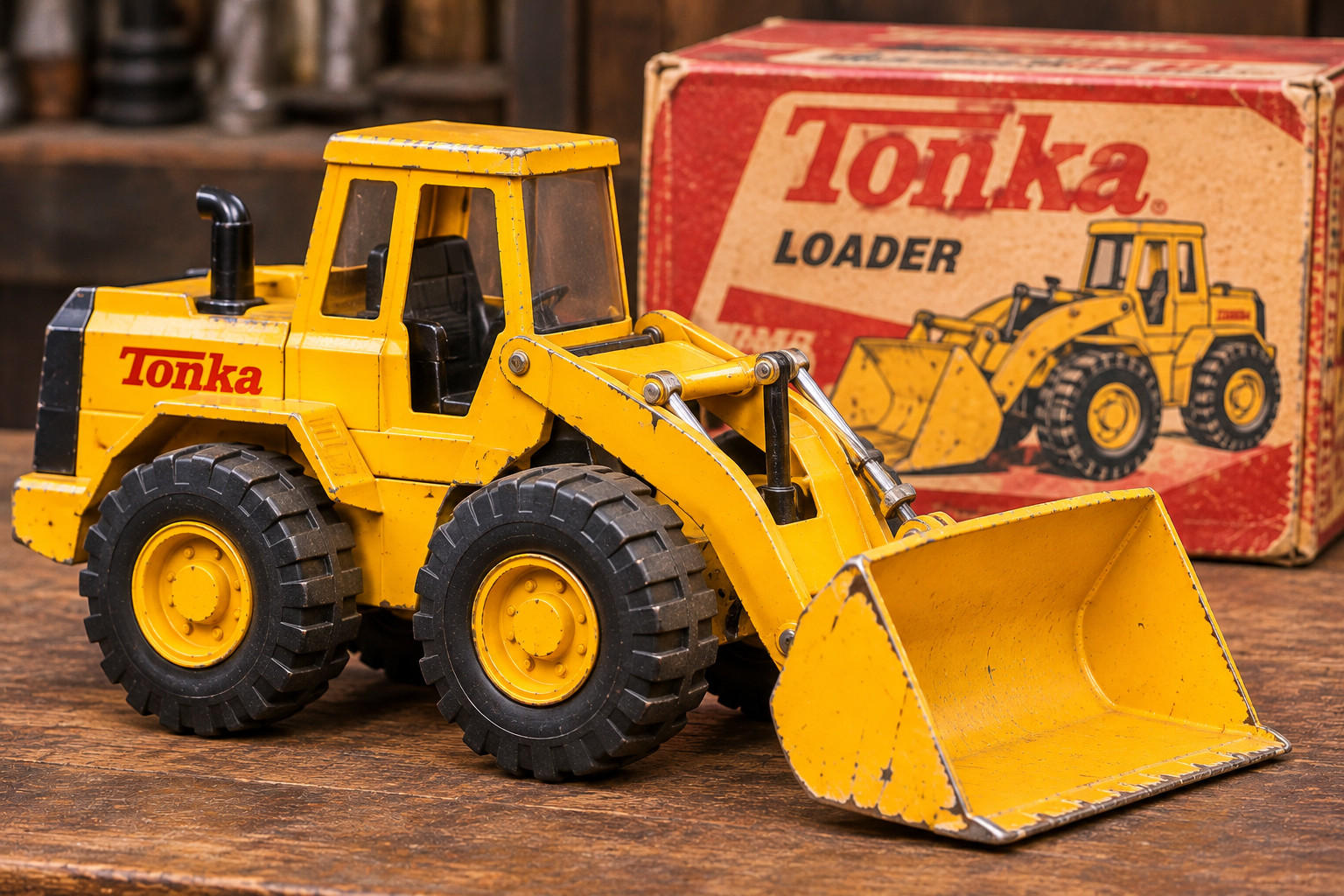
Front-End Loaders Front-end loaders became another natural addition to the Tonka lineup. With a bucket mounted at the front, children could scoop up loose material, transport it, and dump it into another vehicle. The basic operating sequence mirrored that of a full-sized wheel loader working in a quarry, stockpile area, or construction site. |
 |
|
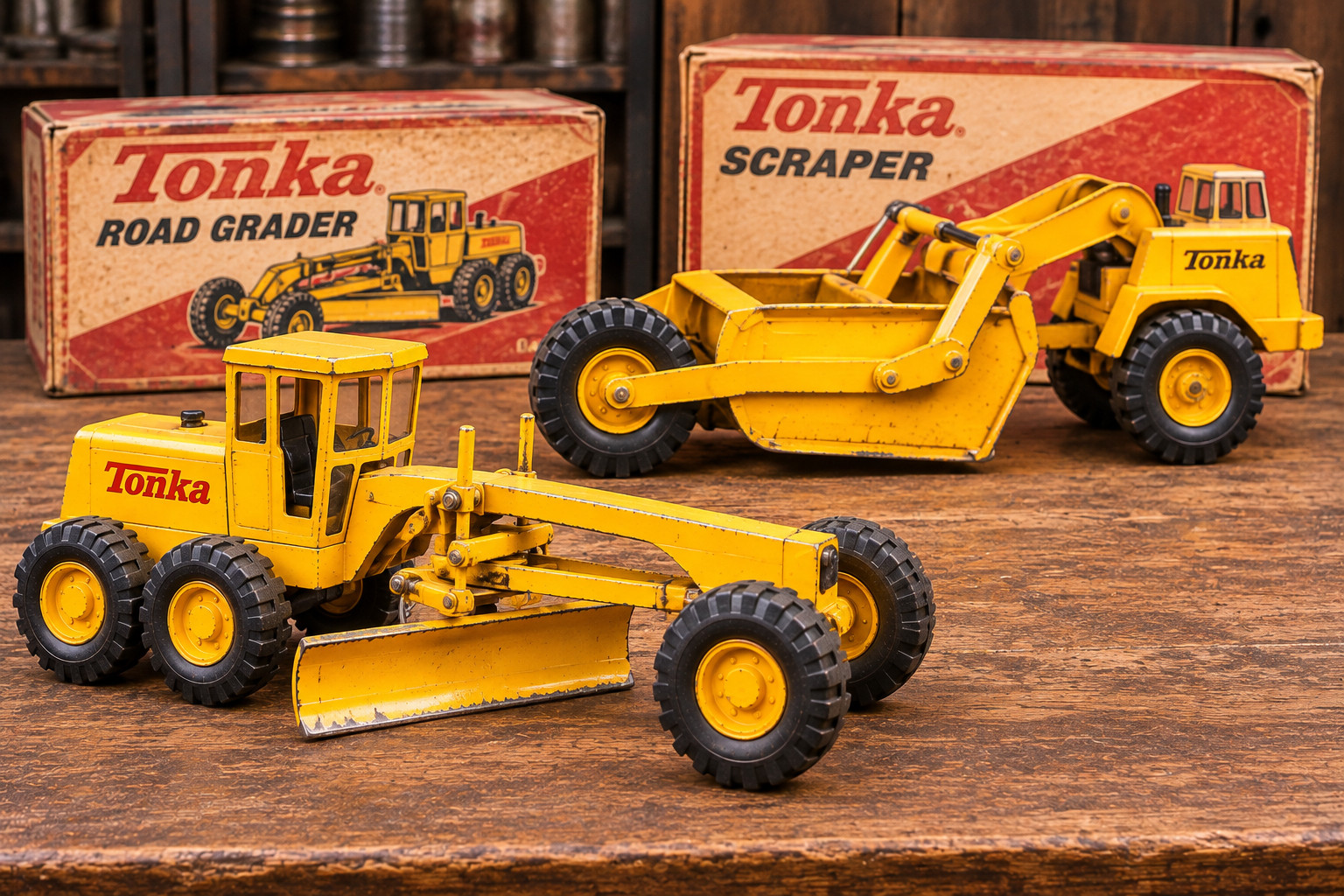
Road Graders and Scrapers Tonka also produced models inspired by specialized earthmoving equipment, including motor graders and scrapers. These machines were particularly interesting because they represented construction operations beyond the familiar tasks of digging and hauling. A grader could be used to smooth an imaginary road, while a scraper represented a machine designed to cut, collect, transport, and spread earth. The mechanical details weren't always exact, but the toys introduced children to equipment they might otherwise have known only from watching road construction. |
 |
Why Were So Many Tonka Trucks Yellow?
One of Tonka's most recognizable characteristics is its association with bright yellow construction equipment.
The colour wasn't unique to Tonka.
By the middle of the twentieth century, yellow had become strongly associated with many types of construction machinery, particularly earthmoving equipment.
Manufacturers such as Caterpillar had helped establish yellow as a familiar colour on construction sites.
The colour provided visibility and made equipment visually distinctive against soil, gravel, and other construction materials.
Tonka's yellow trucks benefited from that association.
A bright yellow toy dump truck immediately looked like something that belonged on a construction site.
However, not every Tonka vehicle was yellow.
Throughout its history, the company produced trucks and equipment in red, blue, green, orange, and numerous other colours.
Fire trucks, pickup trucks, delivery vehicles, and various construction models all appeared in different finishes.
Nevertheless, the yellow Mighty Dump Truck became so successful that it helped define the visual identity of the entire brand.
The Famous Tonka Tough Reputation
Tonka didn't simply manufacture sturdy toys. It built much of its identity around durability.
The phrase "Tonka Tough" became closely associated with the company's products.
One of the brand's most memorable advertising approaches involved demonstrating just how much punishment its steel trucks could withstand.
During the 1970s, Tonka advertising famously featured an elephant standing on a toy truck to demonstrate its strength.
The message was unmistakable.
These weren't delicate display models intended to sit untouched on a shelf.
They were toys designed to be played with.
That reputation became particularly important as the toy industry increasingly adopted plastic manufacturing.
Plastic offered manufacturers advantages in weight, production cost, and design flexibility, but Tonka's traditional steel construction remained a distinguishing characteristic.
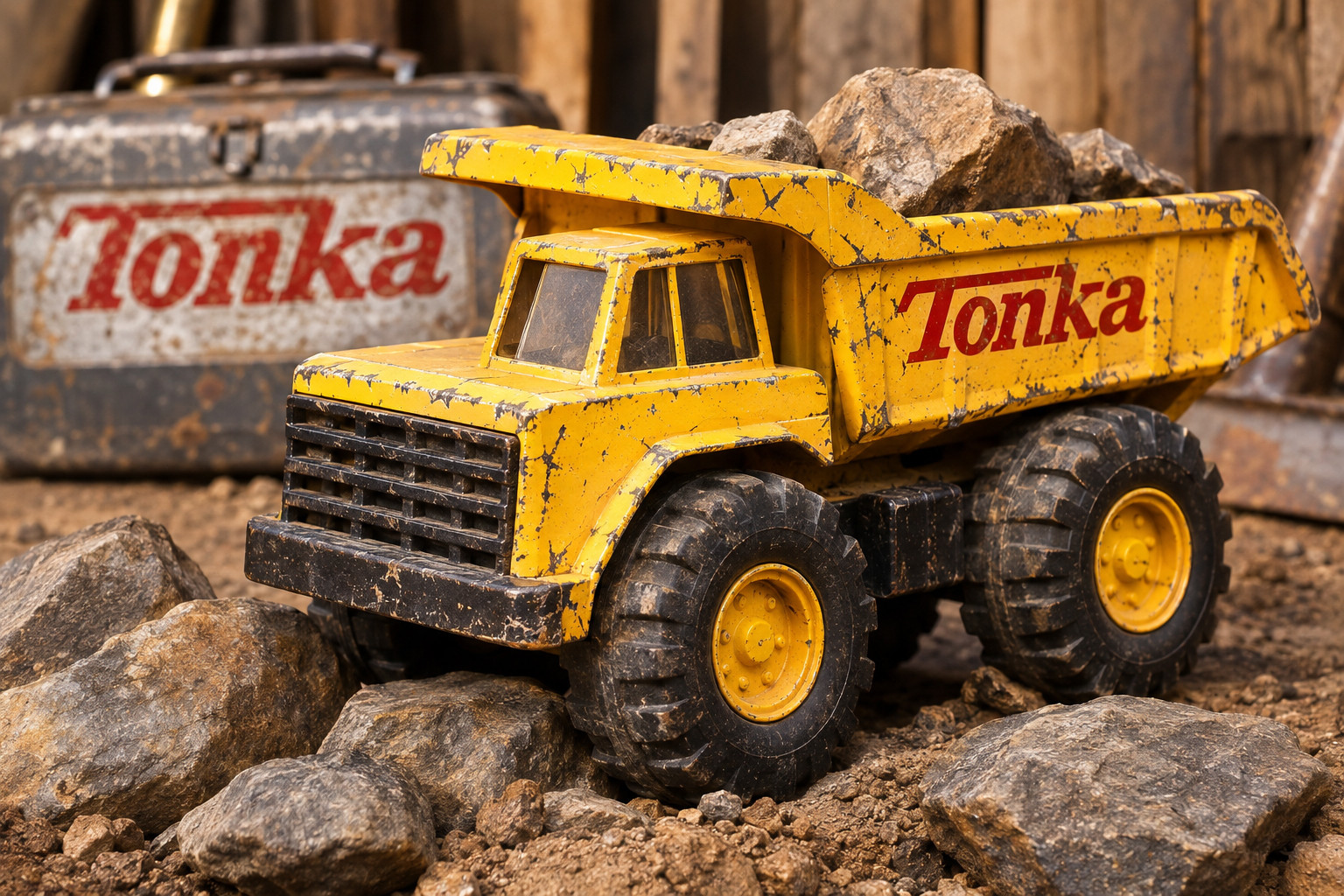
The company's reputation for toughness also helped create something unusual in the toy industry: products that could remain in use across generations.
Many vintage Tonka trucks survived long enough to be passed from parents to children and, eventually, grandchildren.
A toy originally purchased in the 1960s or 1970s could still be recognizable and functional decades later.
Tonka's Expansion Beyond Construction Equipment
As Tonka's popularity grew, its product lineup expanded considerably.
The company introduced miniature versions of many types of working vehicles, including tow trucks, fire engines, cement mixers, semi-trucks, pickup trucks, and agricultural equipment.
The introduction of pickup trucks in 1955 and a Jeep-style vehicle in 1962 reflected Tonka's growing interest in transportation beyond construction sites.
The company also developed different product sizes and series, including the Mighty Tonka, Mini Tonka, and Tiny Tonka ranges.
This expansion allowed children to assemble increasingly elaborate miniature fleets.
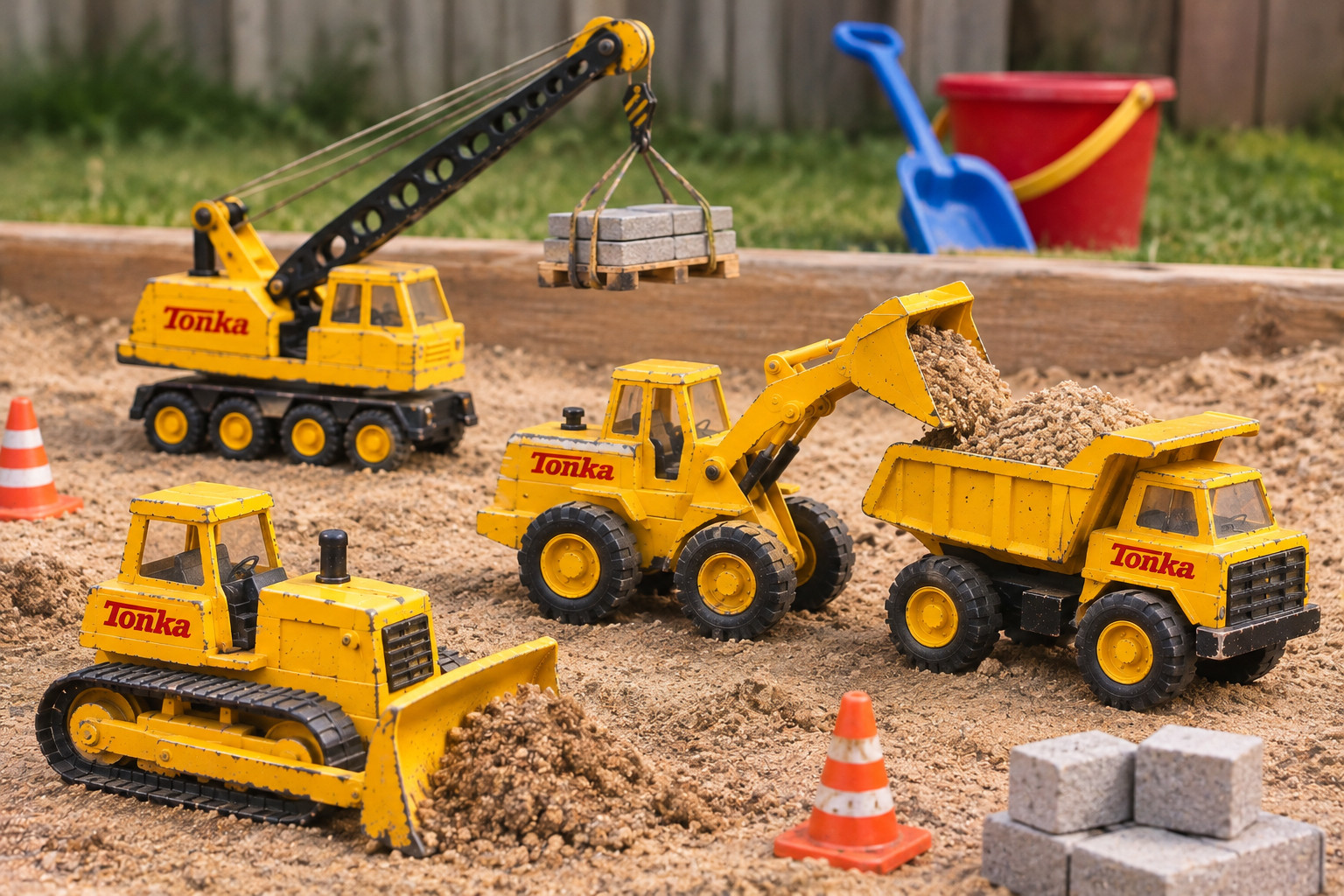
A construction project might involve a bulldozer preparing the ground, a loader filling a dump truck, and a crane lifting materials into position.
The toys worked particularly well together because their functions complemented one another.
Children could imitate the coordinated activity of an actual construction site rather than playing with each vehicle independently.
For heavy equipment enthusiasts, that interconnected play was part of the attraction.
It wasn't just about owning a truck. It was about understanding what the truck did and how it worked alongside other machines.
From Childhood Toys to Collectible Machines
Today, vintage Tonka trucks have developed a dedicated following among collectors.
Some enthusiasts seek out pristine examples with original paint, packaging, and accessories.
Others prefer well-used trucks that show the scratches and dents accumulated during decades of play.
Early production models, unusual colour combinations, limited-production variations, and complete examples of desirable vehicles can be particularly interesting to collectors.
For those interested in restoring vintage Tonka trucks, the process can involve many of the same basic tasks encountered when restoring full-sized equipment.
Old paint may need to be removed, metal components repaired, wheels replaced, and moving mechanisms restored to working condition.
However, collectors often distinguish between original and restored examples.
An extensively restored truck might look nearly new, but original paint and components can be important to collectors who value historical authenticity.
The appeal of vintage Tonka trucks also extends beyond traditional toy collecting.
For some people, they represent a childhood connection to the construction, trucking, or agricultural industries.
A retired equipment operator might collect miniature versions of machines they once operated.
A mechanic might appreciate the simple mechanical features.
And a heavy equipment enthusiast might simply enjoy seeing how the appearance of construction machinery has changed over the decades.
Did Tonka Trucks Influence Future Heavy Equipment Operators?
It's difficult to measure how many construction workers, mechanics, engineers, and equipment operators developed their interests through childhood toys.
However, the connection is easy to understand.
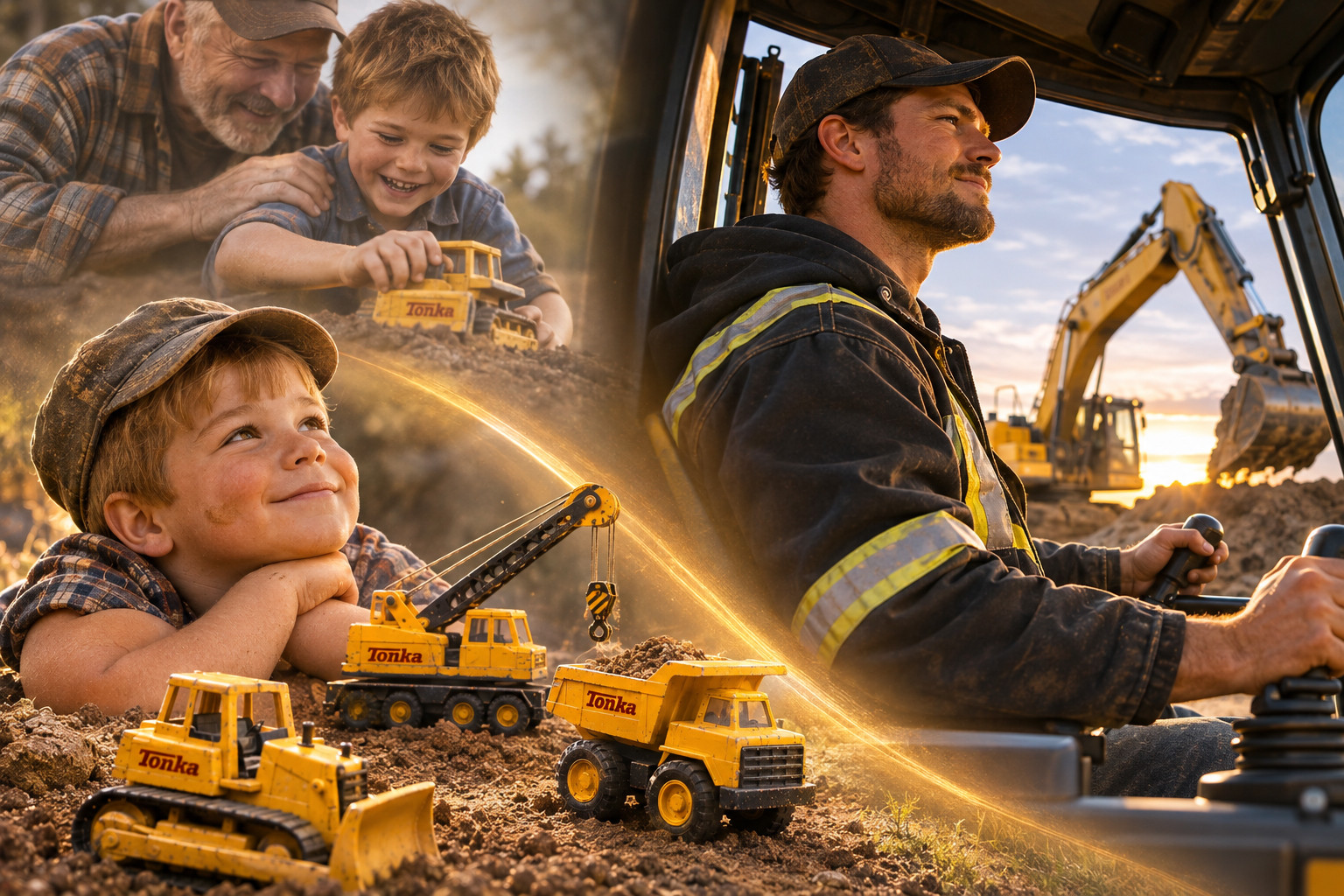
Tonka trucks gave children an opportunity to explore the basic functions of machinery long before they were old enough to operate the real thing.
A child using a toy loader to fill a dump truck was recreating a genuine material-handling process.
Someone pushing a miniature bulldozer through sand was experimenting with how a blade moves loose material.
A toy crane demonstrated that loads could be raised, lowered, and repositioned.
These activities weren't formal equipment training, but they encouraged curiosity about machines and the work they performed.
They also helped children develop an appreciation for the different roles construction equipment plays.
A dump truck couldn't do the same job as a bulldozer. A crane served a different purpose than a loader.
Understanding those differences was part of the fun.
For some children, that fascination may have faded as they grew older.
For others, it may have been the beginning of a lifelong interest in machinery.
How Tonka Survived a Changing Toy Industry
The toy industry changed dramatically during the second half of the twentieth century.
Plastic manufacturing became increasingly widespread, electronic toys gained popularity, and competition expanded.
Tonka adapted by introducing new product lines, different materials, and additional toy categories.
In 1982, the company left its original manufacturing location in Mound, Minnesota.
In 1991, Hasbro acquired Tonka, bringing the historic brand into one of the world's largest toy companies.
Although the business and manufacturing arrangements changed, the Tonka name continued to be associated with rugged construction vehicles.
Modern Tonka products include both traditional steel-bodied trucks and vehicles that incorporate plastic components.
The continued popularity of the classic dump truck demonstrates the enduring appeal of a relatively simple design.
Despite decades of advances in toys and technology, a truck with wheels and a working dump bed still offers something children enjoy: the ability to move material and create something with their own hands.
Tonka Trucks Earned a Place in Toy History
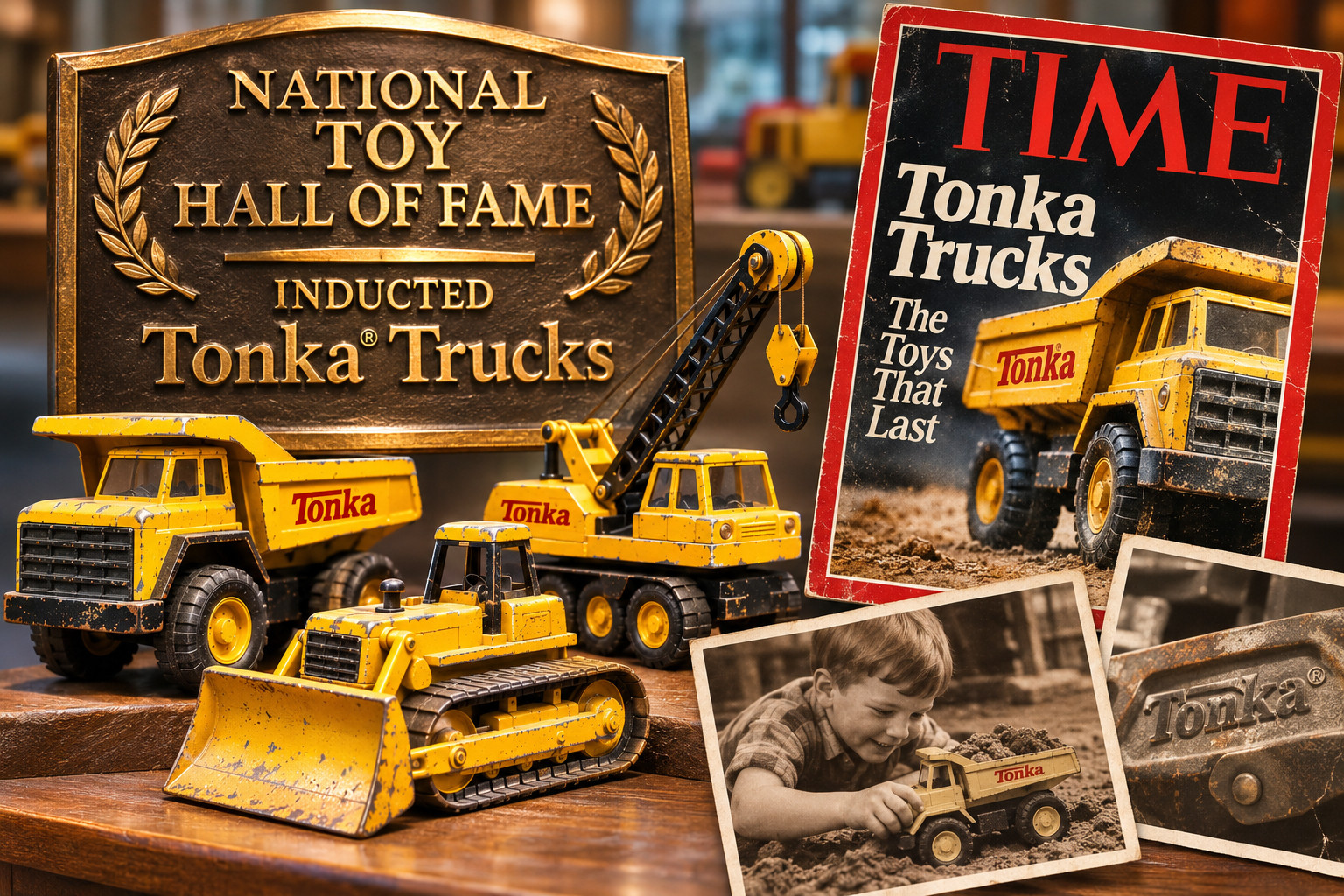
In 2001, Tonka Trucks were inducted into the National Toy Hall of Fame at The Strong National Museum of Play in Rochester, New York.
The honour recognized Tonka's lasting influence on childhood play and its reputation for realism and durability.
Tonka also appeared on TIME magazine's 2011 list of the 100 greatest toys, further demonstrating its place in popular culture.
What began as a small metalworking business in Minnesota had become a recognizable part of North American childhood.
And unlike many toys that became popular for a few years before disappearing, Tonka trucks remained familiar across multiple generations.
Why Tonka Trucks Are Still Iconic Today
Nearly eight decades after the first Tonka vehicles appeared, the basic idea behind their success remains remarkably simple.
Children are fascinated by machines that do things.
They want to push, lift, haul, dig, and build.
Tonka gave them the opportunity to recreate the work of real construction equipment using toys that were sturdy enough for outdoor adventures.
The company also benefited from something that couldn't have been manufactured deliberately: nostalgia.
For adults who grew up playing with Tonka trucks, the sight of a yellow steel dump truck can bring back memories of backyard construction sites, gravel piles, and imaginary roadbuilding projects.
For heavy equipment enthusiasts, those memories often carry an additional significance.
A Tonka truck might have been the first machine they ever operated, even if it required nothing more than two hands and a little imagination.
And perhaps that's the biggest reason Tonka trucks became so iconic.
They didn't just look like real heavy equipment.
They allowed children to experience, on a miniature scale, the satisfaction of putting machinery to work.
