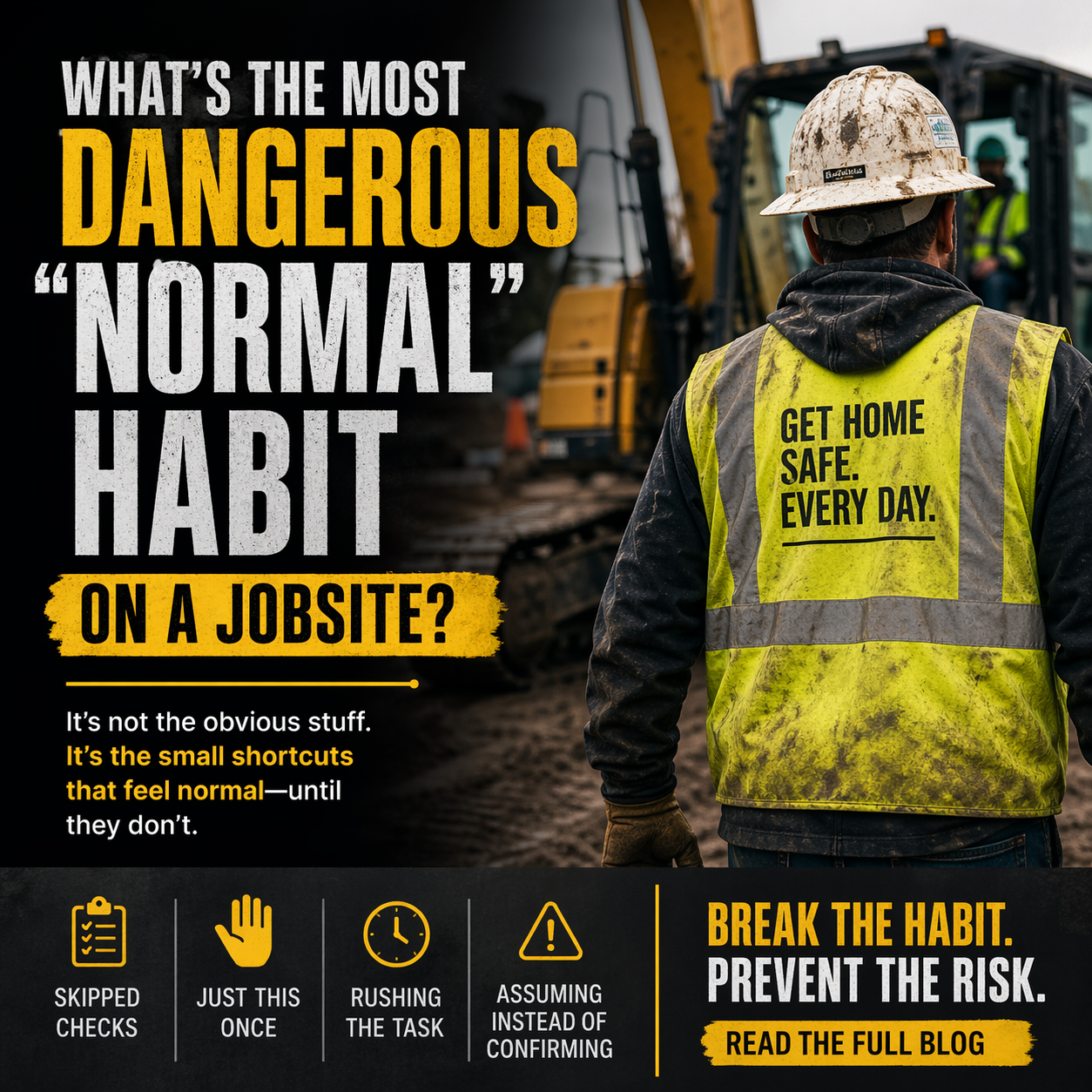
What’s the Most Dangerous “Normal” Habit on a Jobsite?
Walk onto almost any jobsite and you’ll see it: experienced operators moving with confidence, crews working in rhythm, tasks getting done fast. On the surface, everything looks efficient. Productive. Professional.
But buried in that “normal” is often the most dangerous thing on site:
Complacency.
Not the obvious, reckless kind. Not someone blatantly ignoring safety rules. The real danger is quieter than that—it’s the normalization of shortcuts.
When “It’s Always Been Done This Way” Becomes a Risk
The most dangerous habit isn’t one big mistake. It’s the accumulation of small ones:
- Skipping a quick walkaround inspection
- Not wearing PPE “just this once”
- Stepping into a swing radius because “they see me”
- Rushing a task because you’ve done it a thousand times
- Assuming instead of confirming
None of these feel dangerous in the moment. That’s exactly the problem.
They feel normal.
Why Experience Can Work Against You
Ironically, the more experienced someone is, the more likely they are to fall into this trap.
Experience builds confidence—but it can also dull your sense of risk. Tasks become automatic. You stop thinking through steps because your body already knows what to do.
That’s when:
- Checks get skipped
- Communication gets lazy
- Hazards get overlooked
And the margin for error disappears.
The “Just This Once” Mentality
Every unsafe habit starts with a single decision:
- “This will only take a second.”
- “I’ve done this before.”
- “Nothing’s going to happen.”
Most of the time, nothing does happen. That’s what reinforces the behavior.
Until it doesn’t.
The Real Cost of Normalized Risk
The danger isn’t just injury—it’s the ripple effect:
- Downtime on site
- Equipment damage
- Increased insurance and liability
- Crew morale taking a hit
- Someone not going home at the end of the day
And almost every serious incident gets traced back to something that had become routine.
Breaking the Habit
You don’t fix this with more rules—you fix it by resetting awareness.
Slow down the “automatic” moments
The tasks you’ve done 1,000 times are the ones most likely to bite you.
Call out shortcuts—even the small ones
A strong safety culture isn’t silent. It’s proactive.
Treat every day like Day One
That doesn’t mean inexperience—it means staying sharp.
Normalize doing it right, not doing it fast
Speed follows consistency. Not the other way around.
The most dangerous habit on a jobsite isn’t something that looks risky.
It’s something that looks normal.
And the moment everyone accepts it as “just how things are done,” that’s when it becomes a problem.
Because in this industry, the line between routine and risk is thinner than most people think.