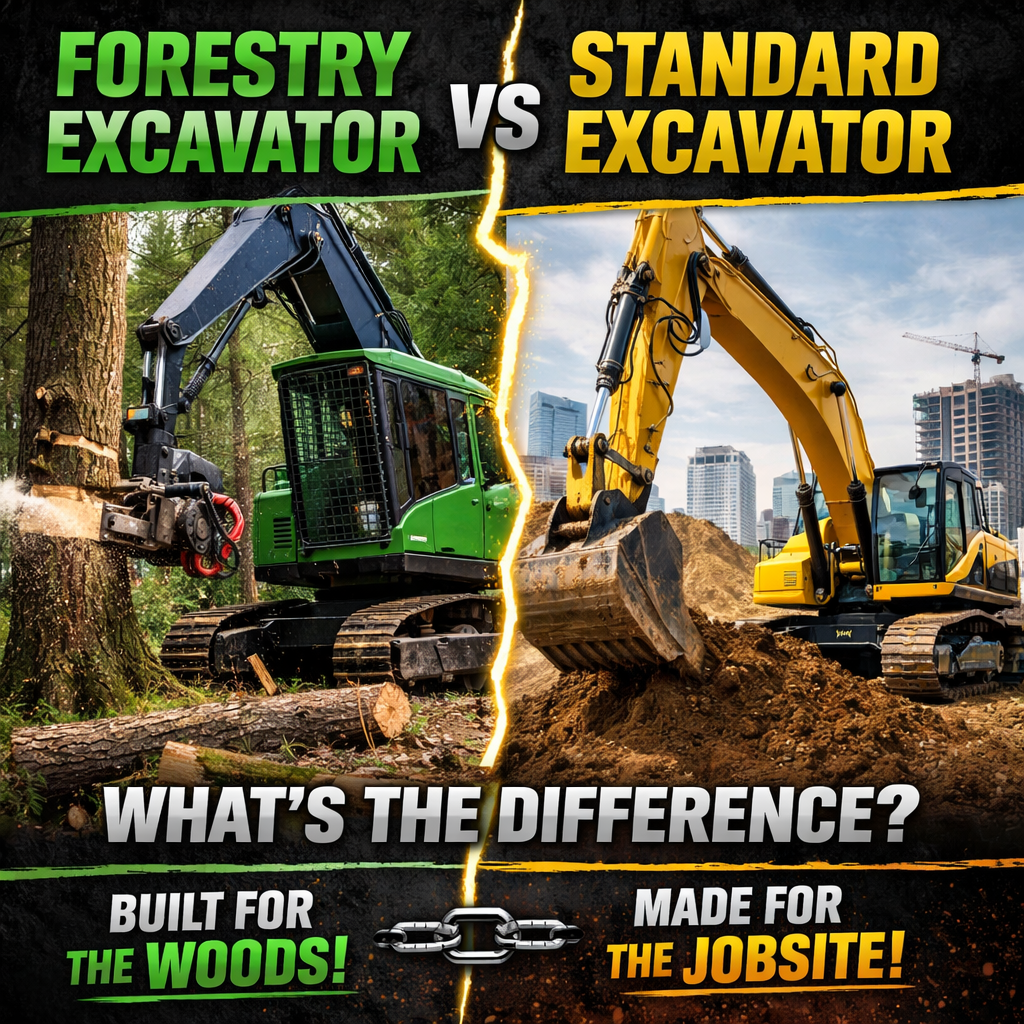
What’s the Difference Between a Forestry Excavator and a Standard One?
When most people think of excavators, they picture the classic machines you see on construction sites: a large tracked or wheeled base, a long boom and arm, and a bucket for digging. But in the forestry world, excavators take on a very different form and function. Forestry excavators are specialized machines built to handle the unique challenges of logging, land clearing, and wood processing. So, what sets them apart from standard excavators? Let’s break it down.
Reinforced Protection and Durability
Forestry excavators operate in harsh environments where falling branches, debris, and rough terrain are the norm. To survive these conditions, they are equipped with reinforced cabs, heavy-duty guards, and stronger undercarriages. The cab is often fitted with steel or polycarbonate shields to protect the operator from flying debris, a feature that’s usually unnecessary for standard construction excavators.
Specialized Attachments
While standard excavators rely mainly on buckets for digging, forestry excavators use a wide range of specialized attachments designed for felling, processing, and moving timber. Some common attachments include:
- Feller bunchers: For cutting and gathering trees.
- Grapples: For picking up logs and brush.
- Mulchers and masticators: For clearing vegetation and grinding stumps.
- Saw and shears attachments: For cutting and processing timber directly on-site.
These tools make forestry excavators far more versatile for logging and land management tasks than their standard counterparts.
Extended Reach and Mobility
Forestry machines often need to reach into dense forests or over uneven terrain. Many forestry excavators have longer booms and arms to reach across brush or manipulate large logs safely. Additionally, their tracks are sometimes wider or designed for better traction on soft, muddy, or uneven forest floors. Some models even come with high-flotation tracks to reduce soil impact in sensitive areas.
Engine Power and Hydraulic Systems
Handling trees, stumps, and dense vegetation requires more power and more precise hydraulic control than typical digging operations. Forestry excavators are usually equipped with higher torque engines and advanced hydraulic systems that allow smooth, controlled movements under heavy loads. This ensures efficiency when lifting, cutting, or moving large logs.
Safety Features for Extreme Conditions
Working in forests presents unique hazards that standard construction sites don’t typically face. Forestry excavators often include additional safety features like:
- ROPS/FOPS-certified cabs: To protect operators from rollovers and falling objects.
- Enhanced visibility systems: Cameras and mirrors to see around dense trees.
- Fire suppression systems: Since logging operations can involve sparks, dry wood, and machinery heat.
Cost and Maintenance Considerations
Forestry excavators are specialized, which usually means a higher upfront cost compared to standard excavators. However, their durability and specialized attachments often reduce downtime and repair costs in demanding environments. Maintenance can also be different, with more attention paid to guards, hydraulics, and engine protection against dust, debris, and moisture.
Bottom Line
In essence, while a standard excavator is a versatile digging machine for construction and earthmoving, a forestry excavator is a rugged, specialized tool designed to thrive in the unique challenges of logging, land clearing, and vegetation management. Choosing the right machine comes down to the job environment, the type of work you need to perform, and the level of protection and specialization required.
Forestry excavators aren’t just construction machines in the woods—they’re precision-engineered timber-handling giants built to keep operators safe while tackling some of the toughest environments on Earth.