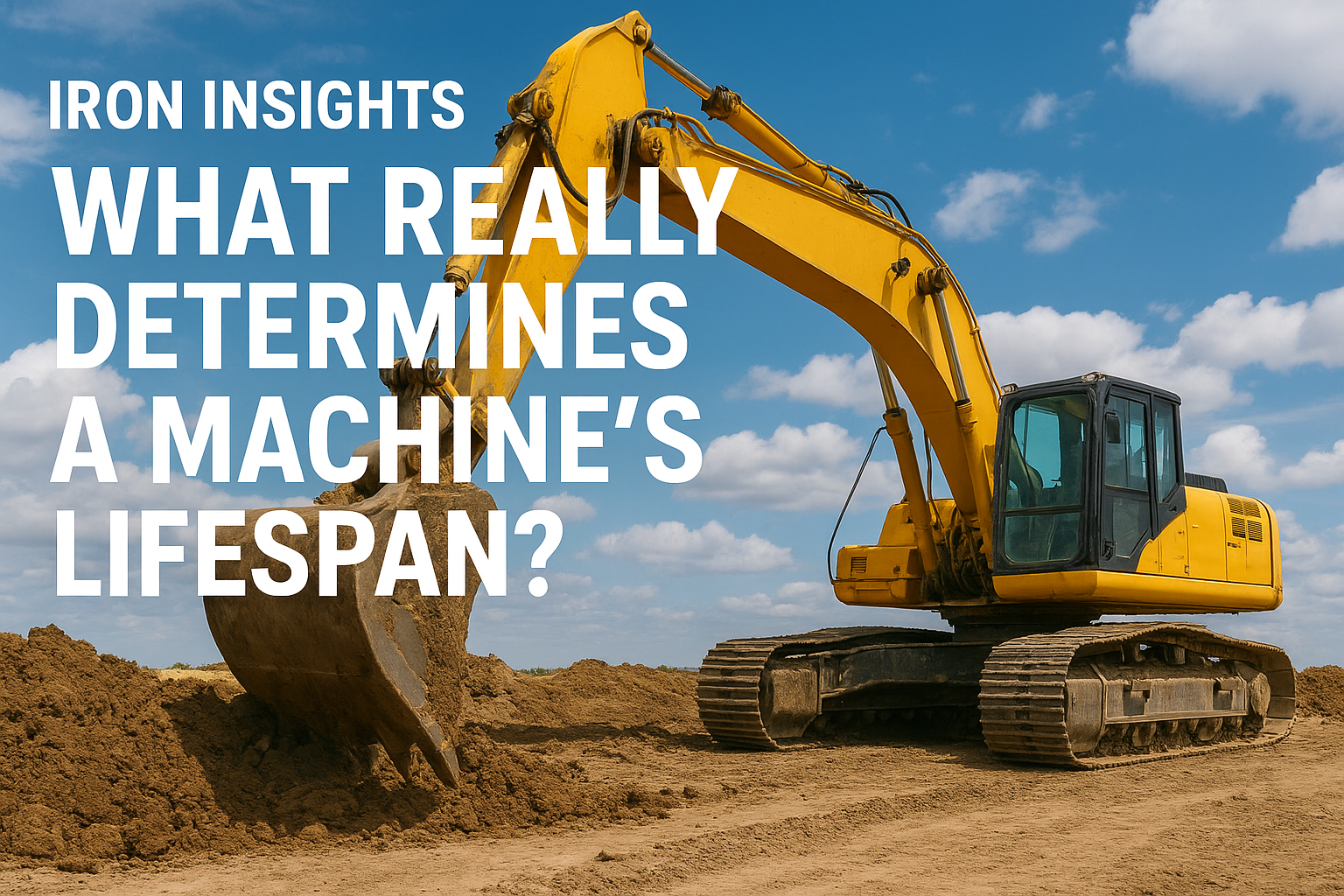
What Really Determines a Machine’s Lifespan?
When people talk about heavy equipment longevity, the conversation often starts and ends with brand reputation. While manufacturer quality absolutely matters, the true lifespan of a machine is shaped by several less obvious—but far more controllable—factors. Understanding these can mean the difference between a machine that delivers decades of value and one that becomes a costly headache far too soon.
Maintenance Habits Matter More Than Hours
Hour count is often treated as the ultimate indicator of wear, but it’s only part of the story. A well-maintained machine with 12,000 hours can outperform a neglected one with half that time.
Consistent oil changes, proper greasing intervals, timely filter replacements, and fluid analysis all slow internal wear dramatically. Machines that follow a documented preventative maintenance schedule almost always outlive those maintained reactively.
Iron Insight: Service records often matter more than the hour meter when evaluating used equipment.
Operator Behavior Has a Direct Impact
Two operators can run the same machine in the same conditions and produce very different outcomes. Aggressive throttle use, excessive idling, ignoring warning indicators, or improper warm-up and cool-down routines all accelerate component fatigue.
Skilled operators treat machines like long-term assets, not disposable tools. Over time, that mindset alone can extend a machine’s usable life by years.
Application and Environment Are Critical
A machine designed for light grading will wear far faster if used for constant heavy ripping. Similarly, equipment operating in dust-heavy, corrosive, or extreme-temperature environments requires more frequent service and closer monitoring.
Using the right machine for the job—and adjusting maintenance schedules to match environmental conditions—preserves structural components, hydraulic systems, and drivetrains.
Quality of Repairs and Parts
Not all repairs are equal. Using low-quality aftermarket parts or rushed repair work can introduce new failure points. Proper torque specs, calibrated diagnostics, and OEM-grade components help ensure repairs restore integrity rather than compromise it.
Cutting corners on repairs often leads to repeat failures that shorten overall lifespan.
Storage and Downtime Care
How a machine is treated when it’s not working also matters. Long-term idle equipment without proper storage prep can suffer from seal degradation, corrosion, battery failure, and fuel system issues.
Simple steps—like periodic start-ups, fluid circulation, and weather protection—can prevent expensive reactivation repairs.
Machine lifespan isn’t luck, and it isn’t just branding. It’s the cumulative result of daily decisions: how the machine is operated, maintained, repaired, and stored. Owners who focus on these fundamentals consistently extract more value, more uptime, and better resale returns from their iron.