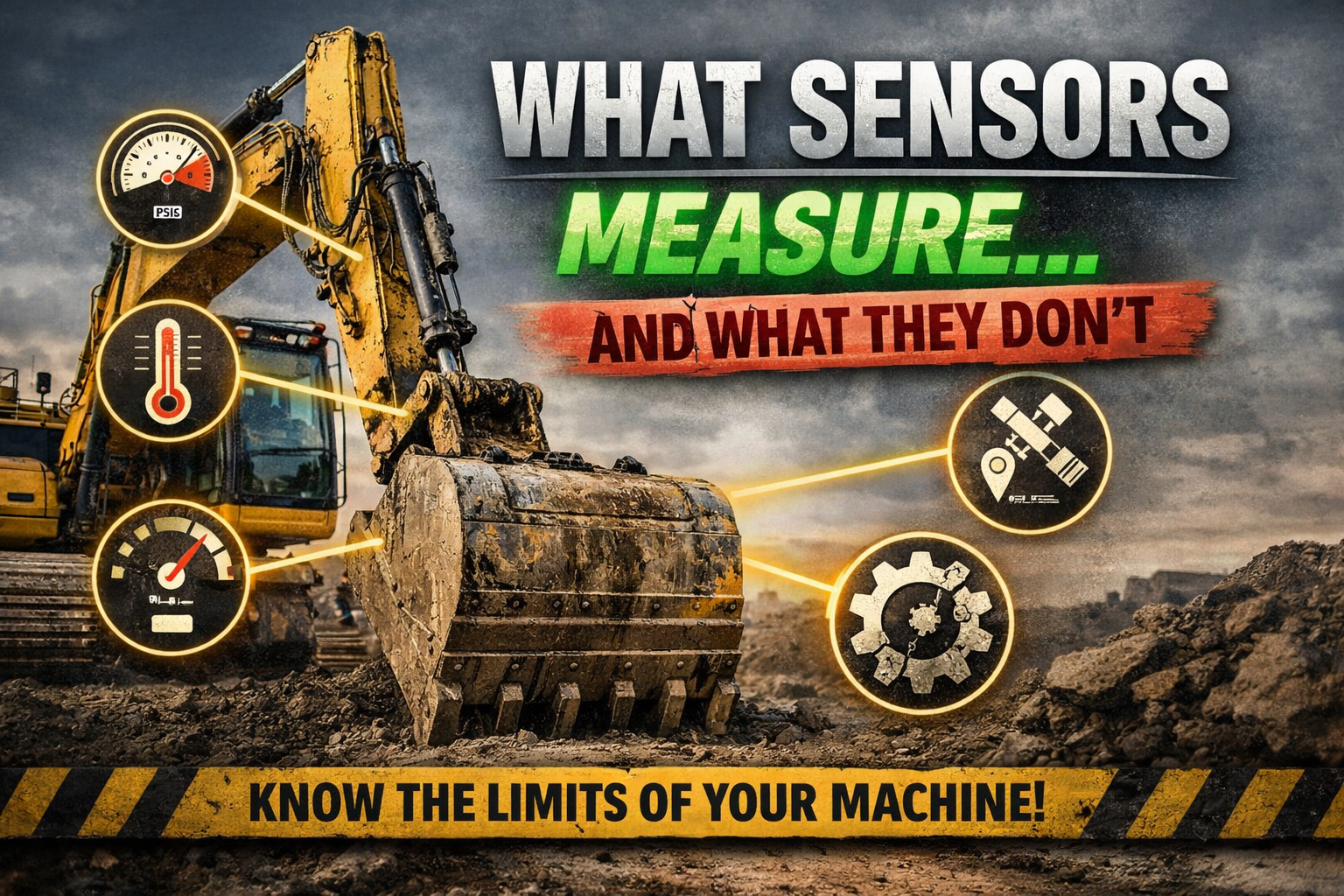
What Machine Sensors Actually Measure—and What They Don’t
In the world of heavy equipment, modern machines are bristling with sensors. From pressure transducers in hydraulic systems to GPS units tracking position, operators and fleet managers often rely on sensor data to make decisions about performance, maintenance, and safety. But it’s important to remember: sensors measure specific things, not everything you might assume. Understanding what they can—and can’t—tell you is key to keeping machines running efficiently and avoiding costly mistakes.
What Sensors Do Measure
Heavy equipment sensors fall into several broad categories, and each provides precise information about a particular aspect of machine operation:
1. Pressure Sensors
Hydraulic systems rely on pressure sensors to monitor system health. These sensors tell you how much pressure is in a cylinder or line, which can indicate if a component is under load or if there’s a leak somewhere in the system.
2. Temperature Sensors
Engines, transmissions, and hydraulic systems often have temperature sensors to monitor fluid and component temperatures. This data helps prevent overheating and indicates whether systems are operating within safe limits.
3. Position and Speed Sensors
These sensors measure the location of moving parts (like a boom or bucket) and rotational speed (like a track or wheel). They’re critical for precise control, safety interlocks, and automated operations.
4. Vibration Sensors
Accelerometers and vibration sensors detect unusual oscillations or shaking, often serving as early warning signs of wear or impending failure in components like bearings or gearboxes.
5. Fuel and Flow Sensors
Fuel level, flow rate, and hydraulic flow sensors provide insight into efficiency and system health. Unexpected drops or spikes can indicate leaks, blockages, or other problems.
6. Environmental Sensors
Modern machines increasingly use sensors to detect outside conditions—like ambient temperature, humidity, or terrain inclination—to optimize performance and safety.
What Sensors Don’t Measure
Even the most advanced sensors have limitations. There are many things sensors cannot directly tell you:
1. Mechanical Wear and Tear
Sensors can detect pressure drops or unusual vibrations, but they don’t directly measure wear on a bucket edge, track shoes, or bearings. A part can be failing even if sensor readings appear normal until it reaches a critical point.
2. Operator Behavior
Aggressive handling, overloading, or improper technique can stress a machine in ways sensors may not detect until damage has occurred. Sensors can indicate consequences of misuse (like high temperatures or erratic vibrations), but not the behavior itself.
3. Long-Term Component Fatigue
Many sensors monitor real-time conditions, but they don’t account for cumulative stress over time. Two machines might have identical sensor readings today, yet one could fail sooner due to earlier unseen fatigue.
4. Subtle Fluid Contamination
Temperature and pressure sensors provide clues about system health, but they don’t detect small levels of contamination in oil or hydraulic fluid. Particle counters or lab analysis are required for that.
Why Understanding Limits Matters
Relying solely on sensors can give a false sense of security. Maintenance schedules, inspections, and operator awareness remain critical. Sensors are powerful tools, but they measure specific conditions, not the full story of machine health. Understanding both the capabilities and limitations of sensors ensures better decision-making, longer equipment life, and safer operations.