What Happens When a Diesel Engine Runs Backward?
The unusual conditions that can cause reverse rotation, what happens inside the engine, and why operators need to recognize the warning signs.
Diesel engines are built to do one thing very well: turn fuel into the power needed to move heavy equipment, haul enormous loads, and operate machinery under demanding conditions. But what happens when an engine suddenly starts rotating in the wrong direction?
It sounds almost impossible. After all, diesel engines are designed to rotate in a specific direction, with carefully timed fuel injection, valve operation, and lubrication systems working together.
Yet under certain unusual circumstances, a diesel engine can actually begin running backward.
This phenomenon, known as reverse engine rotation, is uncommon but has been documented in certain diesel engine designs. Depending on the engine, it can cause poor combustion, unusual exhaust behaviour, loss of lubrication, and serious mechanical damage.
Understanding how it happens is particularly important for operators and mechanics working with older diesel-powered heavy equipment.
Can a Diesel Engine Really Run Backward?
|
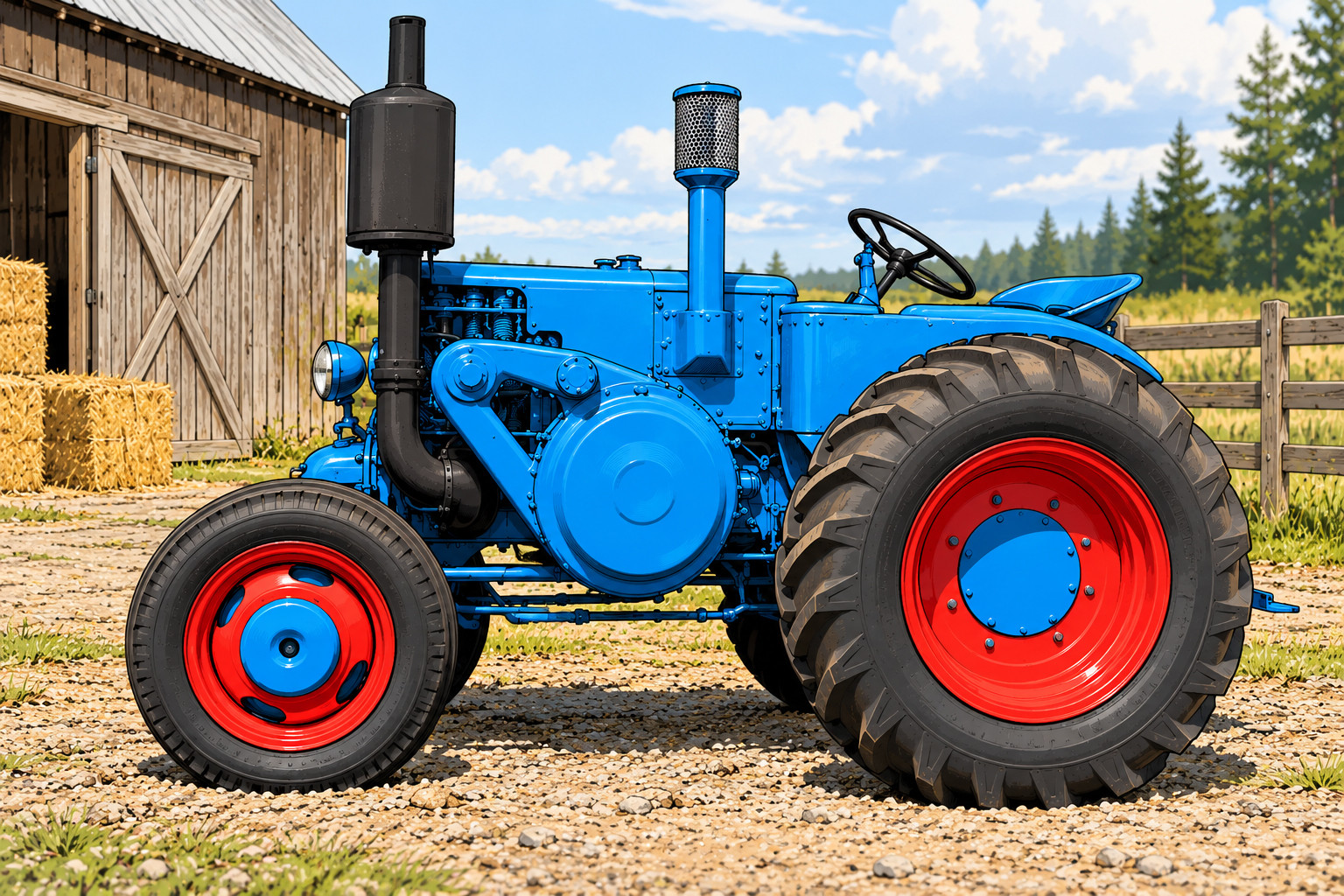
Yes, but not every diesel engine can sustain reverse rotation. A conventional four-stroke diesel engine relies on a precisely timed sequence of intake, compression, combustion, and exhaust strokes. The camshaft, crankshaft, fuel injection system, and valve timing are designed around the engine's intended direction of rotation. If the crankshaft begins turning backward, these systems no longer operate in their intended sequence. Some engines may briefly rotate backward without firing. Others, particularly certain older mechanically controlled diesel engines, may actually continue combusting fuel while rotating in reverse. Two-stroke diesel engines can be especially interesting in this regard. Certain older two-stroke designs are more capable of sustaining reverse operation because of how their intake and exhaust events are arranged. In fact, some specialized marine diesel engines were deliberately designed to operate in either direction. However, these engines use systems specifically engineered to accommodate reverse operation. That is very different from an ordinary construction or agricultural diesel engine unexpectedly running backward. |
 |
What Causes a Diesel Engine to Run Backward?
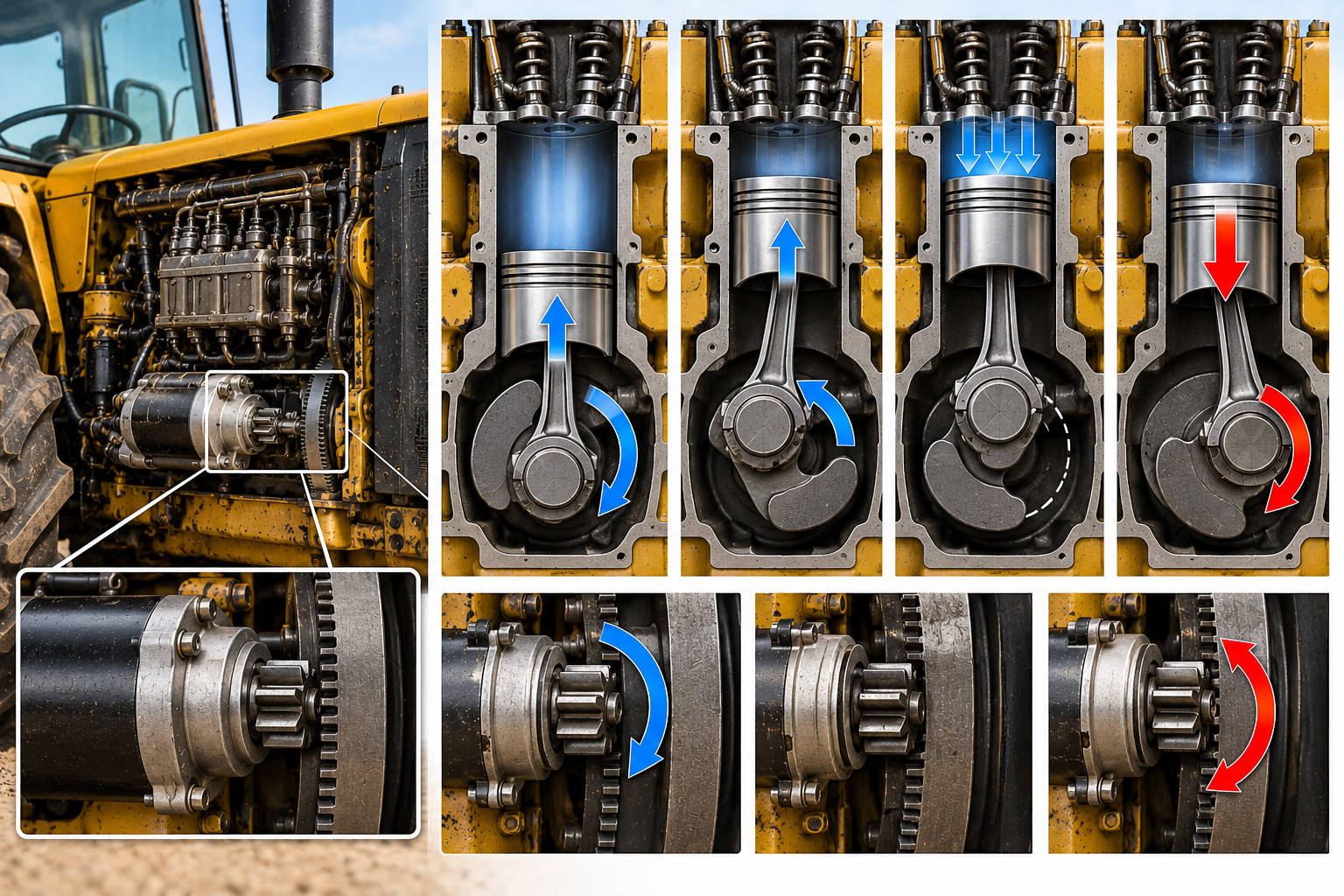
Several unusual operating conditions can cause a diesel engine to reverse direction. Most involve a sudden change in crankshaft momentum when the engine is turning slowly.
1. Stalling Under a Heavy Load
One of the better-known causes is an engine stalling while under load.
Imagine an older diesel-powered tractor climbing a steep incline while pulling a heavy implement.
As the load increases, engine speed begins to fall. Eventually, the engine may no longer produce enough torque to keep the crankshaft turning forward.
If the engine nearly stops while a cylinder contains highly compressed air, that compressed air can push the piston backward.
The crankshaft may then reverse direction.
This is sometimes called engine kickback.
Under the right circumstances, particularly with certain older mechanically injected engines, the engine may begin firing while rotating backward.
However, a brief backward movement does not necessarily mean the engine will continue running in reverse.
|
2. Incorrect Starting Conditions Reverse rotation can sometimes occur during engine starting. Diesel engines require considerable torque to overcome cylinder compression. When an engine is cranked too slowly, the starter may fail to carry the crankshaft through a compression stroke. The compressed air can then force the piston and crankshaft backward. Conditions that may contribute include: • Weak batteries or inadequate cranking speed. Modern electronically controlled diesel engines are generally much less likely to sustain reverse combustion because their control systems depend on crankshaft position and rotation information. |
 |
3. A Machine Rolling Backward While in Gear
This is another unusual situation that can arise with older equipment using mechanical drivetrains.
Consider a tractor or piece of heavy equipment climbing a slope.
If the engine stalls and the machine begins rolling backward while the transmission remains engaged, the wheels may drive the drivetrain in the opposite direction.
Depending on the transmission arrangement, this can force the crankshaft to rotate backward.
If the engine is capable of firing under these conditions, reverse operation may begin.
This scenario is not possible in the same way with every drivetrain. Torque converters, transmission controls, clutches, and other components can prevent the wheels from directly back-driving the engine.
Nevertheless, the possibility is one reason operators should follow proper procedures for securing stalled equipment on slopes.
4. Incorrect Fuel Injection Timing
Diesel combustion depends heavily on timing.
Fuel must be injected at the appropriate point in the compression cycle so that expanding combustion gases produce useful torque.
On older mechanically injected engines, incorrect injection timing can contribute to abnormal combustion and kickback.
However, incorrect timing alone does not guarantee reverse rotation.
The engine must also be physically driven backward, and its fuel delivery and combustion characteristics must permit continued operation in that direction.
What Happens Inside the Engine When It Runs Backward?
|
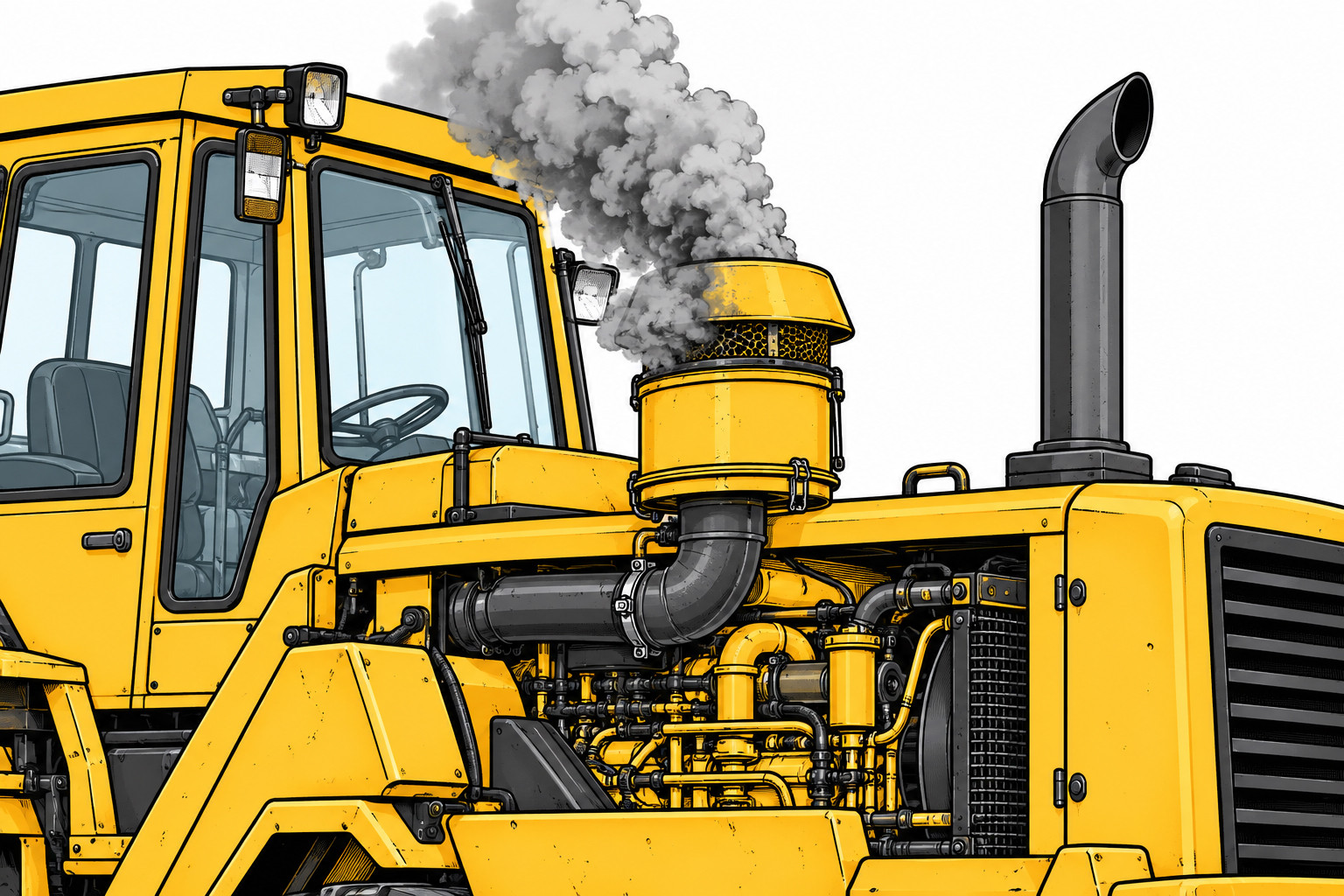
This is where things become particularly interesting. An engine operating in reverse is not simply producing power in the opposite direction. Many of its internal systems may be functioning outside their intended operating conditions. The Intake and Exhaust Systems May Behave Strangely In a conventional four-stroke diesel engine, the camshaft still operates the intake and exhaust valves according to their mechanical relationship with the crankshaft. But when the crankshaft rotates backward, the sequence of valve events is reversed. This can result in abnormal gas exchange. On some engines, exhaust gases or smoke may be expelled through the intake system, while air may be drawn through the exhaust. An operator might suddenly notice smoke emerging from the air cleaner or intake opening instead of the exhaust stack. This is one of the most recognizable symptoms associated with certain older diesel engines running backward. The exact behaviour depends on the engine's valve timing, intake and exhaust arrangement, and ability to sustain combustion in reverse. |
 |
The Lubrication System May Stop Working Properly
One of the greatest mechanical concerns is lubrication.
Diesel engines depend on pressurized oil to protect crankshaft bearings, camshaft components, turbochargers, and other moving parts.
Many engine oil pumps are designed for a particular direction of rotation.
If the pump is driven backward, it may fail to supply oil at the required pressure or flow. Some pump designs can reverse their flow, while others may continue moving oil differently or be protected by their drive arrangement.
Either way, reverse rotation can leave critical engine components without adequate lubrication.
Even a short period of operation with insufficient oil pressure can cause severe damage.
The Cooling System May Be Affected
Some mechanically driven cooling pumps are also sensitive to rotation direction.
Depending on the pump design, reverse operation may reduce coolant circulation or interfere with normal flow.
The engine-driven fan may also rotate backward, although the actual airflow behaviour depends on its blade design.
Cooling problems may not be the first concern during a brief reverse-running event, but they add another potential risk if operation continues.
Turbochargers and Other Components Can Be Affected
Turbocharged engines introduce additional complications.
A turbocharger is designed around a particular direction of exhaust-gas flow and turbine rotation.
Abnormal exhaust flow during reverse engine operation may prevent the turbocharger from operating as intended.
Unusual intake and exhaust pressure conditions can also affect the engine's ability to breathe.
However, the turbocharger does not automatically reverse simply because the crankshaft reverses. Its behaviour depends on actual gas flow through the turbine and compressor.
How Can an Operator Tell if a Diesel Engine Is Running Backward?
Reverse rotation can be surprisingly confusing, particularly when the engine continues making noise and appears to be running.
Some operators may initially mistake the symptoms for a serious fuel system or air intake problem.
|
Warning signs can include: • Smoke coming from the air intake: Particularly noticeable on some older engines. Not every symptom will occur on every engine. Smoke from the intake, for example, can also indicate other serious mechanical problems. It should not be considered definitive proof of reverse rotation. If reverse operation is suspected, the engine should be shut down immediately using the manufacturer's approved shutdown procedure, and the machine should be secured against movement. Operators should not attempt to investigate a running engine by approaching exposed rotating components or opening the intake system. |
 |
Can Running Backward Destroy a Diesel Engine?
Yes. The potential for damage depends on the engine design, how long reverse operation continues, and whether critical systems continue functioning.
The most serious risks include inadequate lubrication, abnormal combustion, and damage to engine-driven accessories.
Bearings can suffer rapid wear if oil pressure is lost. Pistons, valves, and other components may also be subjected to operating conditions outside the engine's intended design.
That said, a brief kickback during starting does not automatically mean the engine has been damaged.
The distinction between a momentary reverse movement and sustained reverse running is important.
A diesel engine that briefly rocks backward before stopping is experiencing a different situation from one that continues firing and rotating in reverse.
Why Is Reverse Rotation Less Common in Modern Heavy Equipment?
Modern diesel engines incorporate several technologies that make sustained reverse operation much less likely.
Electronic engine control systems monitor crankshaft position, engine speed, and other operating parameters to determine when fuel should be injected.
Many systems can identify abnormal crankshaft movement or prevent fuel injection when the required synchronization is absent.
Modern equipment may also incorporate electronically managed transmissions, improved starting systems, and protective shutdown features.
These technologies significantly reduce the likelihood of the unusual conditions associated with reverse running.
However, the level of protection varies by manufacturer and engine design.
It would be incorrect to assume that every electronically controlled engine is completely immune to reverse crankshaft movement.
What About Diesel Engines Designed to Run in Reverse?
|
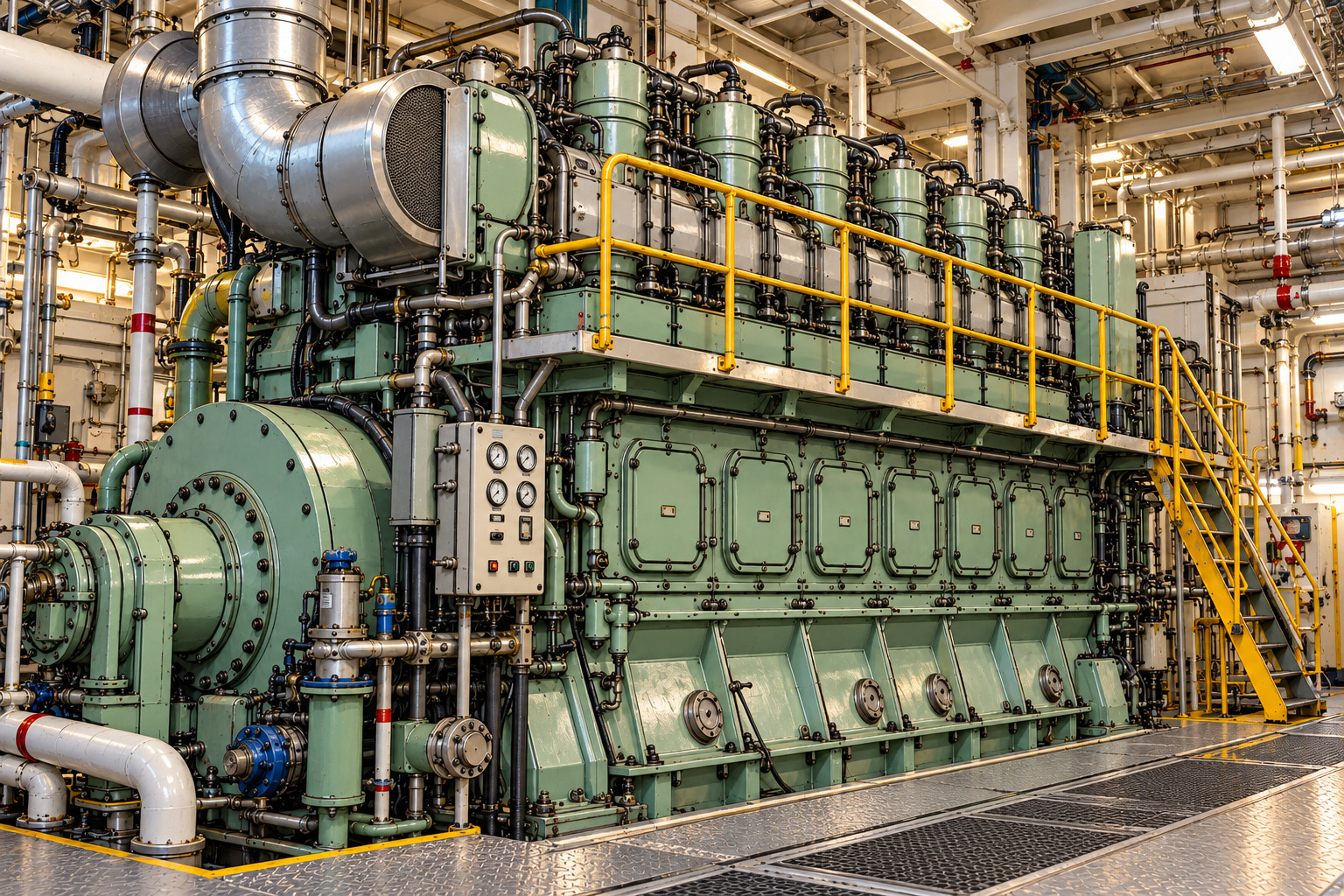
Interestingly, reverse operation is not always a malfunction. Some large marine diesel engines have historically been designed to operate in either direction. On certain direct-drive vessels, reversing the engine's rotation allows the propeller to turn backward, moving the vessel astern without a conventional reversing gearbox. These engines incorporate specialized systems to accommodate the change in rotation, including appropriate starting and fuel injection arrangements. Depending on the design, valve timing and other engine functions may also be adapted for reverse operation. This demonstrates an important distinction: a diesel engine can be engineered to run backward safely, but that does not mean an ordinary heavy equipment diesel engine can do the same. |
 |
What Should You Do if a Diesel Engine Runs Backward?
If an operator suspects reverse rotation, the priority is to stop the engine safely and prevent additional damage.
Once the engine is shut down and the equipment is secured, a qualified mechanic should investigate the cause before the machine is returned to service.
An inspection may include checking engine oil pressure and lubrication components, verifying injection timing, examining the starting system, and evaluating possible drivetrain-related causes.
If the engine ran backward for more than a moment, further inspection may be necessary to determine whether internal components were damaged.
Simply restarting the engine without identifying the cause could allow a serious mechanical problem to go unnoticed.
Diesel Engines Can Do Some Unexpected Things
Diesel engines are remarkably durable machines, capable of operating for thousands of hours under extreme loads and difficult conditions.
But their operation depends on a precise relationship between mechanical movement, compression, combustion, and supporting systems.
When that relationship is disrupted, something as unusual as reverse rotation can occur.
For operators of older tractors, construction machinery, and other mechanically controlled diesel equipment, recognizing the possibility of reverse running can help prevent a strange engine behaviour from becoming an expensive repair.
And perhaps the most surprising lesson is that an engine doesn't necessarily have to stop firing just because its crankshaft starts turning the wrong way.
Sometimes, the machine keeps running. Just not the way its designers intended.
Explore More Heavy Equipment Knowledge at HeavyEquipment.com From unusual diesel engine behaviour to the mechanical principles behind the world's hardest-working machines, Iron Insights explores the questions that make the heavy equipment industry fascinating.
Discover more articles in HeavyEquipment.com's Iron Insights, and join the conversation with operators, mechanics, and equipment enthusiasts who know these machines inside and out.
