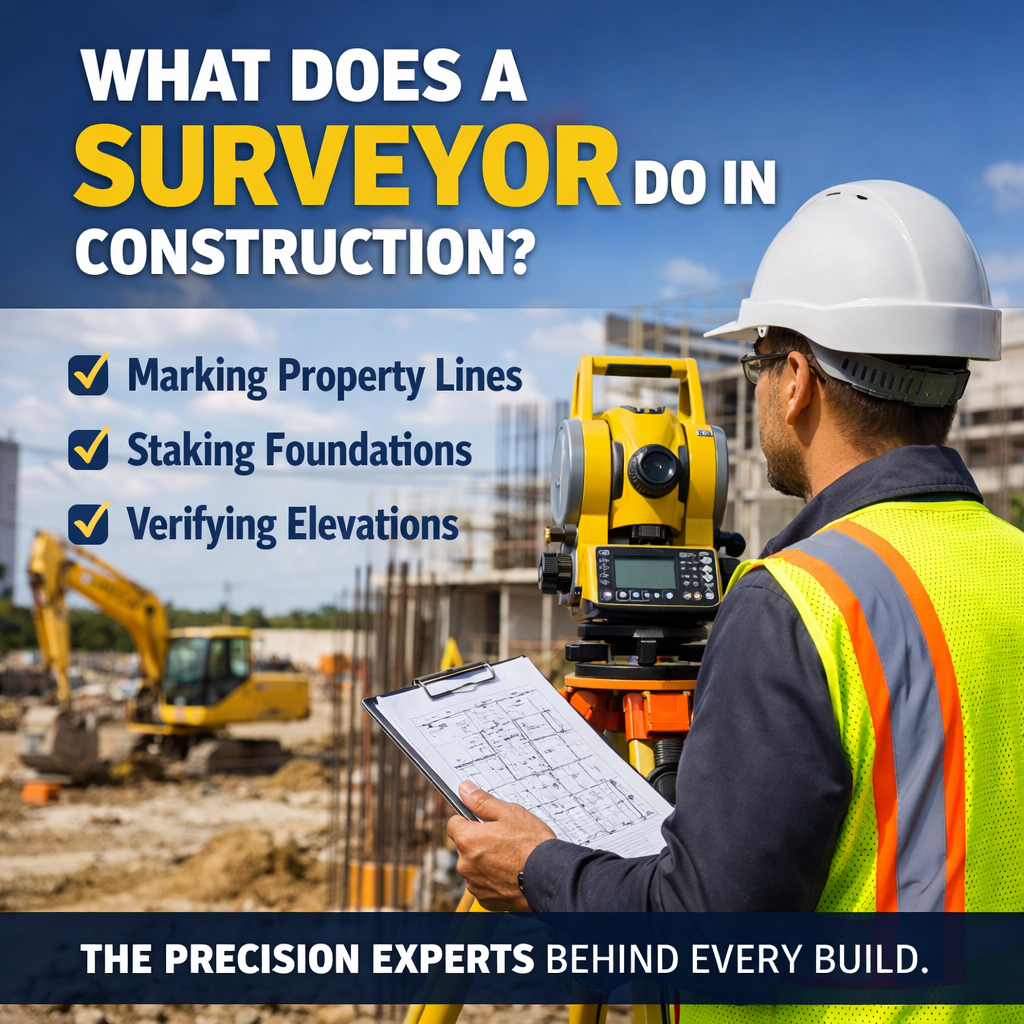
What Does a Surveyor Do in Construction?
Before a single shovel hits the ground, a surveyor has already been on site.
A construction surveyor is responsible for measuring, mapping, and marking land to ensure buildings, roads, and infrastructure are built in the correct location, at the correct elevation, and according to design plans. Without surveyors, construction projects would risk costly mistakes, boundary disputes, and structural misalignment.
Establishing Property Boundaries
One of the first jobs a surveyor performs is identifying legal property lines. This helps:
- Prevent encroachment onto neighboring land
- Confirm setbacks required by local regulations
- Protect owners and contractors from legal disputes
Surveyors use historical records, legal descriptions, and advanced measurement tools to determine exact boundaries.
Site Layout (Construction Staking)
Once engineers and architects complete the design, surveyors transfer those plans to the ground. This is called layout or staking.
They mark:
- Building corners
- Foundation lines
- Road alignments
- Utility locations
- Elevation benchmarks
This ensures that excavators, concrete crews, and structural teams build precisely where intended.
Topographic Surveys
Before design begins, surveyors perform topographic surveys to map the land’s natural features, including:
- Elevation changes
- Slopes and drainage paths
- Trees and existing structures
- Utilities and roadways
This data helps engineers design grading plans, drainage systems, and foundations that work with the landscape—not against it.
Monitoring and Verification
During construction, surveyors may return to:
- Verify foundation placement
- Check structural alignment
- Confirm grading elevations
- Ensure roads and utilities meet specifications
They also conduct as-built surveys, documenting the final constructed positions for records and future reference.
Tools Surveyors Use
Modern surveyors rely on advanced technology, including:
- GPS and GNSS systems
- Total stations
- Laser scanners
- Drones for aerial mapping
- Data modeling software
These tools allow for extremely precise measurements, often within millimeters.
Why Surveyors Are Critical in Construction
Even a small measurement error can cause major delays and expenses. A misplaced foundation or incorrect elevation can lead to structural problems, drainage issues, or regulatory violations.
Surveyors act as the accuracy checkpoint of the jobsite. They ensure:
- Legal compliance
- Structural integrity
- Proper alignment
- Cost control
In short, they make sure everything is built exactly where it’s supposed to be.
From subdivisions and commercial developments to highways and bridges, surveyors play a foundational role in every successful construction project.