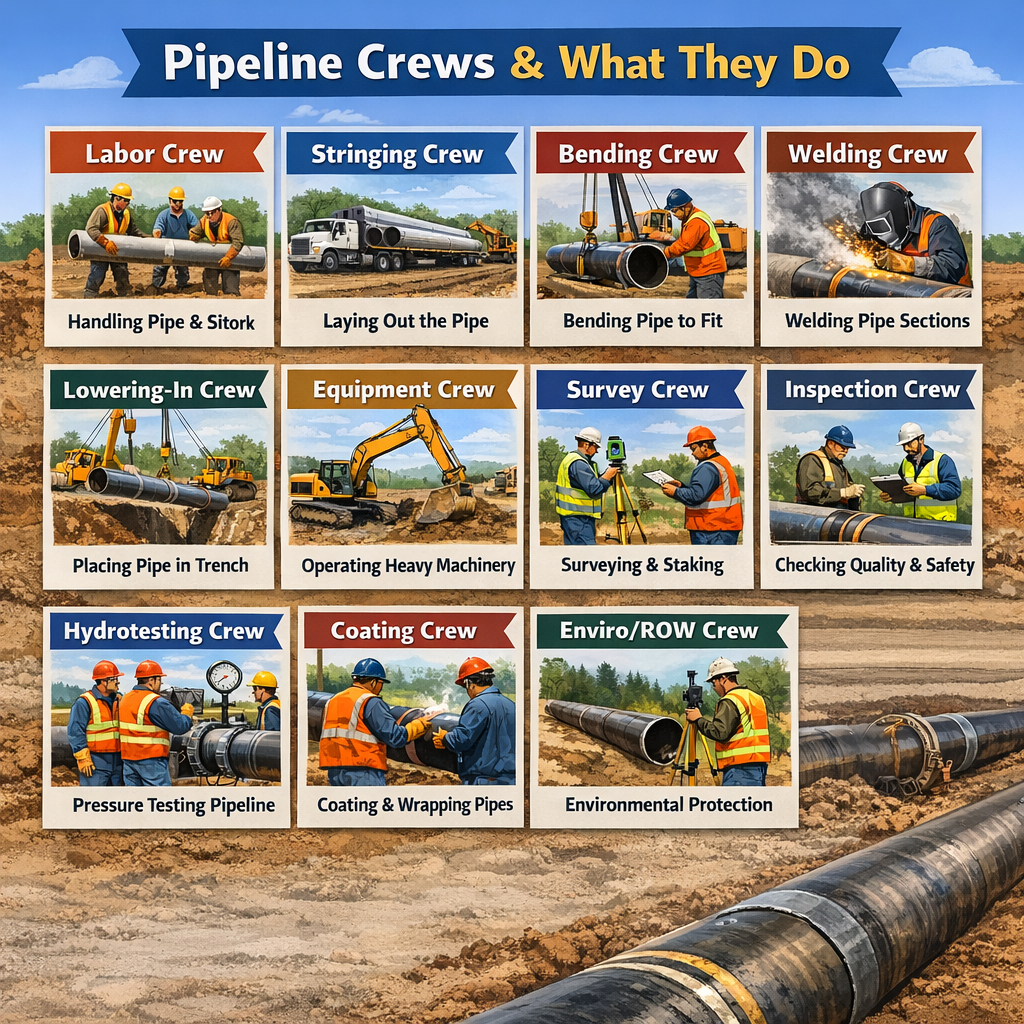
What Are the Different Crews on a Pipeline, and Which One Should You Try to Get On?
If you’re curious about pipeline construction, one of the first questions you’ll have is: “What crews are there, and which one should I aim for?” Pipeline projects involve multiple specialized crews, each with distinct roles, skills, and responsibilities. Here’s a breakdown of the main crews and what you can expect from each.
1. Labor / General Hand Crew
- Role: Labor crews are the backbone of pipeline construction. They handle pipe, move materials, dig trenches, assist other crews, and keep the worksite organized.
- Skills Needed: Physical stamina, willingness to learn, basic tool handling, and safety awareness. No prior experience is usually required.
- Why It Matters: This is the typical entry point for most workers. It gives you exposure to the entire construction process and opportunities to move into more specialized roles.
2. Stringing Crew
- Role: The stringing crew lays out pipe along the right-of-way, preparing it for welding and bending. They handle heavy pipe sections, organize them, and make sure everything is staged correctly for the crews down the line.
- Skills Needed: Attention to detail, teamwork, and some physical strength. Understanding basic pipeline plans helps.
- Why It Matters: Proper stringing makes welding and lowering-in more efficient. This crew teaches coordination and pipeline site logistics.
3. Bending Crew
- Role: Bending crews shape pipe sections to match the terrain or engineering specifications using mechanical or thermal bending equipment. This ensures the pipeline fits the contours of the land without stress or damage.
- Skills Needed: Mechanical aptitude, safety awareness, and precision. Experience with tools and machinery helps.
- Why It Matters: Bends must be accurate to avoid problems with welding and structural integrity. Working in bending crews gives you specialized, in-demand skills.
4. Welding / Pipe Fitting Crew
- Role: Welders join pipe sections together using techniques like butt welding, while pipe fitters prepare the joints and sections for welding.
- Skills Needed: Certified welding experience (e.g., API 1104), attention to detail, and precision. Pipe fitting experience is a plus.
- Why It Matters: This is one of the highest-paying and most critical roles. A skilled welding crew ensures the integrity of the entire pipeline.
5. Lowering-In Crew
- Role: After welding, this crew places pipe sections into trenches using sidebooms or cranes, carefully positioning them to prevent damage.
- Skills Needed: Physical strength, teamwork, and safety awareness. Experience with equipment or welding can be helpful.
- Why It Matters: Mistakes here can damage expensive pipe or slow the project. This crew works closely with welders and equipment operators.
6. Construction / Equipment Crew
- Role: Operates heavy machinery such as excavators, bulldozers, trenchers, and sidebooms to dig trenches, grade surfaces, backfill trenches, and assist other crews.
- Skills Needed: Heavy equipment experience or certification, mechanical aptitude, and safety awareness.
- Why It Matters: Equipment crews are critical for keeping the project on schedule. Operators are highly valued and often well-compensated.
7. Survey Crew
- Role: Ensure pipelines are installed according to engineering plans, using GPS, lasers, and measurement tools to stake the right-of-way and monitor alignment.
- Skills Needed: Technical knowledge of survey equipment, attention to detail, and understanding of pipeline plans.
- Why It Matters: Accurate survey work prevents costly mistakes and ensures compliance with regulations.
8. Inspection / Quality Control Crew
- Role: Inspect welds, coatings, and installation quality to ensure the project meets specifications and safety regulations.
- Skills Needed: Technical knowledge, certifications (like NACE or weld inspection), and strong attention to detail.
- Why It Matters: QC crews are essential for safety and regulatory compliance. They often have less physically demanding work and higher long-term career potential.
9. Hydrotesting / Commissioning Crew
- Role: Test the completed pipeline for leaks and structural integrity using pressurized water or other methods before the pipeline goes into service.
- Skills Needed: Mechanical aptitude, technical experience, and rigorous safety training.
- Why It Matters: Ensures the pipeline is fully operational and safe. Hydrotesting is a specialized, safety-critical role.
10. Coating / Wrap Crew
- Role: Apply protective coatings or wraps to pipe to prevent corrosion and extend its lifespan.
- Skills Needed: Attention to detail, safety awareness, and sometimes equipment operation experience.
- Why It Matters: A pipeline’s long-term durability depends on proper coating and protection.
11. Environmental / Right-of-Way Crew
- Role: Monitor environmental compliance, erosion control, and site restoration. Maintain safety and regulatory compliance around sensitive areas.
- Skills Needed: Environmental awareness, knowledge of regulations, and attention to detail.
- Why It Matters: Prevents fines or project delays and ensures responsible construction practices.
Which Crew Should You Try to Get On?
It depends on your goals:
- Entry-Level / Learning the Site: Labor or stringing crews. Great for getting hands-on experience.
- Technical / High-Paying Specialization: Welding, bending, or equipment operation. Requires skills or certifications but pays well.
- Less Physical / Long-Term Career: Survey, inspection, hydrotesting, or environmental crews. Focus on precision, compliance, and technical skills.
Many workers start on labor or stringing crews to learn the ropes, then specialize as they gain experience and certifications. By understanding each crew’s role, you can target the one that fits your skills, interests, and long-term goals.