What Are the Best Tips When Selling Your Heavy Equipment?
Selling heavy equipment involves more than simply posting a few pictures and waiting for a buyer.
Whether you're selling an excavator, bulldozer, wheel loader, skid steer, tractor, or another piece of machinery, the way you prepare, price, advertise, and present your equipment can make a significant difference in how quickly it sells and how much money you receive.
Heavy equipment represents a substantial investment, and buyers want to know they're making a sound purchasing decision. They often compare multiple machines, examine maintenance records, evaluate operating hours, and consider transportation costs before making an offer.
The good news is that a few practical steps can help your equipment stand out from competing listings, attract serious buyers, and improve your chances of getting a fair price.
Here are some of the best tips for selling your heavy equipment.
Know What Your Equipment Is Worth Before Listing It
One of the biggest mistakes sellers make is setting an asking price without researching the current market.
Price your equipment too high, and potential buyers may overlook your listing entirely. Price it too low, and you could leave thousands of dollars on the table.
Before deciding on an asking price, research comparable machines currently advertised for sale. Look for equipment with similar:
• Manufacturer, model, and year
• Operating hours
• Overall mechanical and cosmetic condition
• Attachments and optional features
• Maintenance history
• Geographic location
Remember that advertised prices aren't necessarily selling prices. A machine listed for $85,000 may eventually sell for considerably less.
Auction results can provide additional insight into what buyers have recently paid, although auction prices may differ from private-sale or dealership prices.
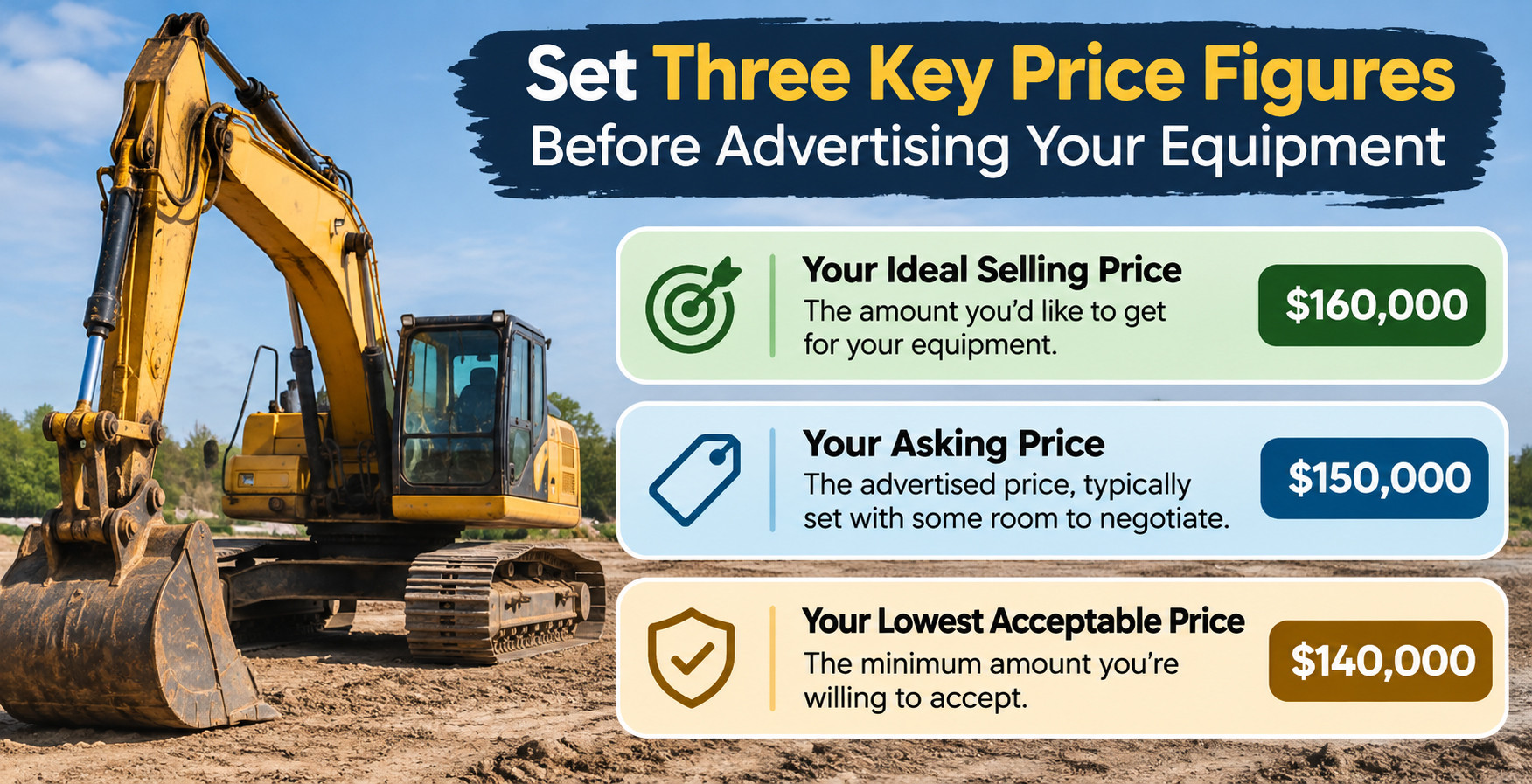
Selling Tip: Establish three figures before advertising your equipment: your ideal selling price, your asking price, and the lowest amount you're willing to accept. This gives you room to negotiate without making decisions under pressure.
Clean Your Equipment Before Taking Pictures
First impressions matter, even when you're selling a machine designed to work in dirt, mud, and harsh conditions.
A dirty machine isn't necessarily a poorly maintained machine, but excessive dirt, grease, and debris can make it difficult for buyers to evaluate its condition.
Before photographing your equipment, consider:
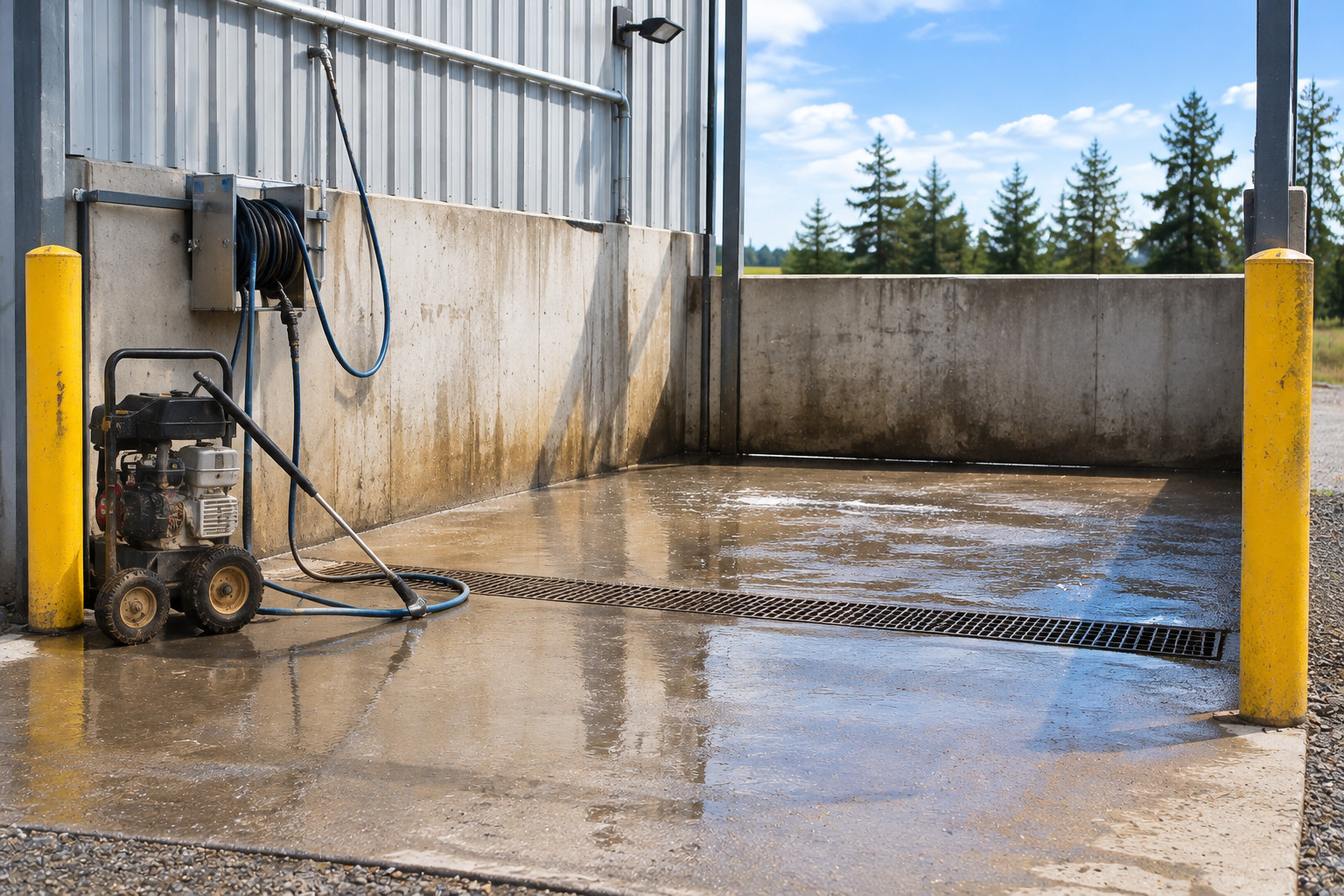
• Pressure washing the exterior where appropriate
• Removing accumulated dirt from the undercarriage
• Cleaning the cab, windows, mirrors, and controls
• Removing garbage and personal belongings
• Cleaning accessible engine compartments
• Removing excessive grease buildup
Be careful when pressure washing around electrical components, seals, bearings, and other sensitive areas. Follow the manufacturer's cleaning recommendations.
You don't need to make a ten-year-old excavator look brand new. In fact, attempting to conceal wear with fresh paint or cosmetic repairs can sometimes make buyers suspicious.
The goal is to present a clean, well-cared-for machine that buyers can inspect with confidence.
Take High-Quality Pictures That Show the Entire Machine
When selling heavy equipment online, photographs are often the first thing buyers notice.
Poor-quality pictures can discourage potential buyers before they even read your description.
Photograph your equipment outdoors in good natural lighting, preferably against a relatively uncluttered background.
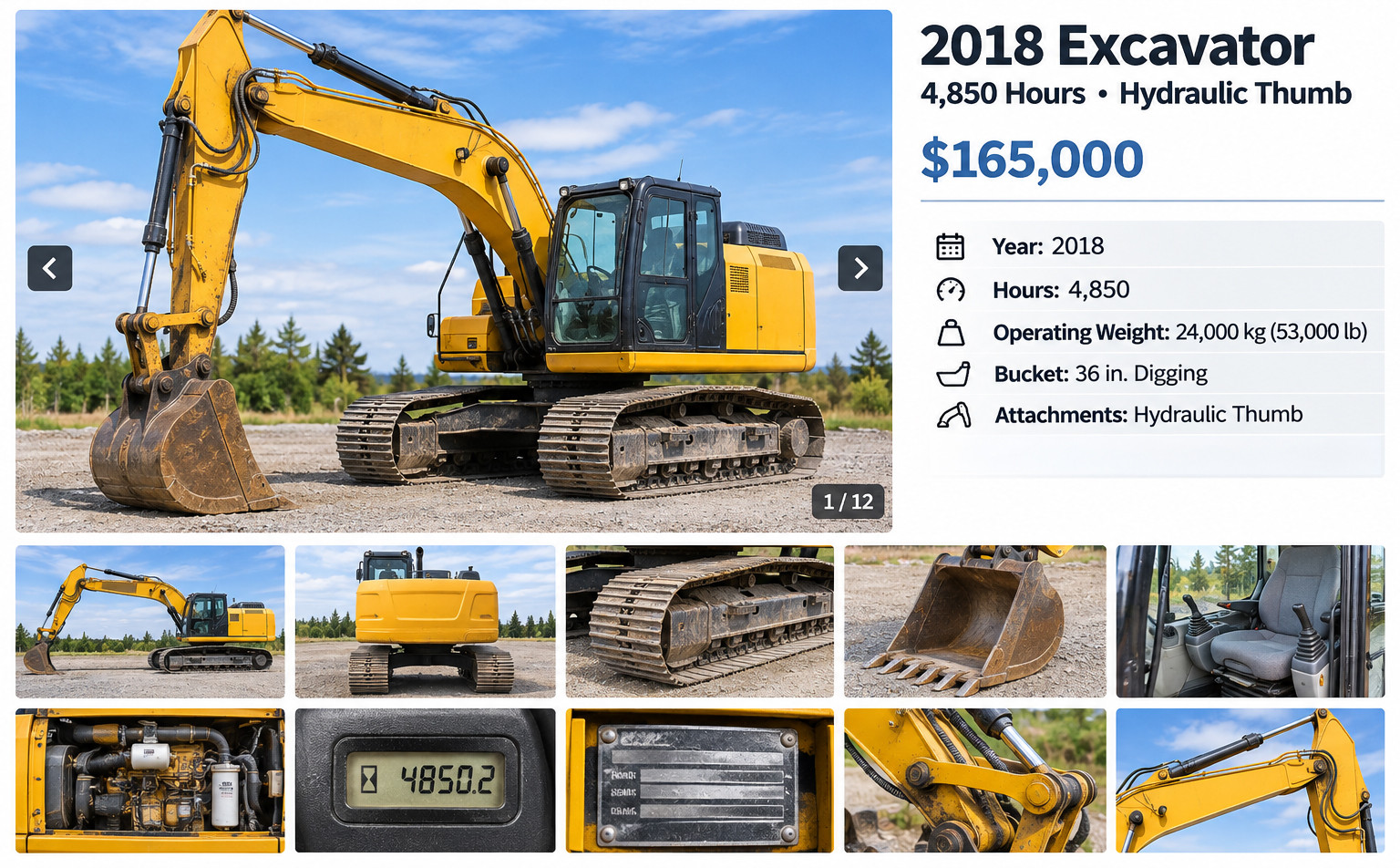
Make sure your listing includes photographs of the entire machine from several angles, along with important components.
For example, when selling an excavator, photograph the boom, stick, bucket, tracks, sprockets, rollers, hydraulic cylinders, cab, and engine compartment.
When selling a wheel loader, include pictures of the bucket, cutting edge, tires, articulation joint, hydraulic components, and operator's station.
Don't forget to photograph the hour meter and the manufacturer's identification plate, while taking appropriate precautions with identifying information.
Should You Show Damage in Your Pictures?
Absolutely.
Photographing damaged panels, worn tires, leaking cylinders, or other visible problems demonstrates transparency.
A buyer who discovers undisclosed damage during an inspection may question everything else you've told them about the machine.
Selling Tip: Take more photographs than you think you'll need. Detailed images can reduce unnecessary questions and help buyers determine whether the machine is worth inspecting in person.
Write a Detailed and Accurate Equipment Description
A good equipment listing should answer as many questions as possible before a buyer contacts you.
Simply writing "2018 excavator, good condition, call for details" doesn't give potential buyers much information.
Instead, provide a thorough description that includes the machine's specifications, condition, history, and included accessories.
EXAMPLE EQUIPMENT LISTING — FICTIONAL DETAILS
2018 Excavator – 4,850 Hours – Hydraulic Thumb
2018 model-year excavator with approximately 4,850 operating hours. Equipped with a hydraulic thumb, 36-inch digging bucket, enclosed cab, air conditioning, and auxiliary hydraulics.
Routine maintenance performed according to the manufacturer's recommended intervals. Service records available. Undercarriage shows normal wear for operating hours. One minor hydraulic seep has been identified and is disclosed in the photographs.
Machine is available for inspection and operational demonstration by appointment. Transportation is the buyer's responsibility.
Notice how this description provides useful information without exaggerating the machine's condition.
Avoid vague claims such as "perfect condition," "like new," or "needs nothing" unless you can genuinely support them.
Also, make sure you correctly identify the model and specifications. Heavy equipment buyers often search for specific configurations, and incorrect information can make your listing difficult to find.
Gather Your Maintenance and Service Records
Maintenance records can be one of your strongest selling tools.
A buyer evaluating two otherwise similar machines may be more comfortable purchasing the one with documented service history.
Before listing your equipment, gather any available records relating to:
• Engine oil and filter changes
• Hydraulic system maintenance
• Transmission and drivetrain servicing
• Undercarriage repairs or replacement
• Major component rebuilds
• Fluid analysis results
• Warranty work and outstanding warranty coverage
• Previous inspections and repairs
If you've recently replaced an expensive component, such as a hydraulic pump, transmission, or engine, provide documentation showing when the work was completed.
However, avoid assuming that the full cost of recent repairs can be added to the machine's resale value.
Repairs may make equipment more attractive, but they don't always increase its market value dollar for dollar.
Selling Tip: If complete maintenance records aren't available, be upfront about what you know and what you cannot verify. Honest information is more valuable than unsupported assurances.
Fix Minor Problems Before Posting
Small mechanical problems can have an outsized effect on how buyers perceive your equipment.
A burned-out work light, loose cab handle, damaged seat, or minor fluid leak may not prevent a machine from operating, but several small issues can create the impression that maintenance has been neglected.
Before listing, inspect the equipment for relatively inexpensive repairs that could improve its presentation and functionality.
Consider addressing faulty lights, damaged mirrors, worn wiper blades, loose panels, and other minor issues.
However, major repairs require more careful consideration.
For example, replacing an excavator's entire undercarriage shortly before selling it may not make financial sense if the additional selling price won't recover the expense.
In some situations, selling equipment in its current condition with a clear explanation of necessary repairs is the better financial decision.
The important thing is to evaluate repair costs against the likely improvement in selling price.
Be Honest About Operating Hours and Machine Condition
Operating hours are among the first details many heavy equipment buyers examine.
However, hours alone don't tell the entire story.
A machine with 8,000 hours that has been properly maintained may be in better condition than a machine with 4,000 hours that has experienced poor maintenance or unusually demanding operating conditions.
Be accurate when reporting hours, and disclose whether the hour meter has been replaced, repaired, or is believed to be inaccurate.
If a major component has been rebuilt or replaced, distinguish between the hours on the machine and the hours on that particular component.
For example, an excavator with 12,000 total machine hours and an engine rebuilt 2,000 hours ago should not be advertised simply as having 2,000 hours.
Buyers appreciate accurate information, particularly when they're considering machinery that may cost tens or hundreds of thousands of dollars.
Advertise Where Heavy Equipment Buyers Are Looking
Even a well-priced machine can sit unsold if the right buyers never see it.
General classified websites may generate some interest, but specialized heavy equipment marketplaces can help you reach people who are specifically looking for construction, agricultural, mining, forestry, trucking, and other industrial machinery.
Consider advertising on platforms dedicated to heavy equipment, where buyers can search by equipment category, manufacturer, model, and other relevant details.
For example, HeavyEquipment.com offers a marketplace where, for a limited time, sellers can create free equipment listings and interested buyers can contact them directly.
Unlike platforms that charge a commission on completed transactions, HeavyEquipment.com does not take a commission from equipment sales.
Why Listing in More Than One Place Can Help
Different buyers use different websites and search methods.
Advertising your equipment across multiple appropriate platforms can increase its exposure, particularly when selling specialized machinery with a smaller potential buyer pool.
Just make sure your pricing, specifications, and availability remain consistent across your listings.
Choose the Right Time to Sell
Demand for certain types of heavy equipment can fluctuate throughout the year.
For example, agricultural equipment may attract increased attention ahead of planting or harvest seasons, while construction equipment demand can be influenced by project schedules, regional weather, and industry activity.
Snow removal equipment may become particularly attractive as winter approaches.
However, seasonal demand isn't the only factor to consider.
Interest rates, financing availability, construction activity, commodity prices, and the supply of comparable used machines can also influence the market.
If you aren't under pressure to sell immediately, monitoring market conditions may help you choose a more favourable listing period.
On the other hand, holding equipment for several additional months can create storage, insurance, financing, depreciation, and maintenance expenses.
Sometimes accepting a reasonable offer today is financially better than waiting for a slightly higher offer later.
Be Prepared to Negotiate Without Undervaluing Your Equipment
Negotiation is a normal part of selling used heavy equipment.
Buyers may point out wear, anticipated repair costs, transportation expenses, or comparable listings when making an offer.
Before entering negotiations, understand your machine's strengths and weaknesses.
If you've priced it fairly based on current market conditions, you should be able to explain how you arrived at your asking price.
Avoid becoming defensive when a buyer makes a lower offer. Instead, ask questions and determine whether there's room for a mutually acceptable agreement.
It's also important to distinguish serious buyers from people who are simply testing how low you'll go.
A buyer who asks informed questions, requests documentation, and arranges an inspection may be worth negotiating with, even if their initial offer is below your asking price.
Protect Yourself During the Transaction
Selling heavy equipment can involve substantial sums of money, making transaction security especially important.
Before releasing the machine, confirm that payment has been received and irrevocably cleared through your financial institution.
Be cautious of buyers who offer unusual payment arrangements, send overpayments, request refunds of supposed excess funds, or insist that equipment be released before payment is verified.
Also, be careful about sharing sensitive personal or financial information.
A written bill of sale or purchase agreement should clearly identify the equipment and the terms of the transaction.
Depending on the circumstances, this may include the serial number, agreed purchase price, payment terms, known defects, included attachments, applicable taxes, transportation responsibilities, and any agreed warranties or disclaimers.
Make sure you have the legal right to sell the machine and that any outstanding financing or liens are properly addressed.
Requirements vary by jurisdiction, so sellers should confirm the documentation and legal obligations applicable to their transaction.
Selling Heavy Equipment Is About Building Buyer Confidence
Selling heavy equipment successfully comes down to three important factors: presentation, pricing, and trust.
A clean machine with quality photographs attracts attention. A competitive asking price encourages inquiries. Accurate descriptions, maintenance records, and honest communication help turn those inquiries into serious offers.
Whether you're selling a single skid steer or reducing an entire equipment fleet, taking the time to prepare your machinery and create a professional listing can improve your chances of a successful sale.
And remember, the best buyer isn't necessarily the first person who contacts you. It's the person who understands the equipment's value, agrees to reasonable terms, and completes a secure transaction.
