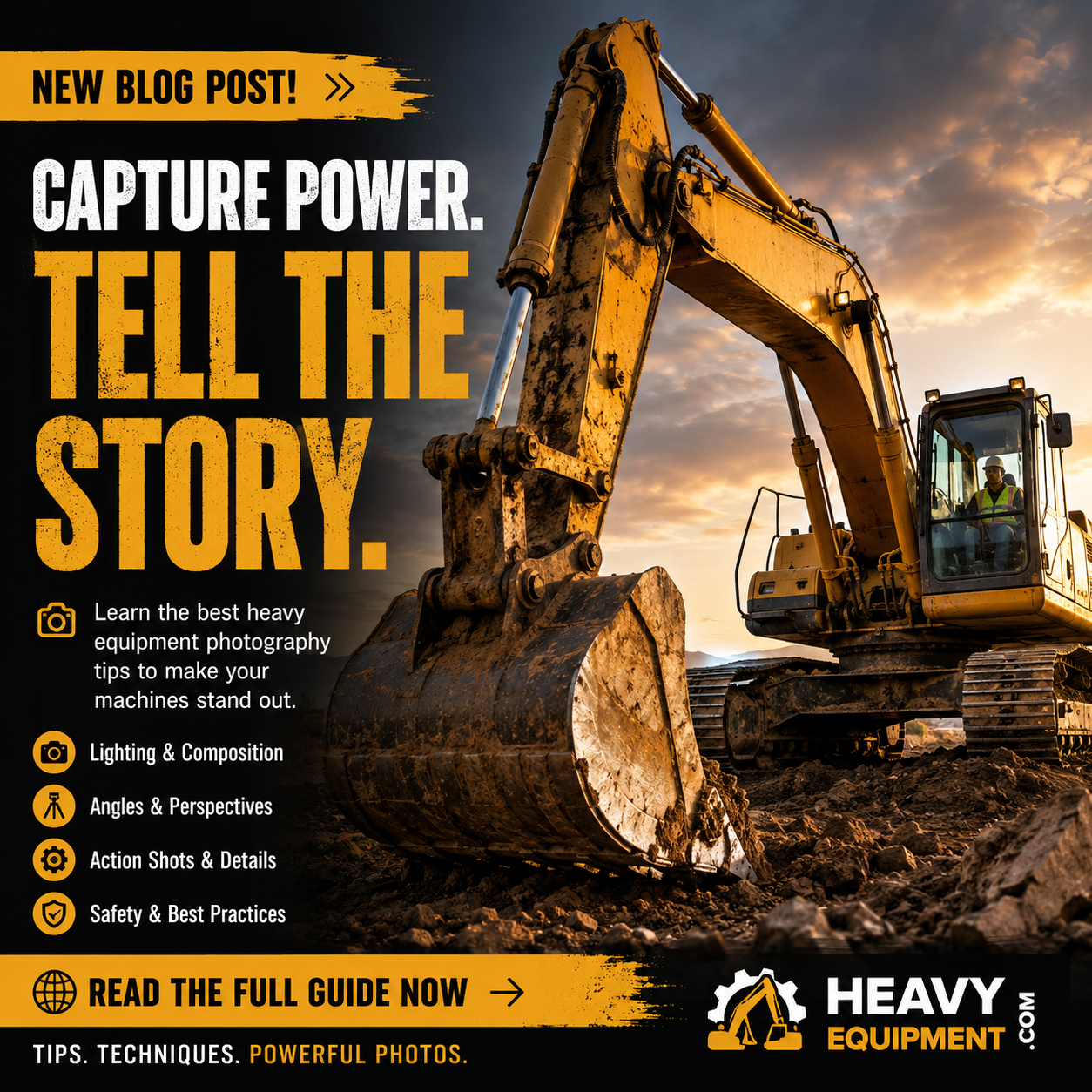
What Are the Best Heavy Equipment Photography Tips?
Heavy equipment is built to move mountains, shape skylines, and tackle jobs that most people never witness firsthand. Yet photographing these incredible machines can be surprisingly challenging. Their enormous size, reflective metal surfaces, dusty environments, and constantly changing worksites require a different approach than traditional photography.
Whether you're documenting equipment for resale, creating social media content, building a company portfolio, or simply capturing your favorite machines, a few professional techniques can dramatically improve your photos.
Here are some of the best heavy equipment photography tips to help your machines look as impressive in pictures as they do in person.
Shoot During the Golden Hours
Professional photographers often schedule outdoor shoots shortly after sunrise or just before sunset. Known as the "golden hour," this period provides soft, warm light that enhances the colors and contours of heavy equipment.
Midday sunlight can create harsh shadows beneath booms, buckets, and tracks while producing bright reflections on painted surfaces. Golden hour light reveals more detail and gives equipment a polished, dramatic appearance.
Get Low for Maximum Impact
One of the simplest ways to make heavy equipment appear even more powerful is to shoot from a lower angle.
By positioning your camera near ground level and aiming upward, machines appear larger and more imposing. This technique works especially well with:
- Excavators
- Wheel loaders
- Bulldozers
- Mining trucks
- Cranes
A low perspective emphasizes height while making the machine dominate the frame.
Include People for Scale
Heavy equipment is often difficult to appreciate without something familiar nearby.
Including an operator wearing proper safety gear or a worker standing beside the machine instantly communicates its true size. A person can make the difference between a photo that simply shows a machine and one that leaves viewers amazed.
Always ensure anyone included follows all jobsite safety procedures.
Keep the Background Simple
Busy backgrounds distract from the equipment itself.
Whenever possible, position yourself so the machine is photographed against:
- Open sky
- Dirt piles
- Fields
- Clean construction areas
- Mountains
- Industrial landscapes
Avoid parking lots filled with unrelated vehicles, utility poles growing out of the cab, or cluttered storage yards that compete for attention.
Show the Machine Working
Static photos have their place, but action shots tell a much stronger story.
Capture moments such as:
- Buckets scooping dirt
- Dozers pushing material
- Excavators swinging loads
- Cranes lifting steel
- Motor graders leveling roads
- Wheel loaders filling haul trucks
Dust, flying gravel, hydraulic movement, and spinning tracks all add excitement and help viewers appreciate what the equipment is designed to do.
Focus on Interesting Details
Sometimes the best photographs aren't of the entire machine.
Look for unique details like:
- Massive hydraulic cylinders
- Track assemblies
- Bucket teeth
- Engine compartments
- Operator controls
- Heavy-duty tires
- Quick couplers
- Warning decals
- Grease fittings
- Welds and reinforced steel
Close-up images reveal craftsmanship that many people never notice.
Experiment with Wide-Angle Lenses
Wide-angle lenses help capture the full scale of oversized equipment.
They're especially useful when photographing:
- Tower cranes
- Large excavators
- Articulated haul trucks
- Wheel loaders
- Complete construction sites
Be careful not to get too close, as extremely wide lenses can distort proportions if used improperly.
Use a Telephoto Lens for Safe Distance
Some jobsites restrict access or require photographers to remain well away from operating machinery.
A telephoto lens allows you to safely capture:
- Crane operations
- Mining equipment
- Demolition work
- Highway construction
- Large earthmoving projects
Long lenses also compress perspective, creating dramatic images with blurred backgrounds.
Watch Your Reflections
Freshly painted machines often reflect sunlight, nearby vehicles, or even the photographer.
Move around the equipment before taking the shot. Small changes in position can eliminate unwanted reflections and improve lighting considerably.
Cloudy days are excellent for reducing glare while producing even lighting across the entire machine.
Clean Equipment Makes Better Photos
If you're photographing equipment for sale or promotional purposes, spend a little time cleaning it first.
Remove:
- Heavy mud
- Excess grease
- Trash
- Loose chains
- Debris
- Snow buildup
You don't necessarily want the machine spotless—some dirt tells the story of a hard day's work—but removing distractions helps viewers focus on the equipment.
Pay Attention to Composition
Instead of centering every machine, experiment with basic composition techniques.
The Rule of Thirds is especially effective. Imagine dividing your frame into nine equal sections and placing the equipment along those lines rather than directly in the center.
Leading lines such as roads, tracks, pipelines, or rows of material can naturally guide viewers' eyes toward the machine.
Capture Different Perspectives
Don't settle for one angle.
Walk completely around the equipment and photograph:
- Front
- Rear
- Side profiles
- Three-quarter views
- Cab interior
- Engine compartment
- Attachments
- Tracks or tires
- Elevated viewpoints (when safe and permitted)
You may discover the best photo from an unexpected position.
Use Drones Responsibly
Drone photography has transformed heavy equipment imagery.
Aerial views reveal:
- Entire construction sites
- Earthmoving progress
- Mining operations
- Road projects
- Fleet layouts
Drone photos showcase the scale of projects that simply can't be appreciated from ground level.
Before flying, make sure you understand local drone regulations, obtain any required permissions, and avoid operating over active work areas where prohibited.
Photograph Different Weather Conditions
Not every great photo requires blue skies.
Heavy equipment often looks dramatic in:
- Early morning fog
- Fresh snowfall
- Light rain
- Dust clouds
- Stormy skies
- Autumn colors
Different weather conditions create mood and atmosphere while highlighting the rugged nature of construction equipment.
Tell a Story
The strongest heavy equipment photographs do more than show a machine—they tell a story.
Instead of capturing only a parked excavator, photograph the entire sequence:
- The operator climbing into the cab.
- The machine warming up.
- Digging the first bucket.
- Loading trucks.
- Finishing the day's work.
- Sunset over the completed project.
These images provide context and make viewers feel connected to the work being performed.
Edit Carefully
Even excellent photos benefit from light editing.
Basic adjustments can improve:
- Exposure
- Contrast
- White balance
- Sharpness
- Cropping
- Color balance
Avoid over-editing. Heavy equipment should still look natural and accurately represent its appearance.
Always Put Safety First
No photograph is worth risking injury.
Never:
- Enter active work zones without permission.
- Stand beneath suspended loads.
- Cross barricades.
- Distract equipment operators.
- Position yourself where operators cannot see you.
Wear all required personal protective equipment (PPE), follow site rules, and coordinate with supervisors before photographing active jobsites.
Don’t Just Shoot, Showcase
Heavy equipment combines engineering, power, and precision in ways few other machines can match. With thoughtful lighting, strong composition, creative angles, and an emphasis on safety, anyone can capture photos that showcase these remarkable machines at their best.
Whether you're documenting a construction project, marketing equipment for sale, building a social media following, or simply sharing your passion for heavy machinery, applying these photography techniques will help your images stand out. The next time you're around a dozer, excavator, loader, or crane, take a little extra time to explore different perspectives—you might capture a shot that's as unforgettable as the machine itself.