What Are High-Reach Demolition Excavators and How Do They Stay Stable?
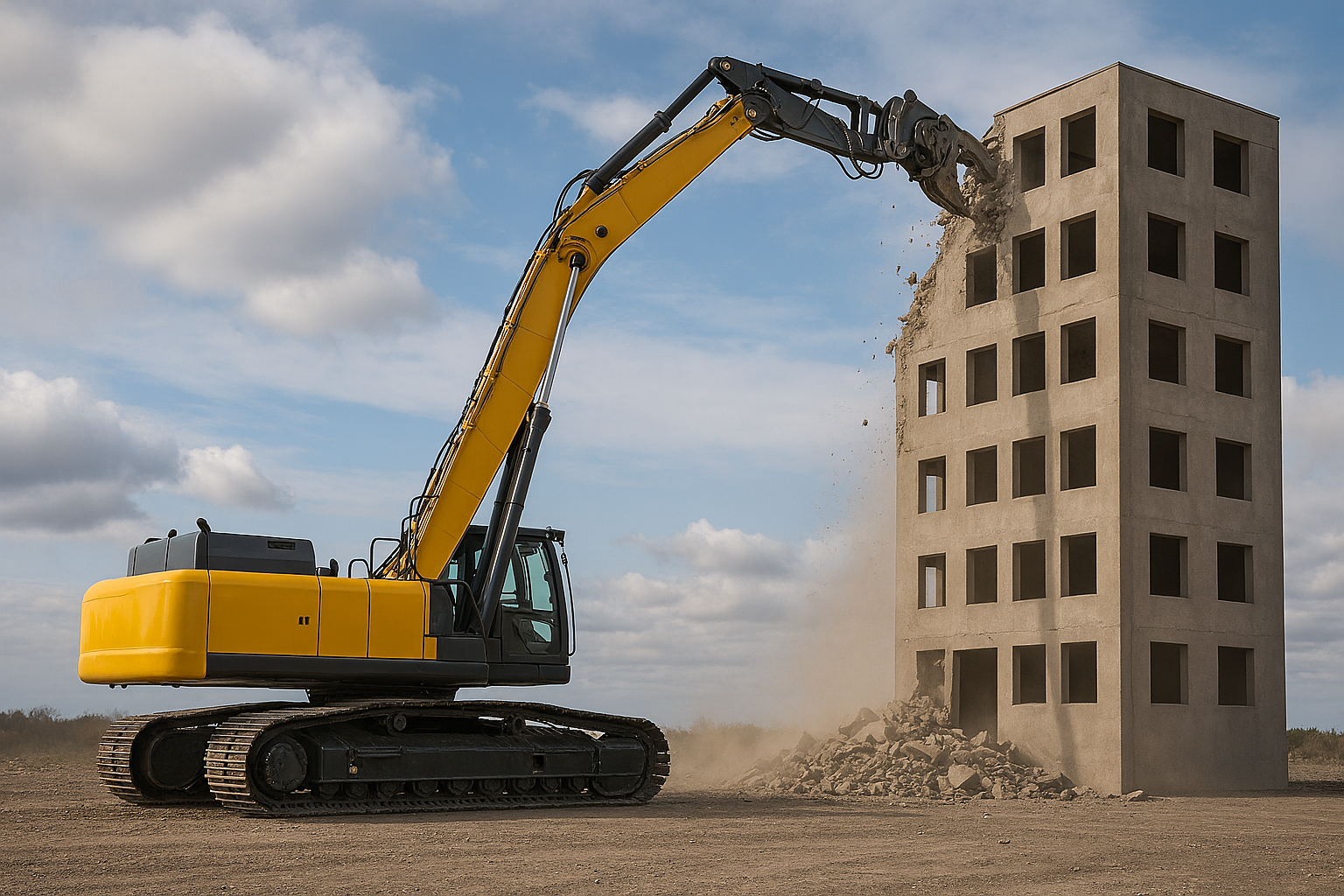
Demolishing multi-story structures is a very different challenge than standard excavation. This is where high-reach demolition excavators come in—machines purpose-built to safely tear down tall buildings while keeping operators firmly in control. At first glance, their extreme height looks like a stability nightmare, but these machines are engineered with several smart design features that keep them planted and productive.
What Makes an Excavator “High-Reach”?
A high-reach demolition excavator is designed with an extended, multi-section boom capable of reaching heights far beyond a standard excavator—often 60 to 100 feet or more, depending on the model.
Key differences from conventional excavators include:
- Multi-piece front assemblies (boom, intermediate boom, and stick)
- Specialized demolition attachments such as crushers and shears
- Reinforced upper structures and undercarriages
- Modular boom systems that can be reconfigured for different heights
These machines are commonly used for concrete, steel, and structural demolition where precision and reach are critical.
The Stability Challenge
Any time you raise mass higher above the ground, you increase leverage and reduce stability. With high-reach excavators, the weight of the boom, attachment, and debris can create massive overturning forces—especially when working at full extension.
To counteract this, manufacturers focus on lowering the center of gravity, increasing the machine’s footprint, and actively managing load forces.
Extra Counterweight—And a Lot of It
One of the most obvious stability features is additional counterweight. High-reach excavators carry significantly more rear ballast than standard machines of the same base size.
Some models use:
- Fixed heavy counterweights
- Hydraulic or removable counterweight systems
- Extended tail designs to increase leverage behind the swing center
This added mass offsets the extreme forward reach and keeps the machine balanced during demolition cycles.
Wider and Heavier Undercarriages
High-reach demolition excavators often sit on extended or hydraulically adjustable undercarriages. These wider stances improve lateral stability and reduce ground pressure fluctuations when swinging heavy loads.
Additional undercarriage features may include:
- Longer track frames
- Heavier track chains and rollers
- Optional bolt-on track extensions
The goal is simple: create a broader, more stable base that resists tipping forces from every direction.
Reinforced Structures and Demolition-Specific Design
The upper structure of a high-reach excavator is heavily reinforced to handle continuous shock loads from breaking concrete and cutting steel. Swing bearings, frames, and boom foot areas are built to withstand forces far beyond standard digging applications.
Operator safety is also a priority, with features such as:
- Falling Object Guards (FOGS)
- Polycarbonate front and roof windows
- Guarded cylinders and hoses
Stability isn’t just about keeping the machine upright—it’s also about maintaining control during unpredictable demolition conditions.
Hydraulic Control and Load Monitoring
Modern high-reach excavators rely on advanced hydraulic systems to manage stability dynamically. Load-sensing hydraulics and onboard monitoring systems help prevent unsafe movements by limiting speed or function when the machine approaches stability thresholds.
Some systems provide:
- Real-time boom angle and reach monitoring
- Visual or audible warnings when nearing limits
- Automatic flow adjustments for smoother operation
These technologies help operators stay productive without compromising safety.
Modular Booms for Smarter Weight Management
Many high-reach excavators feature modular front assemblies, allowing operators to remove sections of the boom when maximum height isn’t required. This reduces weight, improves stability, and allows the same machine to be used for lower-reach demolition or even standard excavation.
This versatility is a major reason high-reach excavators are such valuable assets on demolition sites.
The Big Picture
High-reach demolition excavators may look intimidating, but their stability is the result of careful engineering—not brute force alone. Extra counterweight, wider undercarriages, reinforced structures, advanced hydraulics, and modular designs all work together to keep these towering machines safe and effective.
Understanding how machines stay balanced under extreme conditions gives you a deeper appreciation for the engineering behind the iron—and a better perspective when it’s time to operate, buy, or spec the right equipment for the job.