What Affects Heavy Equipment Resale Value?
The Dirt Desk - Q&A
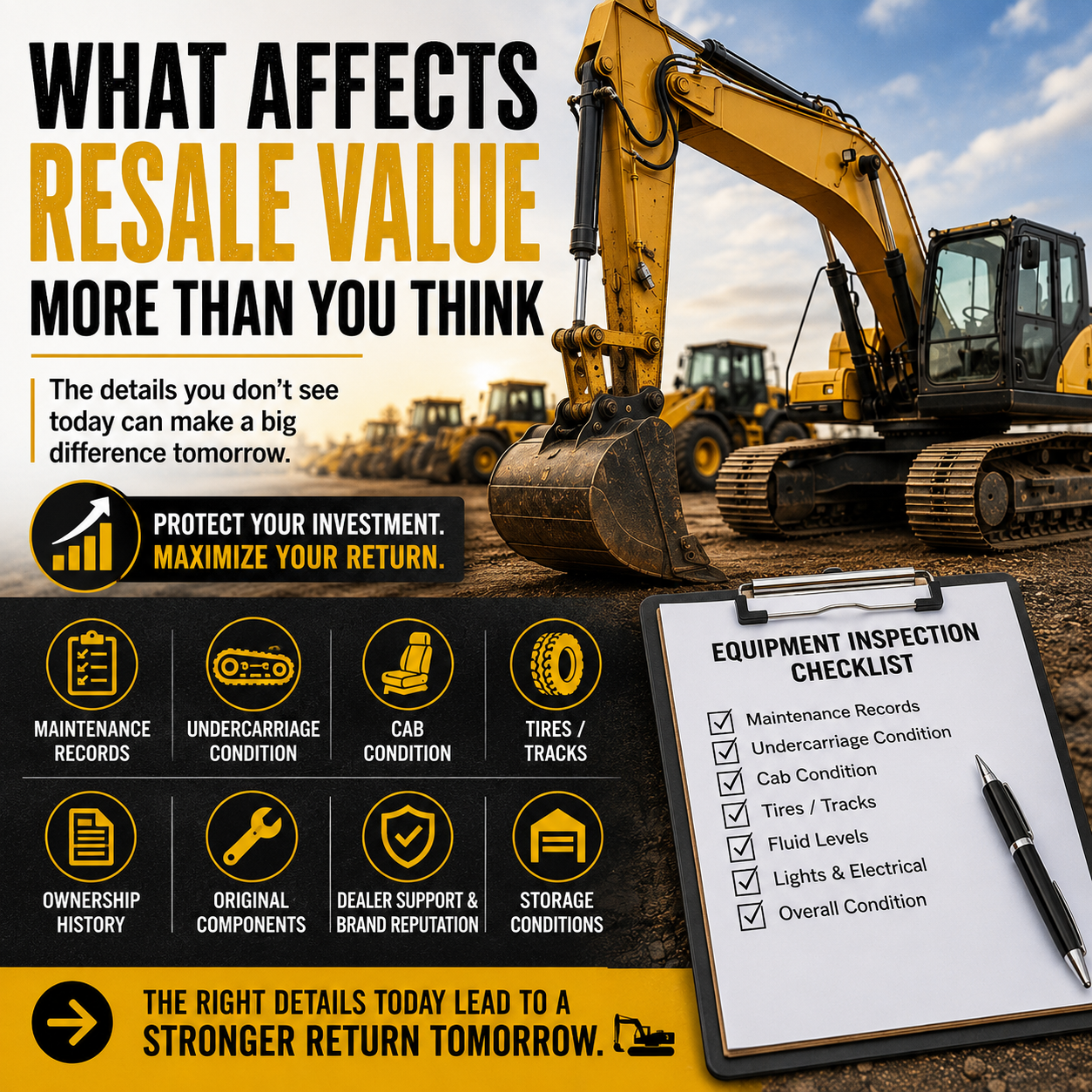
What Affects Resale Value More Than You Think
When it comes time to sell a piece of heavy equipment, most owners focus on the obvious factors: age, hours, make, model, and overall condition. While these certainly matter, there are several less obvious factors that can significantly impact resale value—sometimes more than people realize.
Understanding what buyers look for can help you maximize the return on your investment and avoid costly mistakes throughout the machine's life.
Maintenance Records Matter More Than Fresh Paint
A machine with a complete maintenance history is often worth more than one that simply looks good.
Buyers want evidence that routine services were performed on schedule and that repairs were addressed properly. Detailed records reduce uncertainty and give potential buyers confidence that the machine was cared for responsibly.
A freshly painted machine may catch attention, but a well-organized maintenance file often closes the deal.
Undercarriage Condition Can Make or Break the Sale
For crawlers, dozers, and excavators, the undercarriage is one of the most expensive wear components to replace.
A machine with 50% undercarriage life remaining may be significantly more attractive than a similar machine with worn tracks, rollers, and sprockets. Buyers know these repairs can cost tens of thousands of dollars and will adjust their offers accordingly.
Regular inspections and timely maintenance can preserve both performance and resale value.
Original Components Are Often Preferred
Many owners assume aftermarket parts always reduce operating costs. While quality aftermarket components certainly have their place, some buyers prefer machines that retain original manufacturer components whenever possible.
OEM parts can indicate that repairs were performed according to manufacturer specifications, which may increase buyer confidence—particularly for newer or higher-value machines.
Clean Cab, Higher Value
The operator's cab tells a story.
Worn seats, broken switches, cracked glass, damaged controls, and excessive dirt can create the impression that the entire machine was neglected. Conversely, a clean, well-maintained cab suggests the equipment received proper care.
Because buyers spend time inside the cab during inspections, its condition often influences first impressions more than many owners realize.
Technology and Documentation
Modern machines increasingly rely on electronic systems, telematics, grade control, and software updates.
Having passwords, software documentation, calibration records, and telematics subscriptions properly transferred can make ownership easier for the next buyer. Missing information can create headaches and may even discourage potential purchasers.
As technology becomes more integrated into heavy equipment, documentation becomes increasingly valuable.
Tire Condition and Matching Sets
For wheel loaders, graders, articulated trucks, and other rubber-tired equipment, tires represent a major expense.
Buyers notice tread depth, sidewall damage, and whether tires are matched. Uneven wear patterns may raise concerns about alignment issues, suspension problems, or improper maintenance practices.
Replacing severely worn tires before selling isn't always necessary, but understanding their impact on perceived value is important.
Brand Reputation and Dealer Support
Two machines with similar specifications may command different prices simply because of dealer support in the local market.
Buyers often consider:
- Parts availability
- Dealer proximity
- Service support
- Technician availability
- Brand reputation
A machine backed by strong local support may sell faster and retain value better than one with limited service options nearby.
Ownership History Counts
Machines with a known history are generally more attractive than those that have changed hands multiple times.
Single-owner equipment often suggests consistent maintenance practices and easier verification of service records. Buyers tend to view a clear ownership history as lower risk.
Proper Storage Pays Off
Exposure to weather affects more than appearance.
Ultraviolet light, moisture, corrosion, electrical issues, and deteriorating seals can all result from long-term outdoor storage. Equipment stored indoors or protected from the elements often shows less wear and commands stronger resale prices.
The Small Details Add Up
Missing mirrors, broken lights, leaking hydraulic fittings, worn decals, or non-functioning gauges may seem minor individually. Together, however, they can signal deferred maintenance and reduce buyer confidence.
Many buyers assume that if visible issues weren't addressed, hidden issues may exist as well.
Before listing equipment for sale, addressing these smaller deficiencies can often provide a return that exceeds the cost of repairs.
Final Thoughts
Resale value isn't determined solely by age and operating hours. Maintenance records, component condition, ownership history, cab cleanliness, dealer support, and even small cosmetic details can significantly influence what buyers are willing to pay.
The best time to protect resale value isn't when you're preparing to sell—it's throughout the entire life of the machine. Consistent care, thorough documentation, and attention to detail can pay dividends years down the road when it's time to move on to the next piece of equipment.