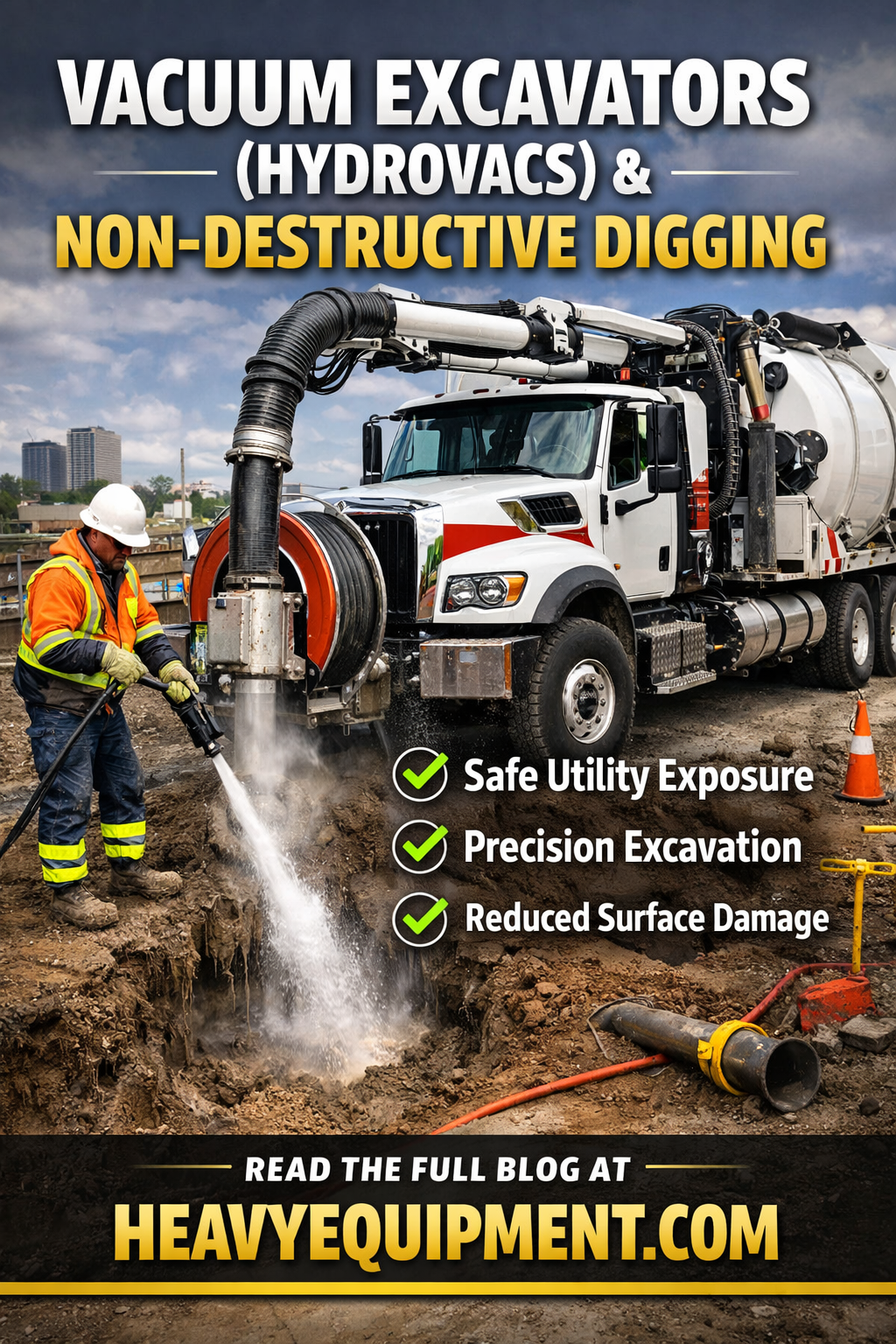
Vacuum Excavators (Hydrovacs) and Non-Destructive Digging
Vacuum excavators—often called hydrovacs—have become one of the most important tools in modern construction, utility work, and excavation projects where precision and safety matter more than brute force. As underground infrastructure becomes more complex and densely packed, non-destructive digging (NDD) has shifted from a niche method to an industry standard in many applications.
This blog breaks down what hydrovacs are, how they work, and why non-destructive digging is transforming how crews approach excavation.
____________________________________________________________________________________
What Is a Vacuum Excavator (Hydrovac)?
A vacuum excavator is a specialized piece of heavy equipment designed to safely expose underground utilities and excavate soil using pressurized water and a powerful vacuum system.
Instead of using a mechanical bucket or backhoe to dig, a hydrovac:
1. Uses high-pressure water to break up soil
2. Converts the soil into a slurry (mud-like mixture)
3. Uses a vacuum system to suck the slurry into a debris tank
This allows operators to excavate with extreme precision while minimizing the risk of damaging buried infrastructure.
____________________________________________________________________________________
What Is Non-Destructive Digging?
Non-destructive digging (NDD) is exactly what it sounds like: a method of excavating soil without physically damaging underground assets.
These assets can include:
• Electrical cables
• Natural gas lines
• Water mains
• Fiber optic communications
• Sewer systems
Traditional excavation equipment can easily rupture or damage these utilities if their exact location isn’t known. NDD eliminates much of that risk by exposing them safely and gradually.
____________________________________________________________________________________
How Hydrovac Excavation Works
Hydrovac excavation typically follows a simple process:
1. Softening the Soil
A high-pressure water lance is used to break up compacted soil. The pressure can be adjusted depending on soil type and sensitivity of nearby utilities.
2. Creating a Slurry
As the soil breaks apart, it mixes with water to form a slurry that can be easily transported.
3. Vacuum Extraction
A powerful industrial vacuum removes the slurry and stores it in a debris tank mounted on the truck.
4. Material Disposal
Once the tank is full, the material is transported to an approved disposal site.
____________________________________________________________________________________
Why Hydrovacs Are So Valuable
1. Safety Around Utilities
One of the biggest advantages is reducing the risk of utility strikes. Damaging a gas line or fiber optic cable can be dangerous, expensive, and cause major downtime.
2. Precision Excavation
Hydrovacs allow operators to expose underground infrastructure with surgical accuracy, making them ideal for “daylighting” (exposing buried utilities for inspection).
3. Reduced Surface Disruption
Compared to traditional digging, hydrovacs create smaller, more controlled excavation zones, reducing site damage.
4. Faster Utility Location Verification
Crews can quickly confirm the exact location and depth of utilities before continuing with mechanical excavation.
____________________________________________________________________________________
Common Applications
Hydrovac and non-destructive digging are used across many industries:
• Utility locating and verification
• Pipeline construction and maintenance
• Pole setting for power and telecom
• Municipal water and sewer work
• Oil and gas field services
• Cold-weather excavation where ground is frozen
____________________________________________________________________________________
Hydrovac vs. Traditional Excavation
While traditional excavation still plays a major role in earthmoving, hydrovacs excel in situations where precision and safety are critical.
| Factor | Hydrovac (NDD) | Traditional Excavation |
| Utility safety | Very high | Moderate to low |
| Speed for bulk digging | Lower | High |
| Precision | Very high | Moderate |
| Ground disturbance | Minimal | High |
| Ideal use case | Utility exposure | Mass earthmoving |
____________________________________________________________________________________
Limitations of Hydrovac Excavation
While powerful, hydrovacs are not a replacement for all excavation methods. Some limitations include:
• Slower for large-scale earthmoving
• Requires water supply and disposal planning
• Less efficient in extremely rocky ground
• Higher operating cost per cubic yard in bulk digging
This is why hydrovacs are typically used alongside traditional equipment, not instead of it.
____________________________________________________________________________________
The Growing Role of NDD in Modern Construction
As underground infrastructure becomes more congested, the margin for error continues to shrink. Non-destructive digging is increasingly required by municipalities, utilities, and engineering standards.
Hydrovac technology is helping crews:
• Prevent costly utility strikes
• Improve jobsite safety
• Meet regulatory requirements
• Reduce project delays caused by damage or rework
In many ways, it represents a shift from “dig first, verify later” to “verify first, dig safely.”
____________________________________________________________________________________
Vacuum excavators and non-destructive digging have changed how the industry approaches underground work. By combining water, vacuum power, and controlled excavation techniques, hydrovacs provide a safer and more precise alternative to traditional digging methods—especially in high-risk environments.
As infrastructure continues to age and expand, the demand for safer excavation practices will only increase, making hydrovacs an essential part of modern heavy equipment fleets.