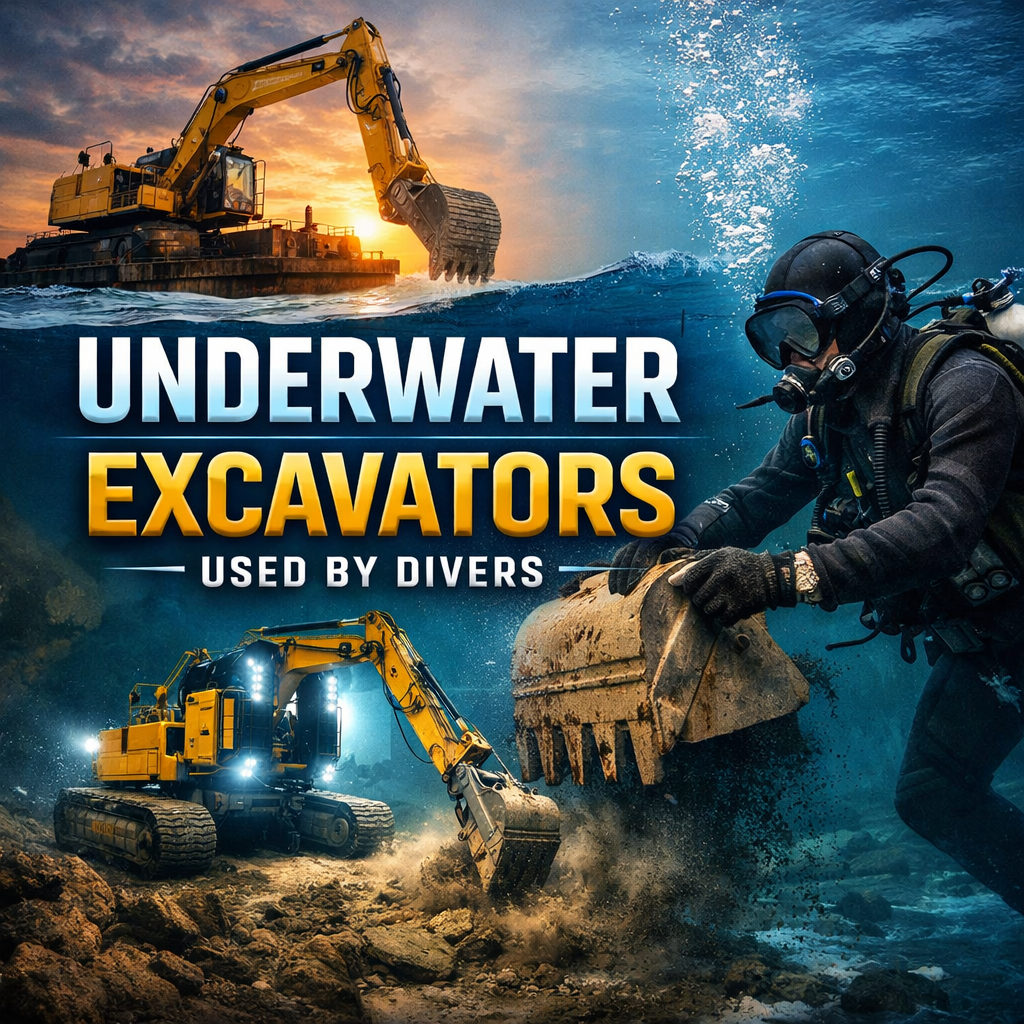
Underwater Excavators Operated by Divers
Enthusiast Corner
Underwater Excavators Used by Divers
Heavy equipment usually works on land, but some of the most fascinating machines operate where visibility is low, pressure is high, and mistakes are expensive—underwater. Divers and engineers around the world use specialized underwater excavators to perform construction, salvage, dredging, and infrastructure repair beneath the surface.
These machines combine rugged engineering with precision control, allowing operators and divers to work together in environments most equipment was never meant to survive.
Why Excavation Happens Underwater
There are many reasons crews need to move earth beneath the waterline. Common underwater excavation projects include:
- Harbor and marina dredging
- Bridge and pier construction
- Pipeline and cable installation
- Dam and hydroelectric maintenance
- Shipwreck recovery and salvage
- Environmental cleanup
In many cases, divers guide the work while operators control the excavator from the surface or from a barge.
Types of Underwater Excavators
Not all underwater excavation is done the same way. Depending on the job, different machines are used to get the work done.
Amphibious Excavators
Amphibious excavators are designed to work in shallow water, marshes, and soft ground. They sit on wide pontoon-style tracks that distribute weight and allow the machine to float or operate in extremely soft terrain.
These machines are commonly used for:
- Wetland restoration
- Canal dredging
- Shallow harbor maintenance
Because they can partially float, amphibious excavators can continue operating where standard excavators would sink.
Barge-Mounted Excavators
For deeper water projects, excavators are often mounted on floating barges. The machine operates much like it would on land, but the barge provides a stable working platform.
Divers may work below to:
- Guide bucket placement
- Inspect underwater structures
- Clear debris
- Communicate with the operator
Communication between the diver and operator is critical. Many teams rely on diver radios and spotters to ensure safe and precise movements.
Submersible Excavators
Some of the most unique machines in the industry are fully submersible excavators. These are purpose-built machines designed to operate entirely underwater.
One famous example is the SMD Subsea Excavator, built by the company SMD (Soil Machine Dynamics). Instead of an operator sitting inside the machine, these excavators are controlled remotely from a ship using cameras and sensors.
Subsea excavators are used for:
- Offshore oil and gas projects
- Deep pipeline trenching
- Subsea mining
- Cable burial for offshore wind farms
These machines can work at depths that human divers cannot safely reach.
How Divers Work With Excavators
Even with modern technology, human divers are still essential on many underwater excavation jobs.
Divers often perform tasks like:
- Positioning the excavator bucket
- Attaching rigging or lifting gear
- Inspecting cuts and trenches
- Removing obstacles the machine cannot see
Because visibility underwater can be extremely limited, divers may guide the operator by touch or through radio communication.
Safety procedures are strict. Excavator operators must move slowly and carefully to avoid creating dangerous suction or striking a diver.
Challenges of Excavating Underwater
Working underwater introduces challenges that don’t exist on land.
Limited Visibility
Silt and sediment can cloud the water almost instantly when the bucket moves.
Water Pressure
Equipment seals, hydraulics, and electronics must withstand high pressure.
Machine Stability
Currents and soft sediment can make stable operation difficult.
Communication
Operators and divers must rely on radios, signals, and careful planning.
Despite these obstacles, underwater excavation has become a critical part of modern marine construction.
The Future of Underwater Equipment
Technology continues to push the limits of what heavy equipment can do underwater.
Advancements include:
- Remote-operated subsea excavators
- Autonomous underwater construction robots
- High-definition sonar guidance systems
- Improved hydraulic sealing technology
As offshore energy, marine infrastructure, and underwater cable networks expand, specialized excavation equipment will become even more important.
A Hidden World of Heavy Equipment
When people think about excavators, they picture dusty construction sites and massive earthmoving projects. But some of the most impressive work happens far below the surface.
From divers guiding buckets in murky harbor water to remotely operated machines digging trenches on the ocean floor, underwater excavation proves that heavy equipment can work almost anywhere.
Even where the jobsite is an entire ocean.