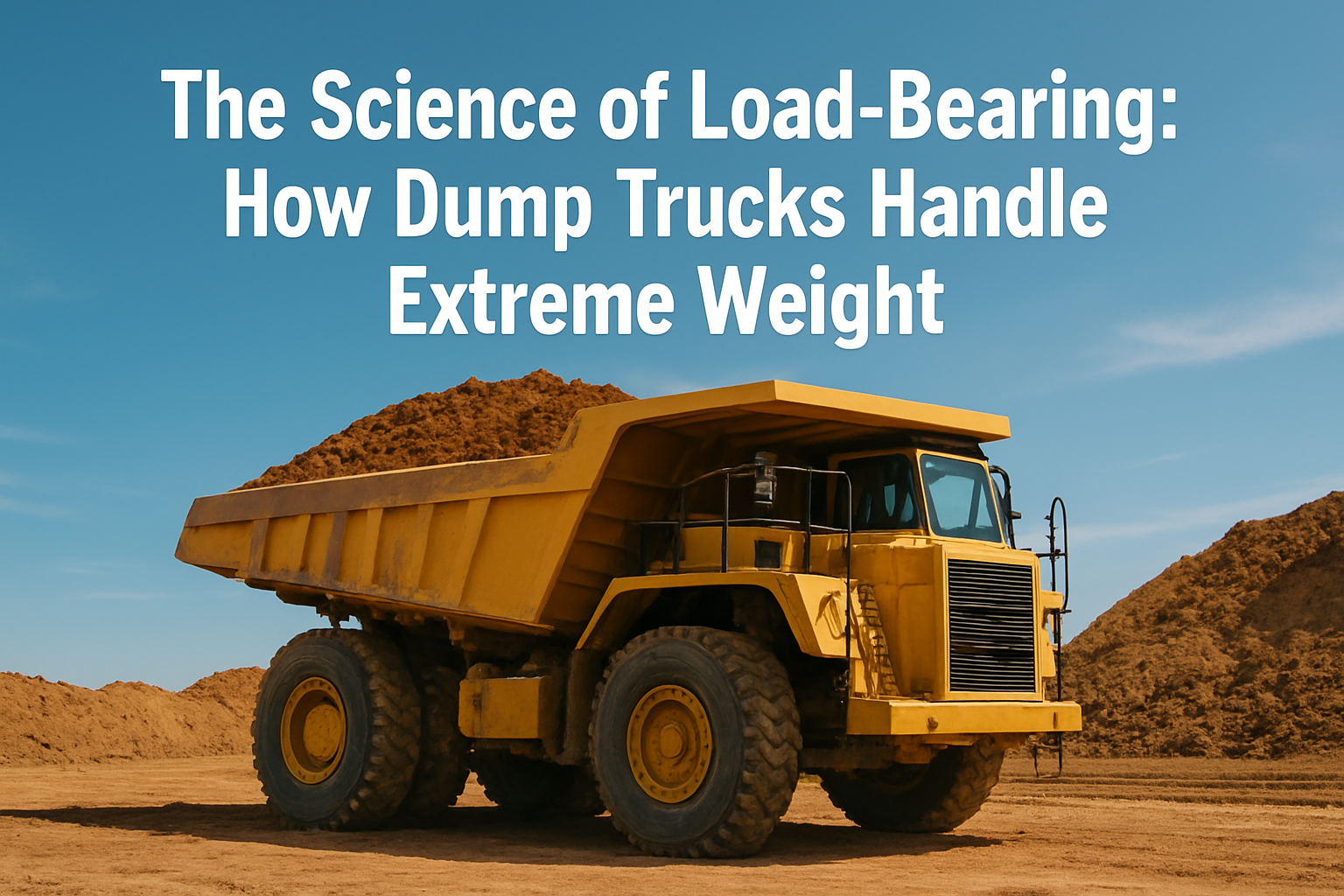
The Science of Load-Bearing: How Dump Trucks Handle Extreme Weight
When it comes to moving massive amounts of earth, rock, or construction materials, few machines are as iconic—or as impressive—as the dump truck. But behind the brute strength lies a carefully engineered system designed to handle incredible weight safely and efficiently. Let’s take a closer look at the science of load-bearing in dump trucks and how these machines manage extreme loads without breaking a sweat.
The Basics of Load-Bearing
At its core, load-bearing is about distributing weight so that a structure—whether a building or a truck—can safely carry heavy loads. In dump trucks, every component is designed to balance strength and flexibility. The chassis, frame, axles, suspension, and tires all work together to ensure that the load is carried evenly and safely.
Key factors include:
• Gross Vehicle Weight Rating (GVWR): The maximum weight the truck is engineered to carry, including the truck itself and the cargo.
• Center of Gravity: Dump trucks are designed to keep the load low and centered to prevent tipping, even on uneven terrain.
• Load Distribution: Properly spreading the material across the bed prevents overloading individual axles or tires.
The Frame: The Backbone of Strength
The truck’s frame is its most critical load-bearing structure. Typically made from high-strength steel, the frame is designed to handle not just vertical weight but also the torsion and bending forces that occur when driving over rough terrain.
Some key design considerations include:
• Box Frames: Most dump trucks use a “ladder” or “box” frame to provide rigidity without excessive weight.
• Reinforced Sections: Stress points, like the points where the bed connects to the frame, are reinforced to handle repeated heavy loads.
• Flexibility vs. Strength: Engineers balance flexibility to absorb shocks with strength to prevent permanent deformation.
Suspension Systems: Cushioning the Load
A dump truck’s suspension system plays a huge role in load-bearing. It absorbs shocks, keeps the tires in contact with the ground, and prevents the frame from taking all the stress.
Types of suspension systems used include:
• Leaf Spring Suspension: Traditional but highly reliable for heavy loads.
• Air Suspension: Provides smoother rides and better weight distribution, often found in modern or long-haul dump trucks.
• Hydraulic Systems: In off-road mining trucks, hydraulics can help distribute weight dynamically across multiple axles.
Axles and Tires: Supporting the Heaviest Loads
The axles and tires are the last line of defense when it comes to load-bearing. Dump trucks are designed with multiple axles to spread the weight, reducing stress on any single component.
• Tandem and Tridem Axles: By having two or three axles in sequence, heavy loads are distributed across a larger area.
• Heavy-Duty Tires: Special radial or bias-ply tires are engineered to support tens of tons while providing traction and durability.
• Axle Ratings: Each axle has a maximum load rating, which is critical to prevent structural failure.
The Art of Loading: Science Meets Skill
Even the most robust dump truck can fail if loaded improperly. Operators are trained to:
• Evenly Spread the Load: Avoiding high spots that could stress the frame.
• Consider Terrain: Adjusting driving and dumping on slopes to maintain balance.
• Monitor GVWR: Staying under weight limits to avoid mechanical failures and legal penalties.
Modern Innovations
Dump trucks continue to evolve with technology designed to improve load-bearing efficiency:
• Telematics Systems: Sensors monitor weight distribution in real-time.
• Stronger Alloys: Advanced materials allow for lighter yet stronger frames.
• Automated Load Management: Some modern trucks can adjust suspension and tire pressure automatically to optimize weight distribution.
The Bottom Line
Dump trucks are more than just giant containers on wheels—they are precision-engineered machines capable of handling extreme weight safely and efficiently. From the reinforced frame to the suspension system, axles, and tires, every component works in harmony to make sure tons of material can be moved without incident. Understanding the science of load-bearing not only gives us appreciation for these workhorses but also highlights the ingenuity of engineering that goes into every heavy-duty machine.
Whether you’re a construction professional, a mining enthusiast, or simply fascinated by big machines, the next time you see a dump truck in action, you’ll know it’s a perfect blend of brute force and scientific precision.