The Role of Dust in Abrasive Wear
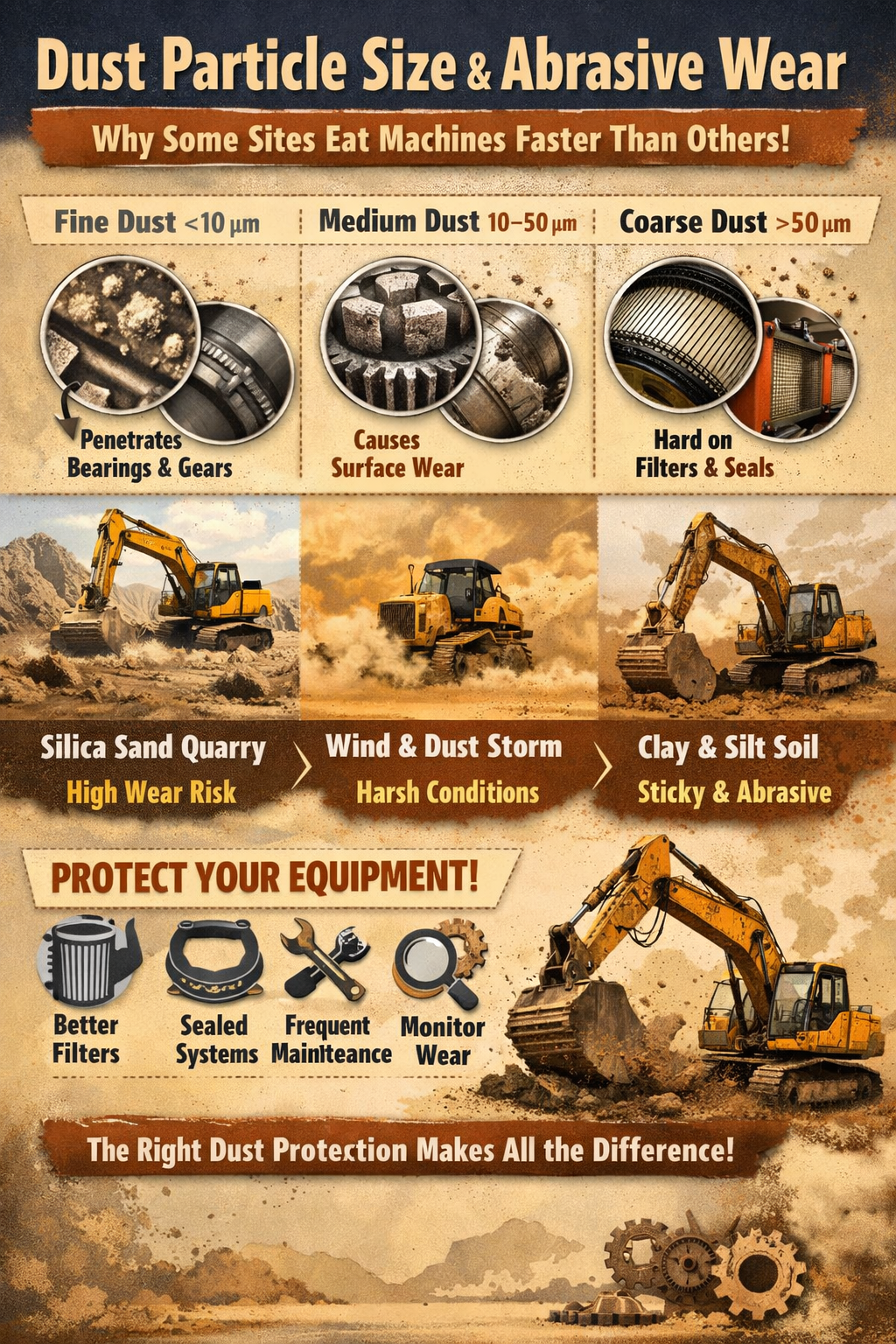
Not all dust is equal when it comes to equipment wear. The key factor is particle size. Small particles can be far more damaging than larger ones because they can penetrate tighter clearances and get between moving surfaces. These particles act like miniature sandpaper inside bearings, gears, and hydraulic systems, accelerating wear.
- Fine particles (<10 µm): Easily enter lubrication films, scratch surfaces, and degrade hydraulic fluids.
- Medium particles (10–50 µm): Cause surface scoring, increase friction, and can settle in crevices to trap moisture or corrosive materials.
- Coarse particles (>50 µm): Often easier to filter but can cause major damage if they bypass filters.
The smaller the particle, the harder it is to capture, and the faster it can erode components.
Soil Type and Abrasive Characteristics
Sites differ widely in the type of soil or dust present:
- Silica-rich sand: Extremely hard and sharp, causing rapid wear.
- Clay: Tends to stick, clog filters, and increase abrasion indirectly by holding harder particles against surfaces.
- Silty soils: Fine, abrasive, and easily airborne, increasing exposure to sensitive components.
Machines in a quarry with silica sand will experience far faster wear than machines on soft, loamy farmland, even with identical usage.
Environmental Conditions
Moisture, wind, and temperature amplify the effect of abrasive dust:
- Dry and windy: Dust stays airborne, infiltrating air intakes and lubrication systems.
- Wet conditions: Creates a grinding slurry that accelerates wear.
- Temperature extremes: Reduce lubricant viscosity, making it easier for dust to contact metal surfaces.
Machine Design & Maintenance Sensitivity
Even on the same site, some machines suffer faster than others:
- Tight-tolerance machinery with small clearances is more susceptible to fine dust.
- Older machines without modern sealing or filtration are “dust magnets.”
- Maintenance practices (filter changes, lubricant quality) can mitigate or exacerbate abrasive wear.
Practical Takeaways
- Know your site’s dust characteristics before selecting machinery.
- Invest in superior filtration and sealing, especially for fine, hard dust.
- Frequent maintenance intervals can prevent minor abrasive damage from escalating.
- Monitor wear patterns to identify if your site’s soil is unusually aggressive.
In short: a dusty, silica-heavy site can “eat” machines far faster than a soft, clay-dominated one. The finer and harder the particles, the more damage, and the more you need to protect the machine with filters, seals, and vigilant maintenance.