The Machine That Can Move an Entire Building Without Taking It Apart
The fascinating engineering behind structural relocation equipment.
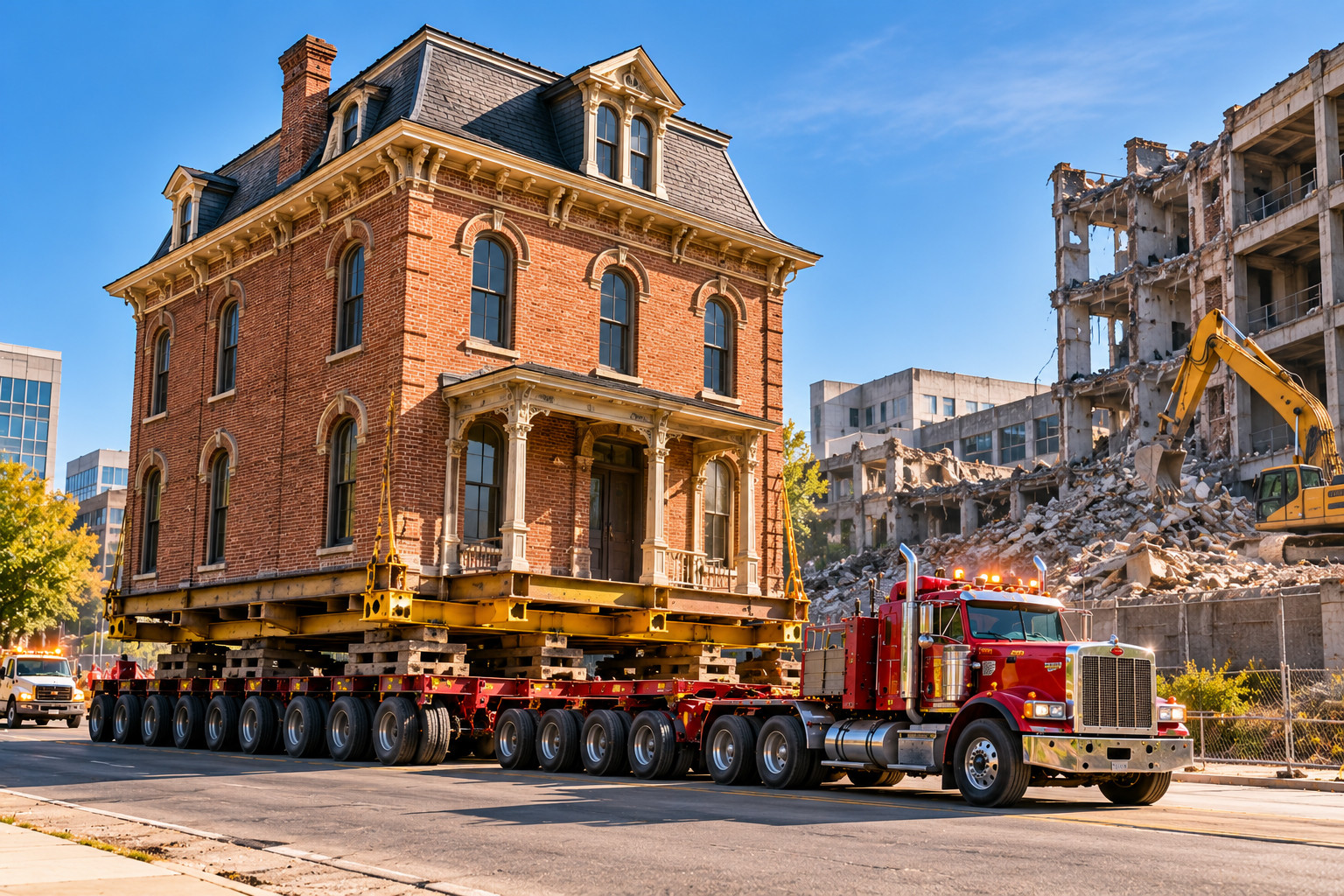
Imagine watching a two-storey house slowly travel down a highway. Its walls are intact, its roof is still attached, and its windows remain in place. The entire building is moving, yet nobody has taken it apart.
It might seem impossible, but specialized heavy equipment can relocate houses, historic buildings, commercial structures, and even some enormous industrial facilities.
What makes this especially fascinating is that the building doesn’t simply get lifted up and carried away. Moving an entire structure requires a carefully engineered combination of hydraulic lifting systems, structural steel, specialized transporters, and precise weight distribution.
So how do engineers lift something that was never designed to move, transport it without destroying it, and place it safely on a new foundation?

How Do You Lift an Entire Building?
Before a building can move, engineers must determine whether its structure can withstand the stresses of lifting and transportation.
A building is designed to transfer its weight through walls, columns, beams, and foundations into the ground. Once the foundation is removed from that equation, those loads need an entirely new path.
This is where temporary structural support systems become essential.
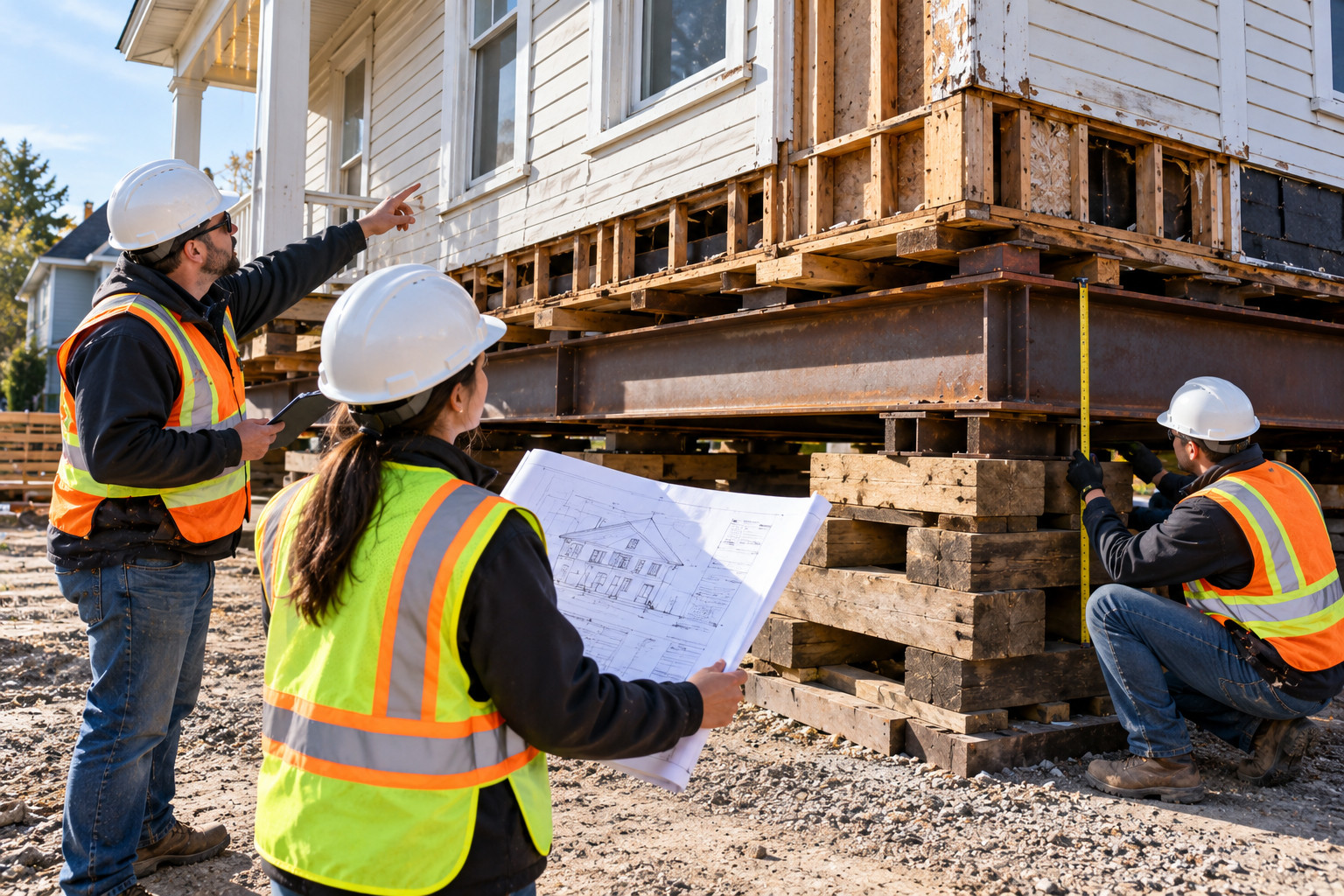
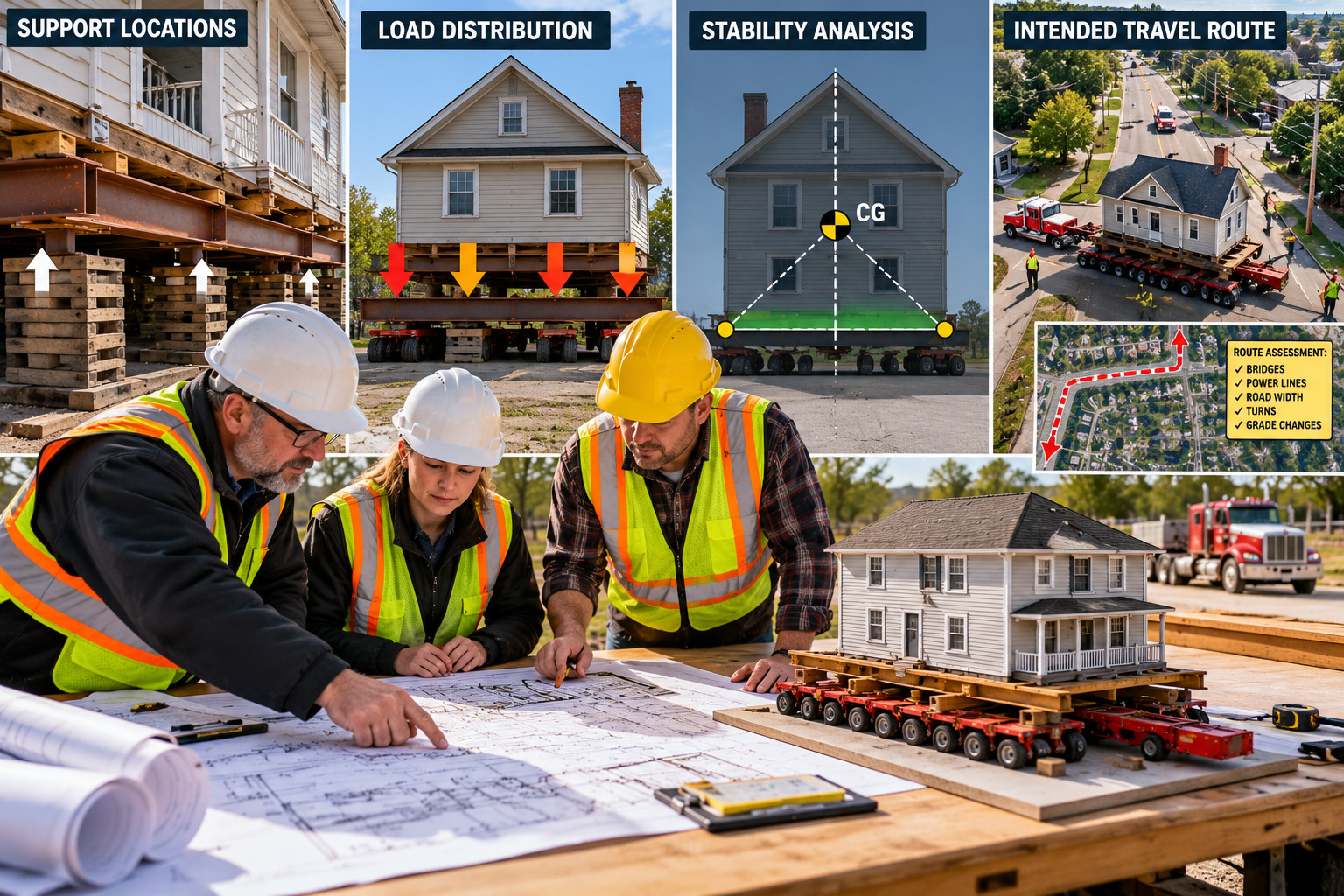
Engineers assess the building's construction, condition, approximate weight, and load-bearing components. They then design a temporary framework, often consisting of large structural steel beams installed beneath the building.
These beams form a supporting platform that distributes the structure's weight across multiple lifting points.
Hydraulic jacks are positioned beneath the steel framework and used to raise the building gradually.
However, there's an important complication.
If one section rises faster than another, the building can twist, crack, or experience damaging structural stresses.
To prevent this, specialized lifting systems use coordinated hydraulic jacks. Some systems incorporate computerized monitoring and controls that help maintain appropriate lifting levels and distribute loads throughout the operation.
The building is raised only as much as necessary to install the transportation equipment beneath it.
The Heavy Equipment That Makes It Possible
There isn't one universal machine responsible for moving buildings. Instead, structural relocation contractors use several types of specialized equipment depending on the building's weight, dimensions, and travel route.
Hydraulic Dollies: The Wheels Beneath the Building
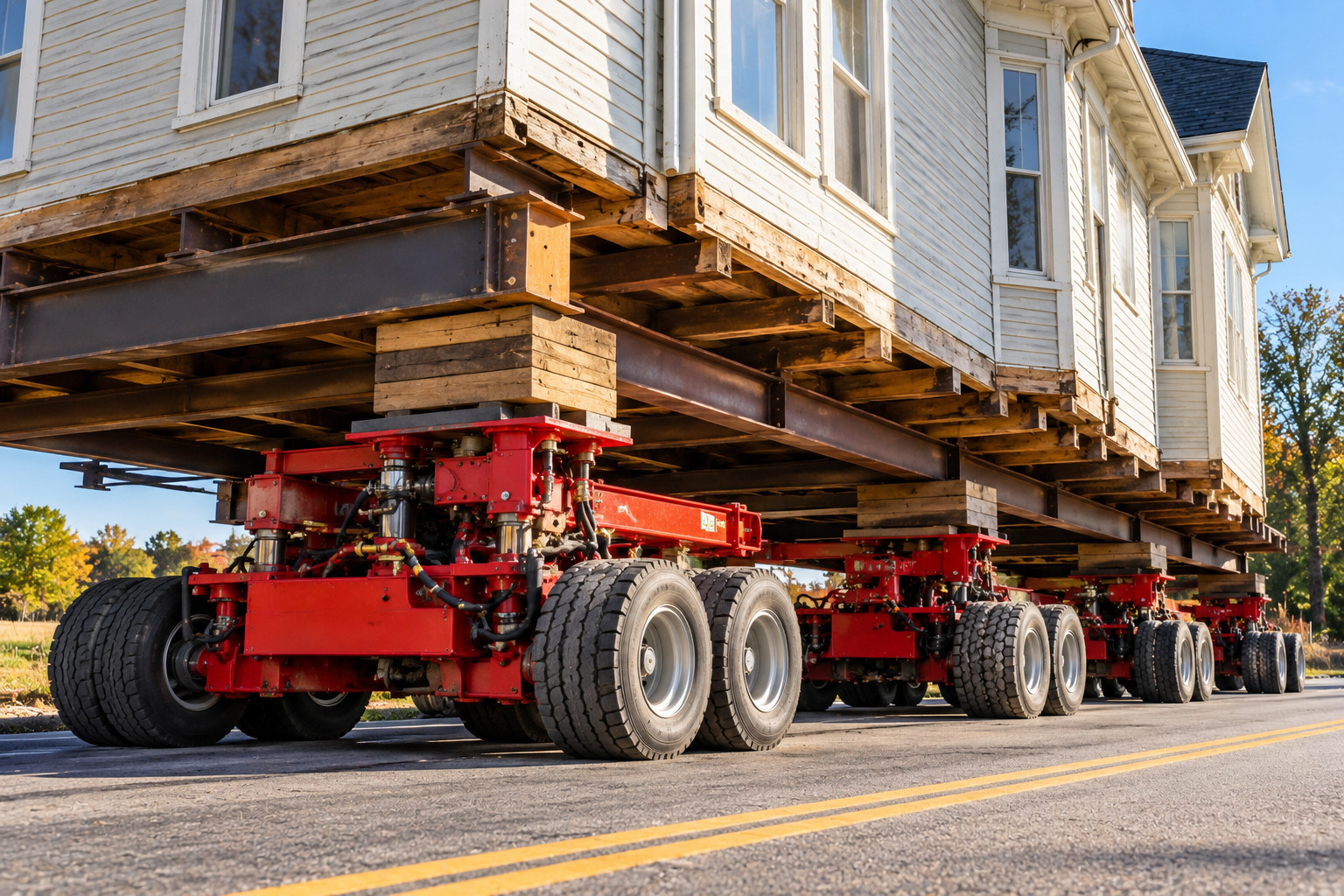
Hydraulic dollies are among the most important pieces of equipment used in structural relocation.
Unlike conventional trailers, these specialized wheeled units are designed to support substantial loads while helping accommodate changes in road elevation.
Multiple dollies can be positioned beneath a steel support framework, allowing the weight of a building to be distributed across several wheel assemblies.
Their hydraulic suspension systems can help maintain load support as the transporter moves over uneven ground.
Depending on the system, the dollies may be steered or operated in coordinated configurations.
This is particularly important when transporting a long or unusually shaped building through tight corners or along narrow roads.
The challenge isn't simply making the structure roll. It's making sure the building remains properly supported while it does.
Self-Propelled Modular Transporters: Moving the Extraordinary
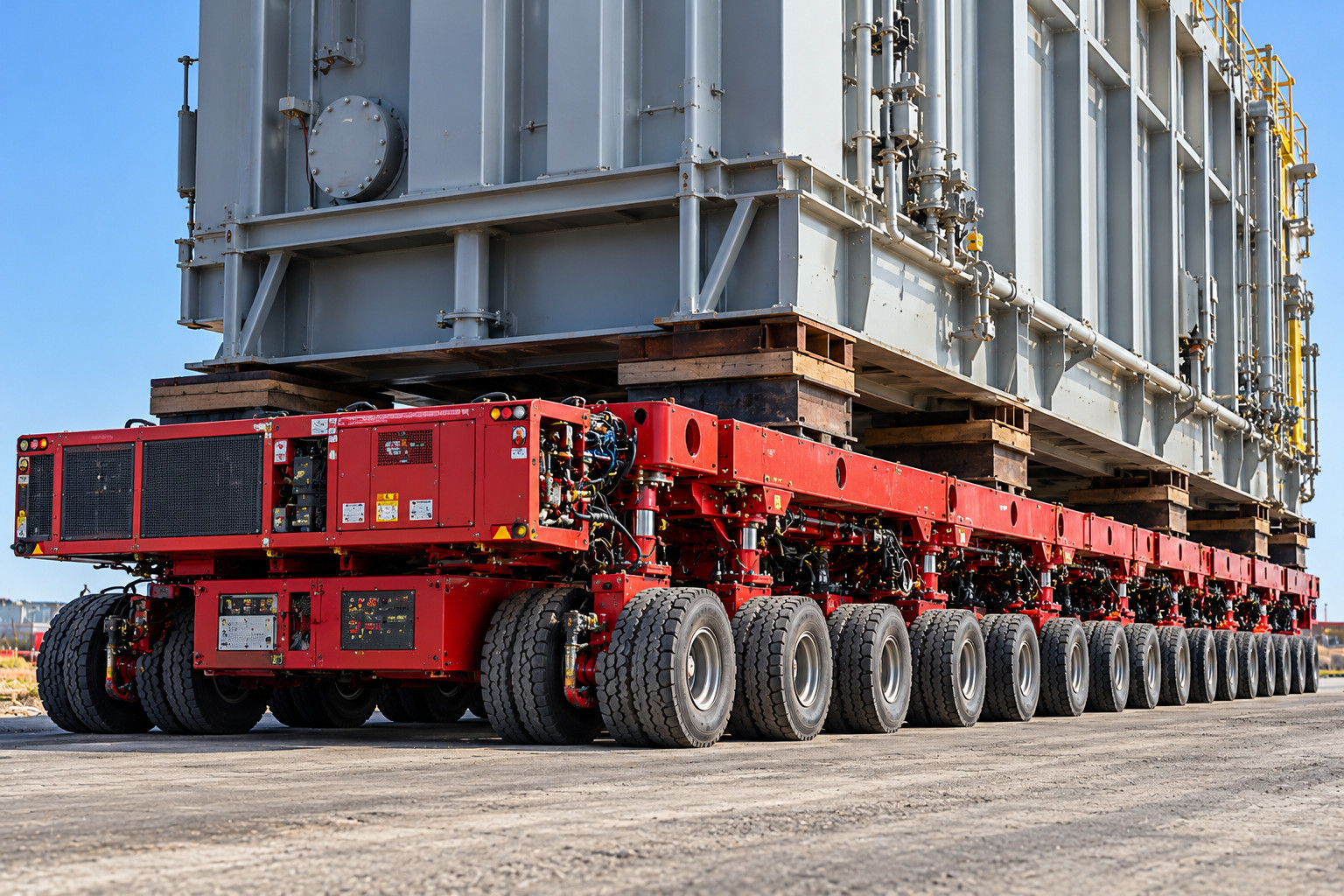
For especially large or heavy structures, engineers may turn to a self-propelled modular transporter, commonly called an SPMT.
These remarkable machines are used for transporting enormous industrial components, bridge sections, offshore modules, and other exceptionally heavy loads.
An SPMT consists of modular platforms supported by multiple axle lines with hydraulically suspended wheel assemblies.
Individual modules can be connected to create a larger transportation platform.
One of the most impressive features is the steering system.
Depending on the configuration, SPMTs can perform highly maneuverable movements, including sideways travel and rotation within a relatively confined area.
Their hydraulic suspension systems also help manage load distribution and platform height.
Rather than relying on a conventional truck pulling a trailer, SPMTs use powered wheel assemblies to propel the load.
This makes them particularly valuable for large structural relocations where maneuverability and precise positioning are essential.
Not every house-moving operation requires an SPMT. Conventional hydraulic dollies and towing equipment are often more practical for residential structures.
But when a relocation involves an enormous industrial structure, modular transporters can provide capabilities that ordinary trailers cannot.
How Much Does an Entire Building Weigh?
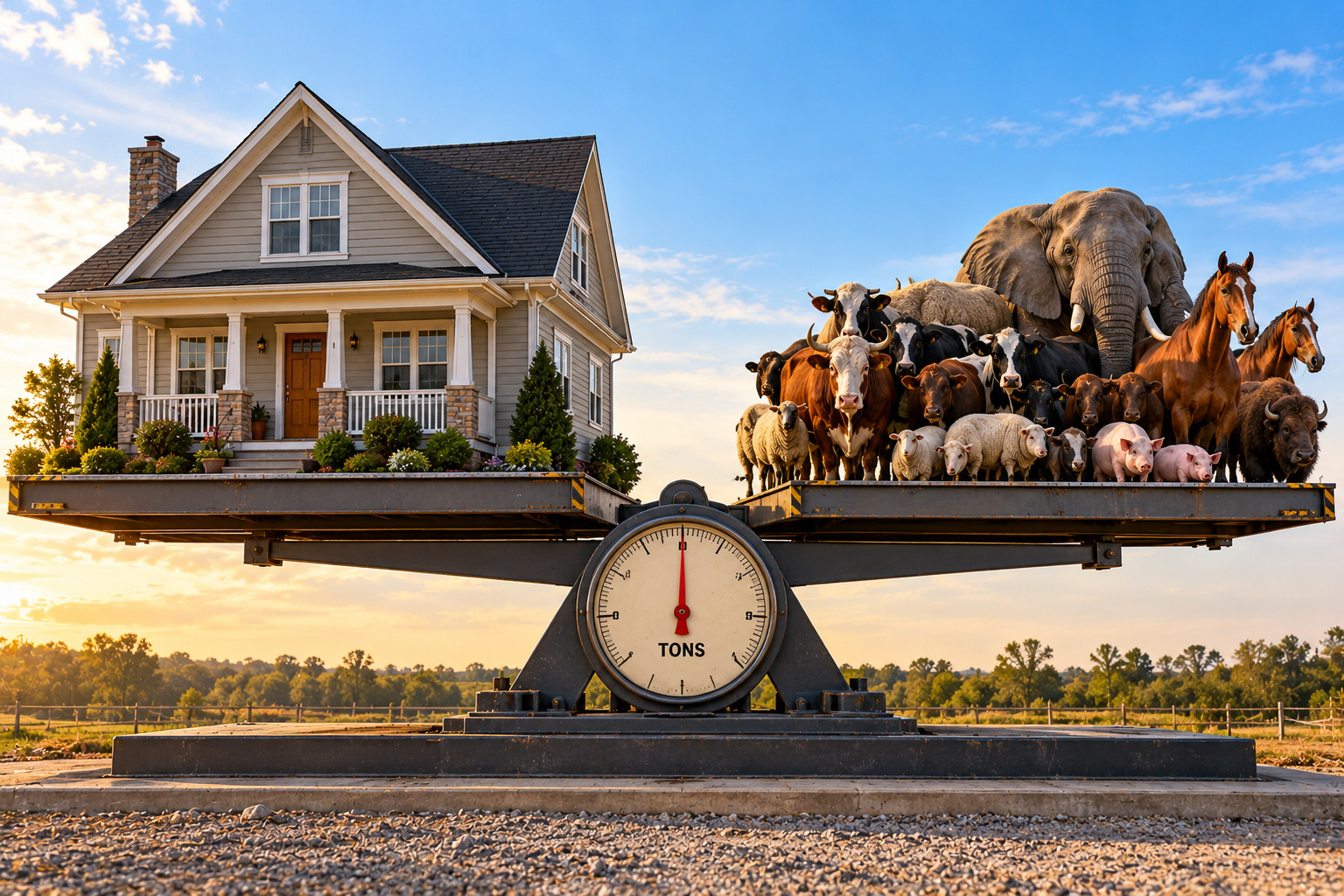
A surprisingly difficult part of relocating a building is determining its weight.
Engineers can't simply look at a structure and make an educated guess.
Building weight depends on numerous factors, including its dimensions, construction materials, roofing system, floors, interior finishes, and any equipment or fixtures that remain inside.
A timber-framed house may weigh considerably less than a similarly sized masonry structure.
The temporary steel support framework also adds weight that must be included in the lifting and transportation calculations.
Engineers develop weight estimates using structural information, material quantities, and inspections. During lifting, hydraulic pressures and load measurements may also provide useful information about how the weight is distributed.
But total weight is only part of the problem.
Knowing where that weight is concentrated can be just as important as knowing how much the building weighs.
A building with heavy masonry walls on one side, for example, may place significantly greater loads on certain support beams and hydraulic jacks.
The equipment must be arranged to accommodate those differences.
The Centre of Gravity Matters More Than You Might Think
Moving a building introduces the same fundamental stability concerns encountered when transporting other oversized loads.
Every structure has a centre of gravity, representing the point through which its combined weight can be considered to act.
For safe transportation, engineers must consider how that centre of gravity relates to the support arrangement and how the load will behave during movement.
A tall, narrow building can present different stability challenges than a wide, low structure.
Uneven ground, road slopes, acceleration, braking, and turning can all affect the forces acting on the transported building.
Hydraulic suspension systems help accommodate changes in elevation, but they don't eliminate the laws of physics.
If the load becomes unstable or the supporting equipment exceeds its operating limits, the consequences can be serious.
That's why relocation planning involves careful analysis of support locations, load distribution, stability, and the intended travel route.
Why Can't They Just Put the Building on a Giant Trailer?
At first glance, a large lowboy trailer might seem like the obvious solution.
After all, heavy-haul trailers routinely transport excavators, bulldozers, transformers, and enormous industrial components.
But buildings create unusual challenges.
First, their dimensions can be extraordinary. A house might be wider than the entire roadway, making conventional transportation arrangements impractical.
Second, buildings aren't necessarily rigid enough to tolerate the same concentrated support points as purpose-built machinery.
Third, the distance between the bottom of the structure and the road must often be carefully controlled.
Bridges, overhead utilities, traffic signals, trees, and changes in road elevation can all restrict the available clearance.
Specialized dollies and modular transporters allow engineers to create support configurations suited to the particular structure.
In some cases, a trailer-based system is appropriate. In others, distributing the load across several independent wheeled units is the better solution.
The equipment is selected around the building's requirements rather than forcing the building to accommodate a standard trailer.
The Road Can Be a Bigger Challenge Than the Building
Once the structure has been lifted and secured to its transportation system, the next challenge is getting it to its destination.
And this is where structural relocation becomes a remarkable logistical operation.
Imagine moving a house that's 40 feet wide through a residential neighbourhood.
The building might be wider than the street itself.
Every intersection, overhead obstruction, slope, and potential turning location must be considered.
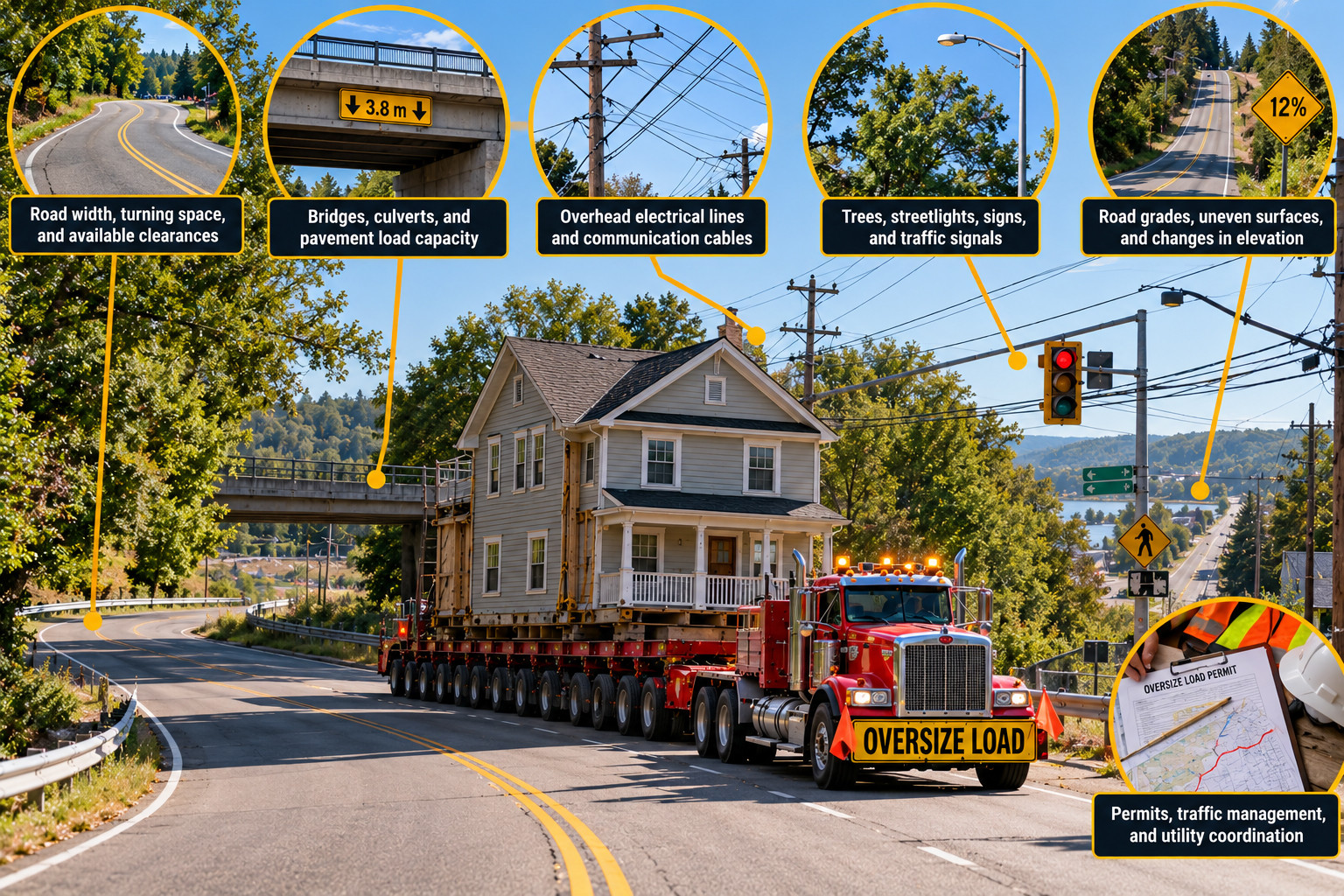
Before a move, planners may need to evaluate:
• Road width, turning space, and available clearances.
• Bridges, culverts, and pavement load capacity.
• Overhead electrical lines and communication cables.
• Trees, streetlights, signs, and traffic signals.
• Road grades, uneven surfaces, and changes in elevation.
• Permits, traffic management, and utility coordination.
Some moves require temporary removal of roadside obstacles or assistance from utility companies.
The transport route may be much longer than the shortest distance between the old and new locations.
A building might travel several additional kilometres simply to avoid a bridge, tight corner, or overhead obstruction.
And unlike a typical heavy-haul operation, the load itself may be relatively fragile.
How Fast Can a Building Travel?
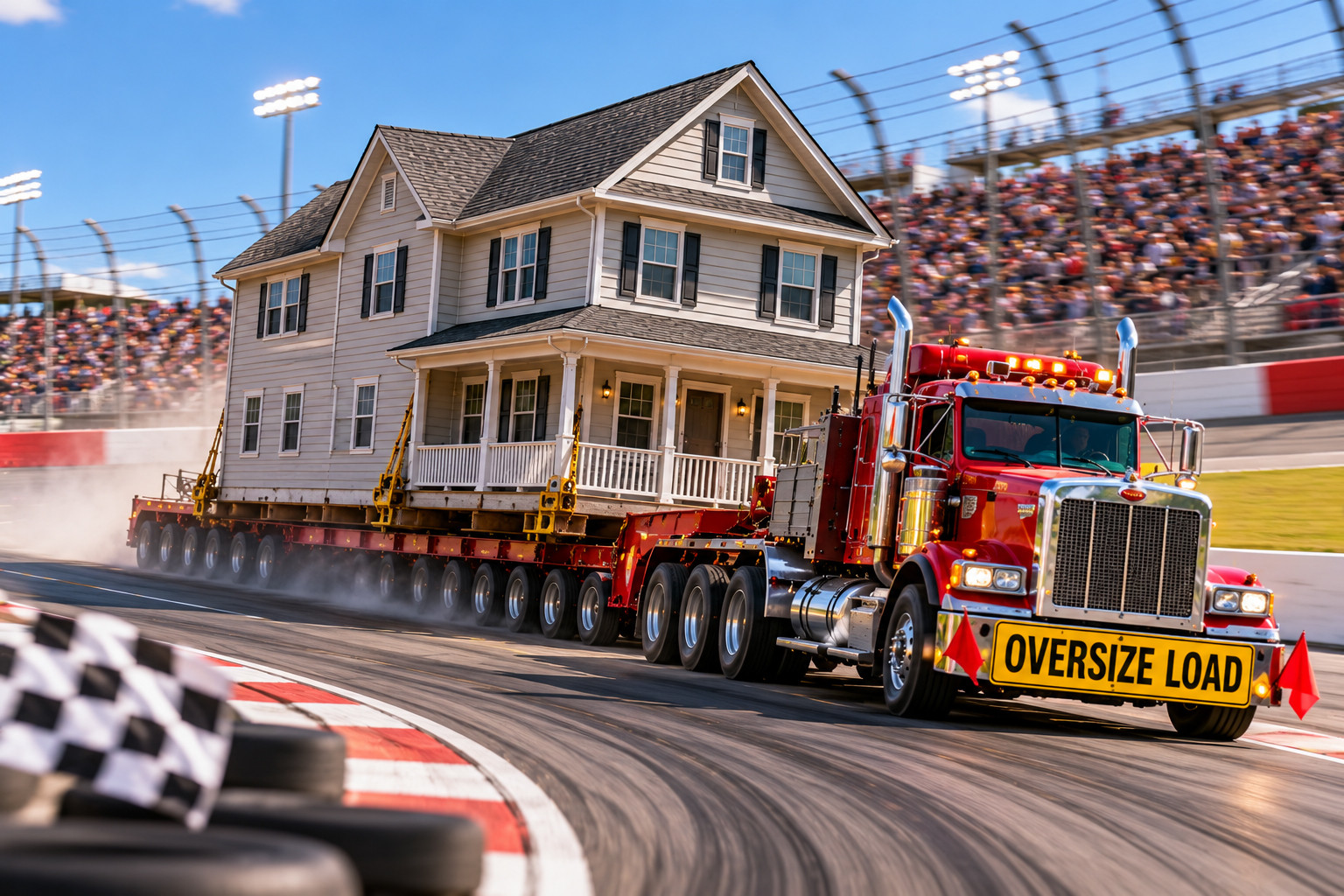
You won't see a house speeding down the highway.
Building relocation is generally performed at very low speeds, with the actual pace determined by the transportation equipment, route conditions, permits, and structural requirements.
In complicated sections, movement may be measured in small increments rather than kilometres per hour.
Operators may need to stop repeatedly to verify clearances, adjust equipment, or coordinate with ground crews.
The priority is maintaining control of the load, not reaching the destination quickly.
Even minor changes in road elevation can require careful attention.
A relatively small bump beneath one section of a transporter can introduce stresses into the supporting framework if the load isn't properly managed.
Hydraulic suspension and coordinated support systems help reduce these problems, but continuous observation remains essential.
What Happens When the Building Reaches Its New Home?
Arriving at the destination doesn't mean the difficult work is finished.
The building must be positioned accurately over its new foundation.
This may require extremely small movements of the transportation equipment to align the structure with its intended location.
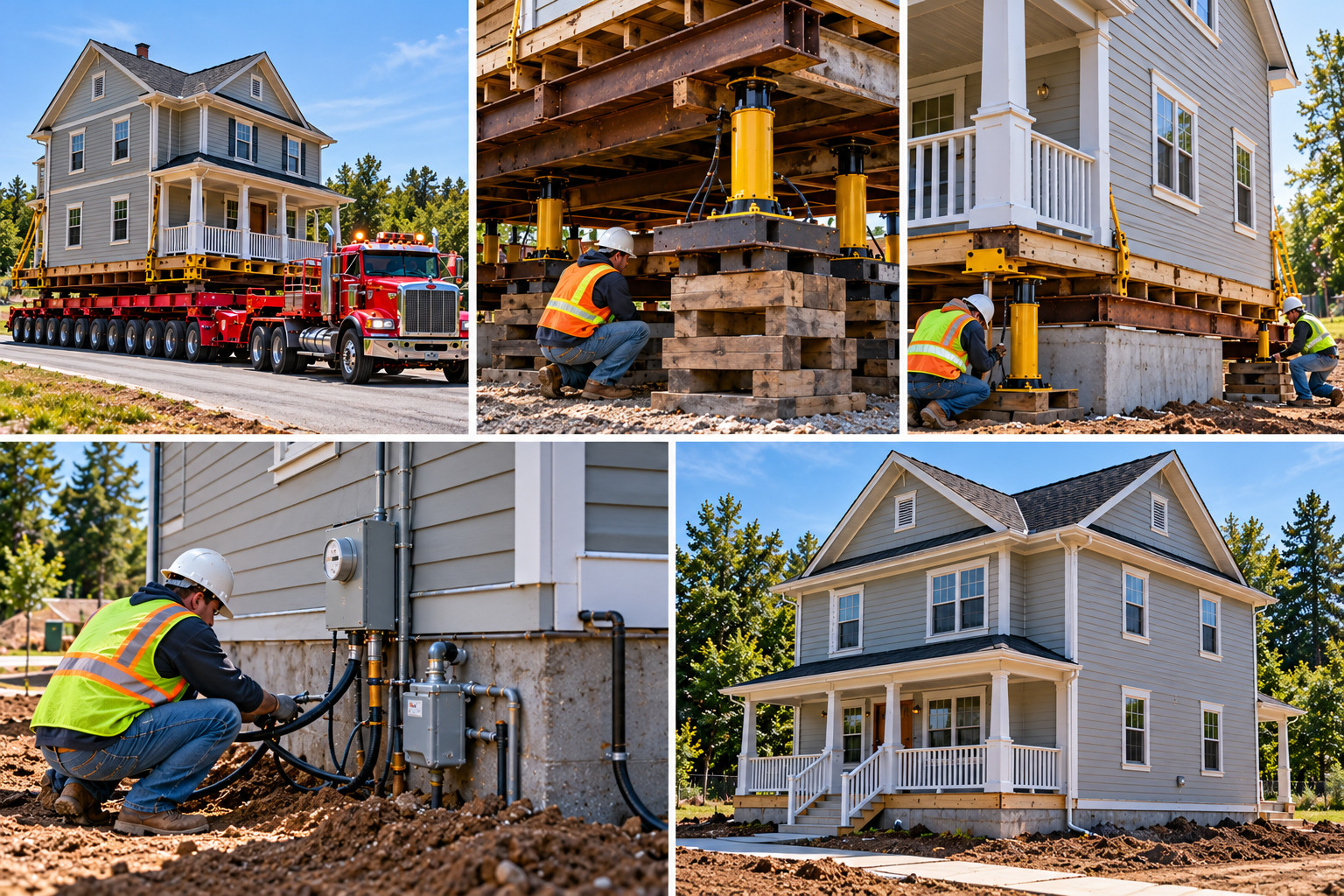
Once positioned, hydraulic jacks and temporary supports are used to transfer the building's weight from the transportation system onto the foundation.
The structure is lowered gradually, with crews monitoring alignment and support conditions.
After the building is properly seated and secured, the temporary steel framework can be removed.
Utilities are reconnected, structural connections are completed, and any required repairs or finishing work can begin.
Although the building may appear unchanged from the outside, it has undergone a significant engineering operation.
Why Move a Building Instead of Demolishing It?
Considering the equipment, planning, and engineering involved, relocating an entire building might seem unnecessarily complicated.
But there are several reasons why it can make sense.
Historic preservation is one of the most recognizable examples. Relocating a historically significant building may allow it to survive when redevelopment or infrastructure construction threatens its original location.
In other cases, buildings are moved to make room for road expansions, new developments, or changing land uses.
Some property owners relocate existing homes onto different lots rather than constructing entirely new buildings.
Industrial facilities may also use structural relocation techniques to reposition large components or structures within a site.
Moving a building can sometimes preserve valuable materials and reduce demolition waste, although the environmental and financial benefits depend on the specific project.
Not every building can be moved economically or safely. Structural condition, transportation distance, route restrictions, and foundation requirements can make relocation impractical.
But when conditions are suitable, specialized heavy equipment can provide an alternative to demolition.
The Engineering Behind a Building on Wheels
Perhaps the most fascinating thing about structural relocation is that the machines themselves are only part of the achievement.
Hydraulic jacks provide the lifting force. Steel beams create temporary load paths. Hydraulic dollies and modular transporters carry the weight. Steering and suspension systems make movement possible.
But none of these components can accomplish the task safely without careful engineering.
Every lifting point, support beam, wheel assembly, and movement must work as part of a coordinated system.
And unlike transporting a machine that was designed to be hauled, relocating a building means moving something that may have spent decades resting on a permanent foundation.
The next time you see a house slowly rolling down a road, consider what's happening beneath it.
An entire structure is being supported by a temporary steel framework, carried on specialized heavy equipment, and guided toward a new location.
It's one of the most unusual demonstrations of what heavy equipment can accomplish: moving something that was never meant to move, without taking it apart.
