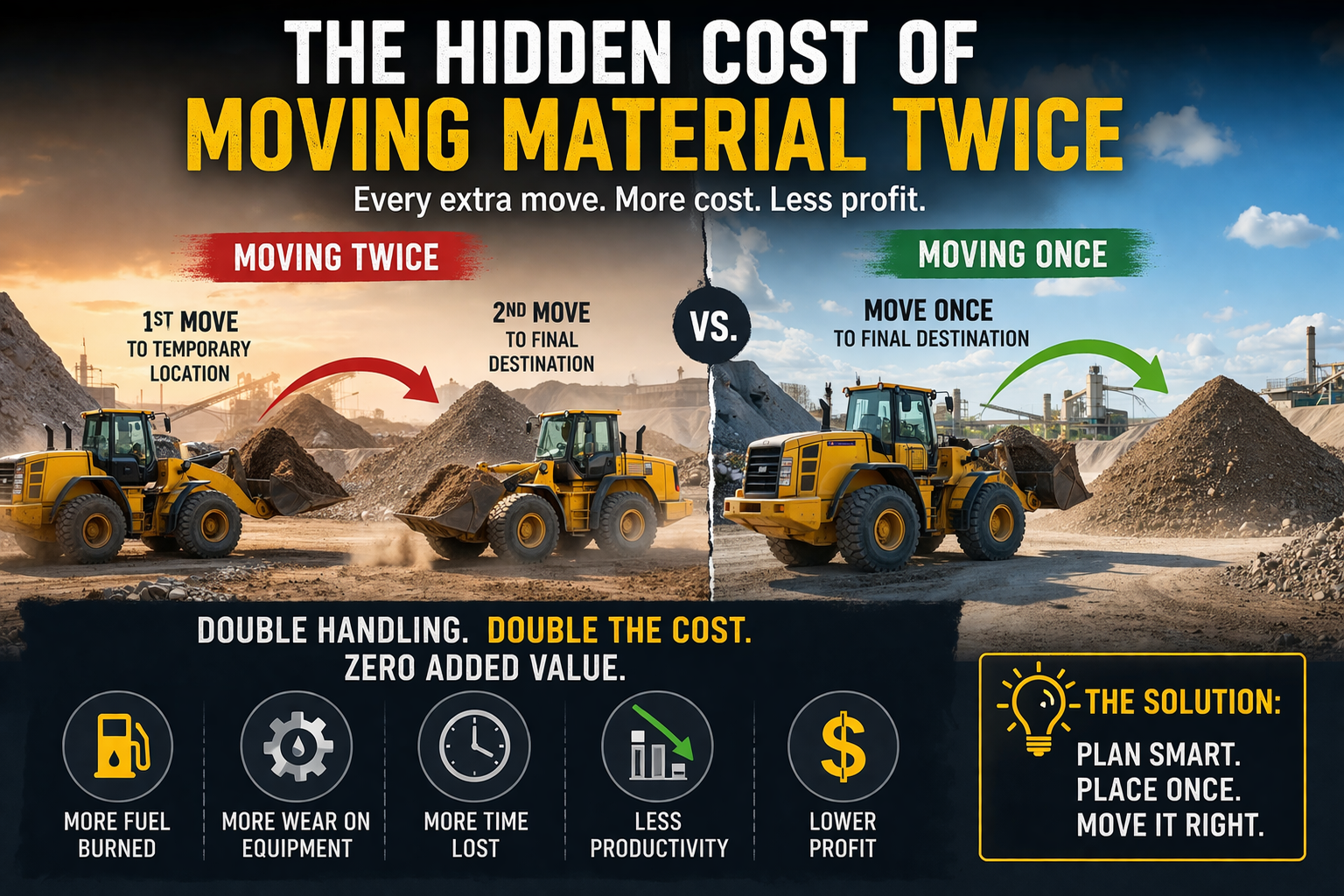
The Hidden Cost of Moving Material Twice
In construction, mining, and material handling, efficiency is everything. Equipment is expensive, labor is limited, and timelines are tight. Yet one of the most common — and costly — inefficiencies on a job site often goes unnoticed: moving material twice.
At first glance, it might not seem like a big deal. A loader moves a pile here temporarily, then moves it again later to its final destination. It feels like part of the process. But that second move carries a hidden price tag that quietly eats away at profit, productivity, and equipment life.
Double Handling = Double Cost
Every time material is moved, there’s a direct cost: fuel, machine wear, and operator time. When you move that same material again, you’re essentially paying twice for the same outcome — without adding any value. The material hasn’t been improved, processed, or sold. It’s just been relocated.
Multiply that across hundreds or thousands of cubic meters, and the cost compounds quickly.
Equipment Wear You Don’t See
Heavy equipment isn’t just expensive to buy — it’s expensive to maintain. Every unnecessary cycle adds hours to machines that already operate in demanding conditions. Pins wear faster, hydraulics work harder, and maintenance intervals creep closer.
That second move might seem harmless, but over time it contributes to earlier rebuilds, more downtime, and higher operating costs.
Lost Productivity
When operators are busy rehandling material, they’re not doing productive work. They’re not feeding a plant, building stockpiles correctly, or advancing the job. They’re just correcting a process that wasn’t optimized from the start.
In many cases, crews don’t even realize how much time is being lost because it’s spread out in small increments throughout the day.
Space and Planning Failures
Moving material twice is often a symptom of poor planning or limited space. Stockpiles get placed wherever there’s room in the moment, not where they should be long-term. As the site evolves, those “temporary” decisions turn into permanent inefficiencies.
Good site layout and planning can eliminate most of this. Material should be placed once — as close as possible to its final point of use or processing.
The Ripple Effect
- Double handling doesn’t just affect one machine or operator. It creates a ripple effect:
- Trucks may wait longer to be loaded
- Processing plants may experience interruptions
- Supervisors spend time managing avoidable issues
- Deadlines begin to slip
All from something that initially seemed minor.
How to Avoid It
Reducing double handling isn’t about working harder — it’s about working smarter:
- Plan material flow before the job starts
- Design stockpile locations with final use in mind
- Communicate clearly with operators about placement
- Reassess site layout as conditions change
Even small improvements in material flow can lead to significant cost savings over time.
Final Thought
Moving material twice is one of those hidden inefficiencies that becomes “normal” if left unchecked. But normal doesn’t mean acceptable. Every extra move is wasted time, wasted fuel, and unnecessary wear.
The most efficient operations have one thing in common: they move material once — and they move it right.