The Bulldozer That Was Designed to Work Underwater
When most people picture a bulldozer, they imagine a powerful machine pushing dirt, clearing land, or moving enormous amounts of material across a construction site. But what happens when the job isn't on dry land? What if the material that needs to be moved is sitting at the bottom of a river, harbour, or reservoir?
Believe it or not, engineers developed bulldozers specifically designed to work underwater.
These unusual machines could crawl along submerged terrain, push sediment, level the bottom of waterways, and perform construction work that would be difficult or dangerous for conventional equipment.
And while they might look like ordinary crawler dozers at first glance, their engineering tells a very different story.
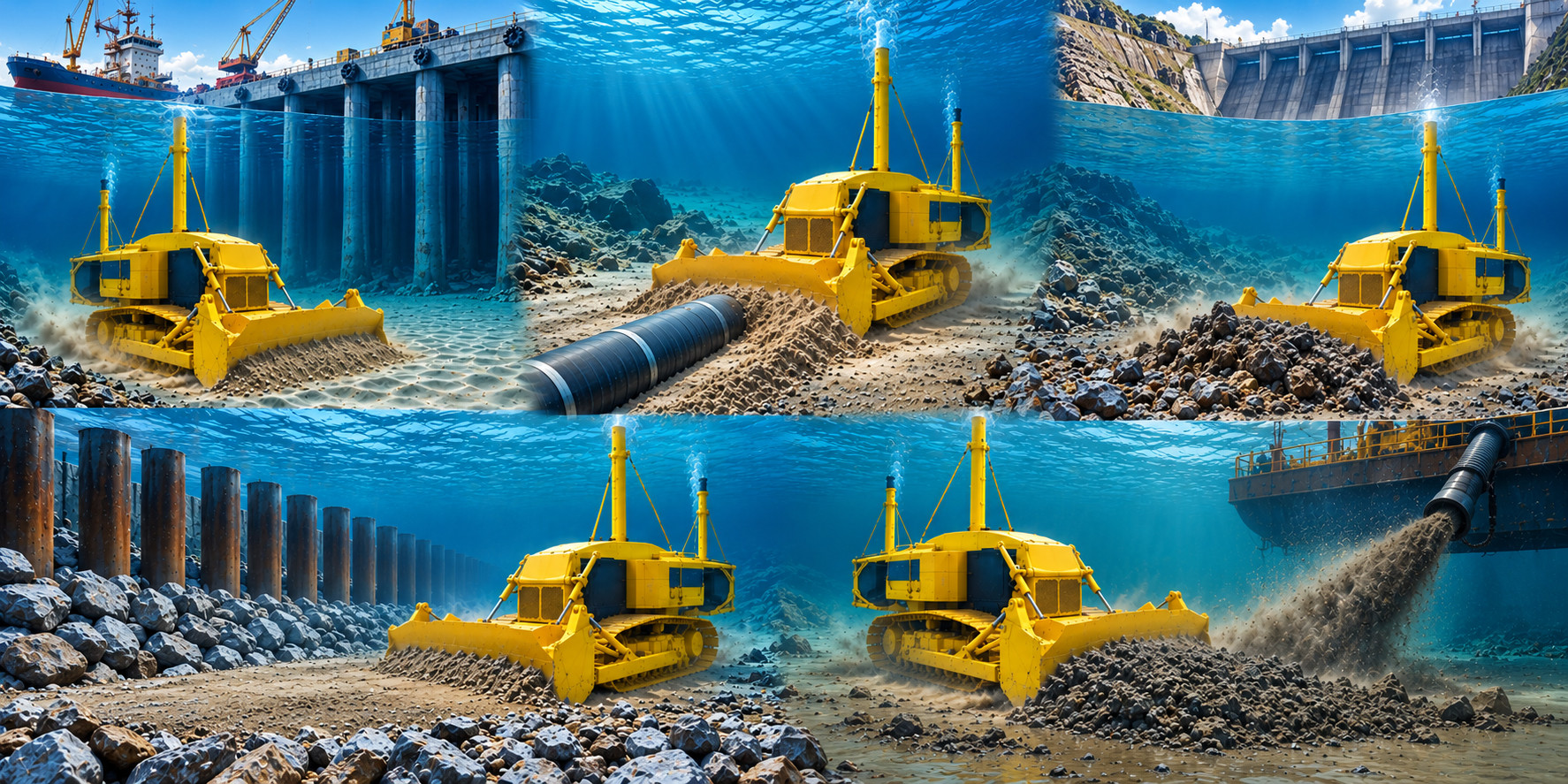
Why Would Anyone Need an Underwater Bulldozer?
Underwater construction presents challenges that ordinary earthmoving equipment was never designed to handle.
Building a harbour, maintaining a shipping channel, preparing a riverbed for a pipeline, or creating a stable foundation for a marine structure often requires moving material beneath the water's surface.
Traditionally, this work has been performed using dredges, cranes, excavators mounted on barges, and specialized marine construction equipment.
However, these methods aren't always ideal for precise grading or pushing material along the bottom.
An underwater bulldozer offers another approach. Rather than reaching down from the surface, the machine operates directly on the submerged ground.
Potential applications include:
• Harbour construction: Leveling underwater surfaces before installing marine structures.
• Riverbed preparation: Grading areas where pipelines, cables, or other infrastructure will be installed.
• Dam and reservoir maintenance: Moving accumulated sediment or reshaping submerged surfaces.
• Marine construction: Preparing foundations for seawalls, breakwaters, and other structures.
• Underwater excavation: Pushing loose material into designated collection areas where it can be removed by dredging equipment.
Instead of attempting to control a bucket or blade from a floating platform, the underwater dozer brings the pushing force directly to the seabed.
Komatsu's Remarkable Underwater Bulldozer
|
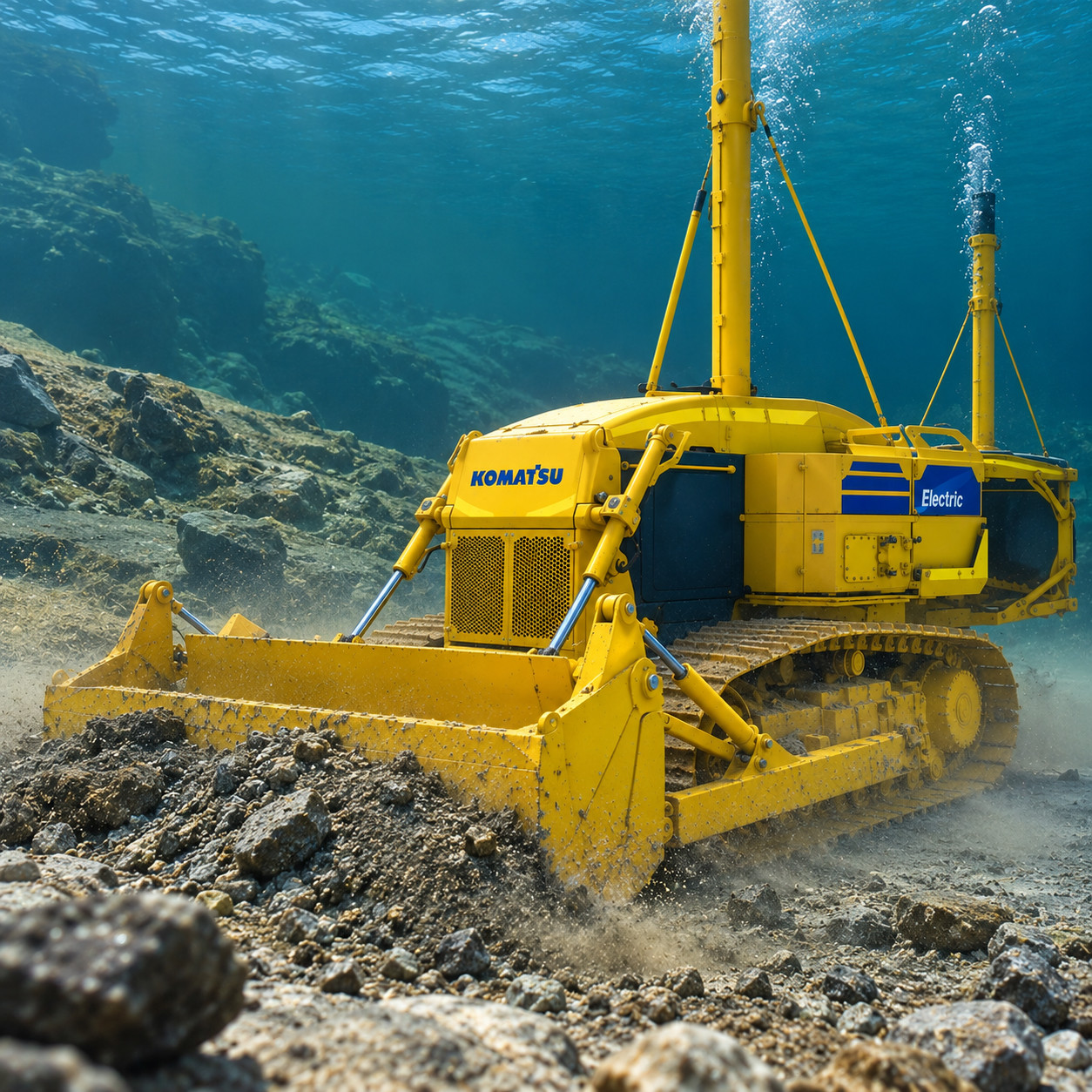
One of the most fascinating examples of this technology came from Japanese equipment manufacturer Komatsu. During the 1970s, Komatsu developed the D155W underwater bulldozer, a purpose-built machine designed to perform earthmoving operations beneath the water's surface. The machine was based on conventional crawler bulldozer technology but incorporated specialized systems that allowed it to operate while submerged. It was an extraordinary engineering achievement for its time. The D155W was designed for underwater work at depths of approximately 7 metres, or 23 feet. Unlike an ordinary bulldozer, it was not intended to carry an operator inside a submerged cab. Instead, the operator controlled the machine remotely from above the water. This eliminated the need to place a person inside a pressurized underwater operator compartment. The result was a machine capable of performing heavy earthmoving work in an environment where a conventional bulldozer would quickly become inoperable. |
 |
How Does an Underwater Bulldozer Actually Work?
At its core, an underwater bulldozer operates much like a conventional crawler dozer.
Its tracks provide traction, its blade pushes material, and its substantial weight helps it remain stable while working.
But making those systems function underwater requires significant modifications.
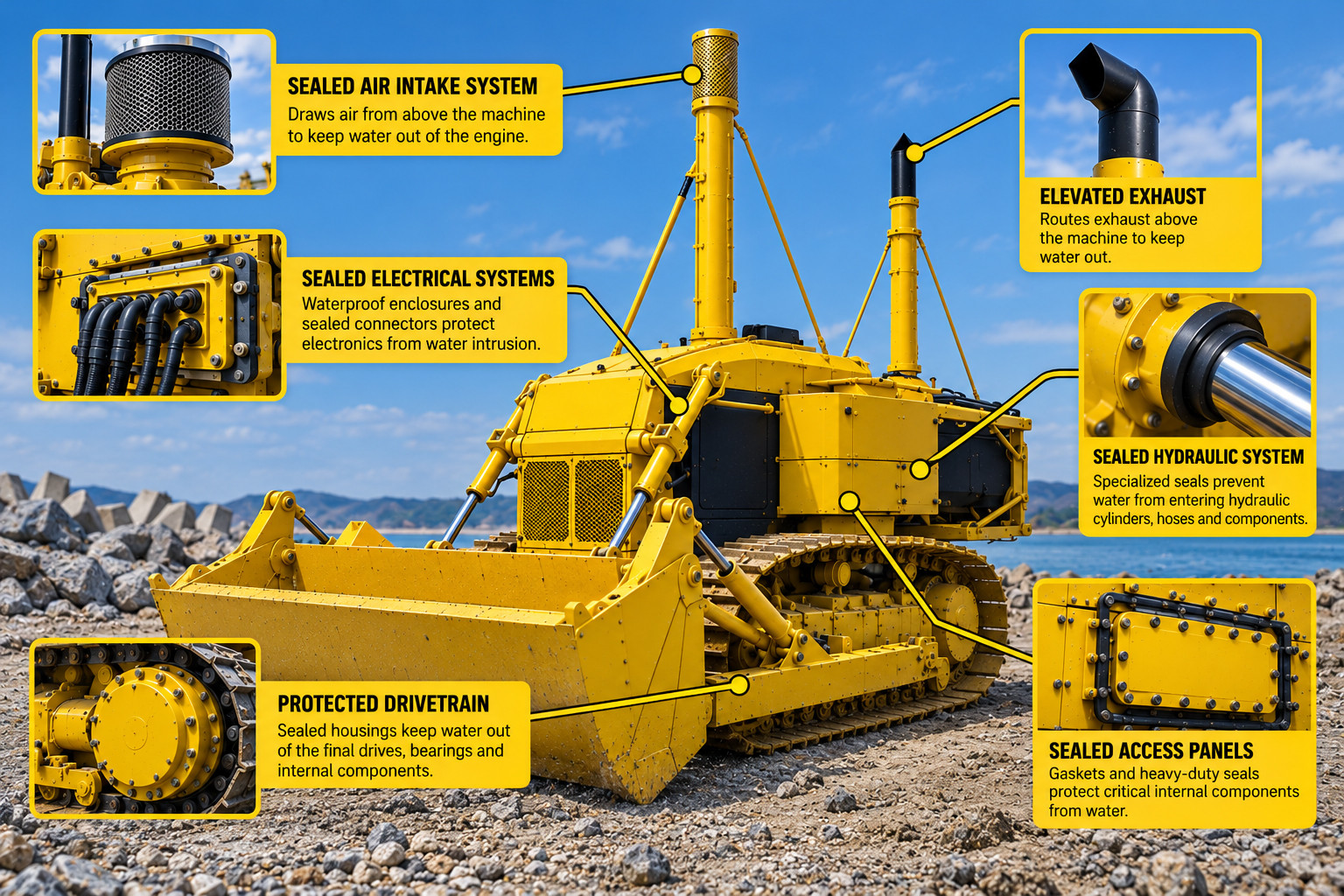
Keeping Water Out of Critical Components
Water is particularly destructive to machinery that was never designed to be submerged.
An ordinary bulldozer contains numerous components vulnerable to water intrusion, including electrical systems, bearings, engine components, hydraulic connections, and lubrication systems.
Underwater bulldozers require specialized sealing and protection to prevent water from entering critical areas.
The engine and drivetrain must also be configured for submerged operation.
Rather than allowing water to circulate freely through the machine, engineers must protect essential components while maintaining the ability to transfer mechanical power to the tracks and blade.
Getting Air to the Engine
One of the biggest engineering challenges is surprisingly simple.
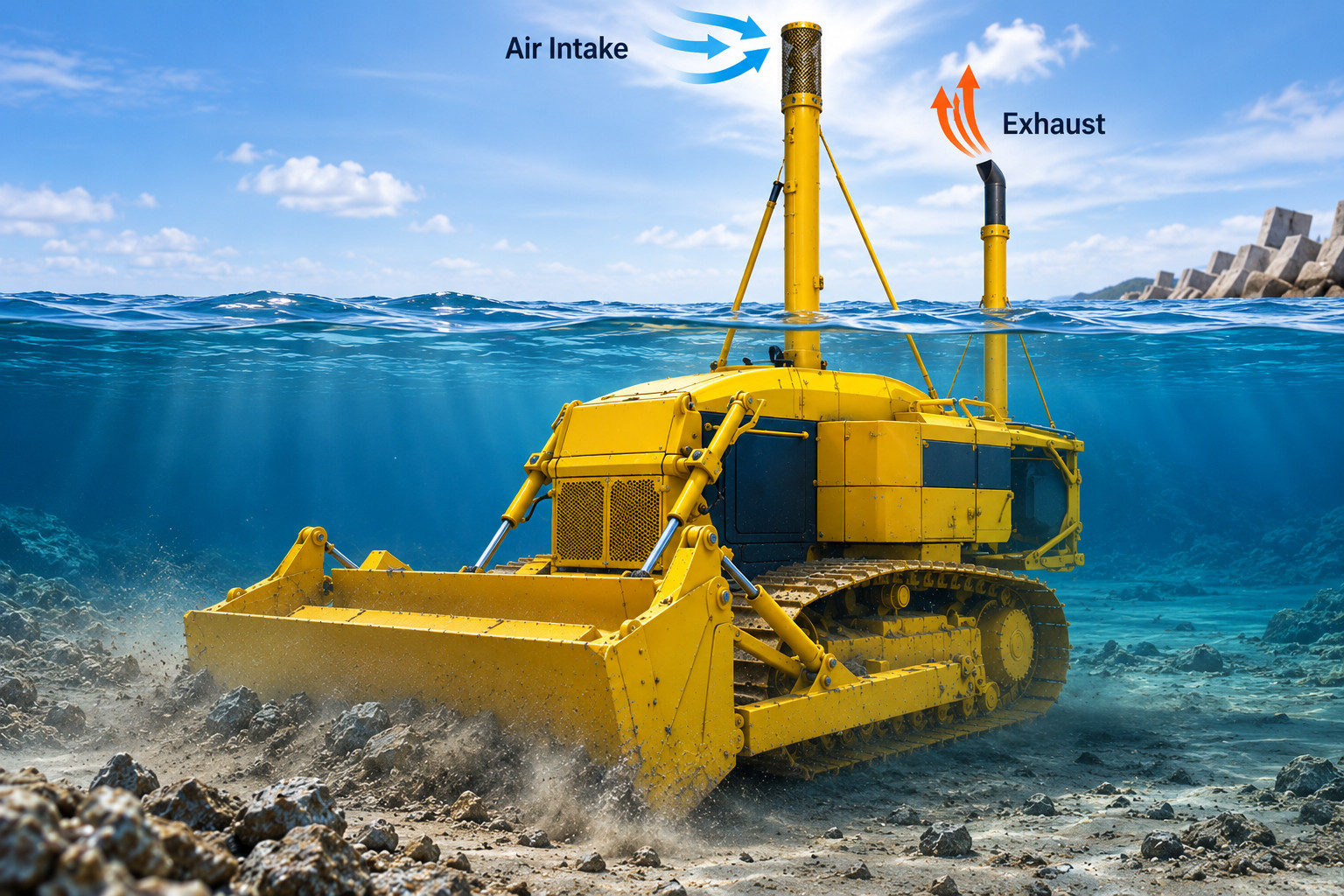
A diesel engine needs oxygen to burn fuel.
A conventional bulldozer draws air directly from its surroundings, but an underwater machine obviously cannot do that.
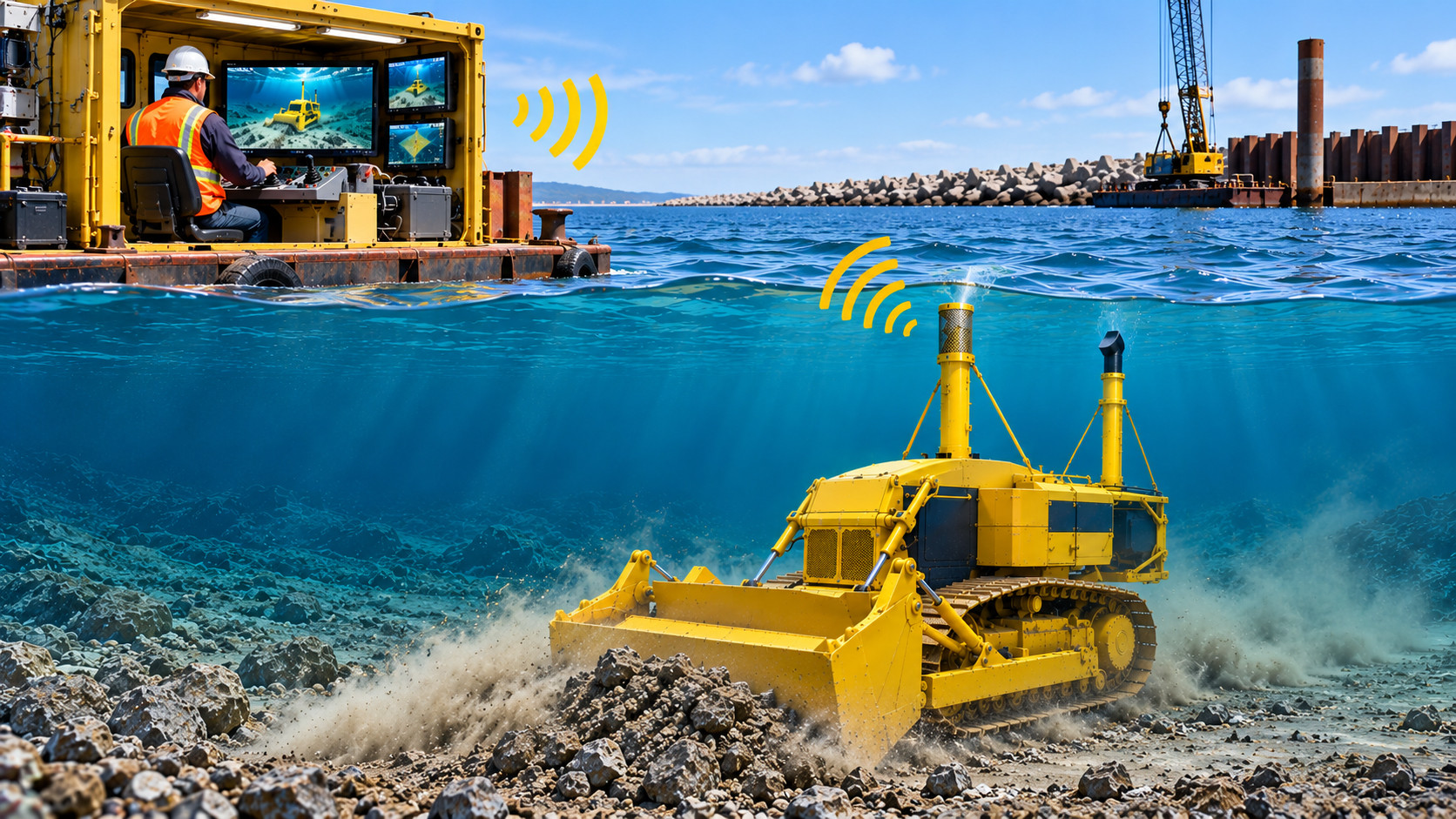
The Komatsu D155W addressed this problem using an elevated structure that carried the engine's air intake and exhaust arrangements above the waterline.
This distinctive vertical structure was one of the machine's most recognizable features.
It allowed the diesel engine to breathe while the main body of the bulldozer remained underwater.
However, it also imposed a practical limit on how deep the machine could operate.
The bulldozer wasn't a submarine. It was a specialized earthmoving machine engineered to work below the surface while maintaining essential connections with the air above.
Remote Operation From the Surface
Operating a bulldozer is challenging enough when the operator can see the blade, tracks, and surrounding terrain.
Now imagine trying to do the same thing when the entire machine is underwater.
The D155W was remotely controlled from the surface, allowing an operator to direct the machine without physically riding on it.
Control signals were transmitted through a cable connection.
The operator could command the bulldozer's movement and blade functions while remaining safely above the water.
However, visibility presented a serious challenge.
In murky water, the operator couldn't simply look down and watch the blade cutting through the material.
Accurate operation required careful positioning, monitoring, and knowledge of the underwater terrain.
Modern underwater construction projects may also use sonar, underwater cameras, positioning systems, and survey equipment to help operators understand what is happening below the surface.
These technologies can provide valuable information when direct visibility is limited or nonexistent.
Tracks That Work on the Bottom
Crawler tracks are particularly useful for underwater earthmoving because they distribute a machine's weight across a relatively large contact area.
This can help reduce ground pressure compared with wheels carrying a similar load.
However, underwater terrain presents its own challenges.
Soft sediment, loose sand, uneven rock, and accumulated debris can all affect traction.
The machine must also contend with the forces generated by water currents.
An underwater bulldozer relies on its weight, track contact, and available traction to push material without becoming immobilized.
Even a powerful crawler dozer can struggle when its tracks sink into soft sediment or lose grip on the bottom.
And recovering a stuck machine from underwater is considerably more complicated than recovering one on dry land.
Does Water Make the Bulldozer Lighter?
Here's where underwater bulldozers become particularly interesting.
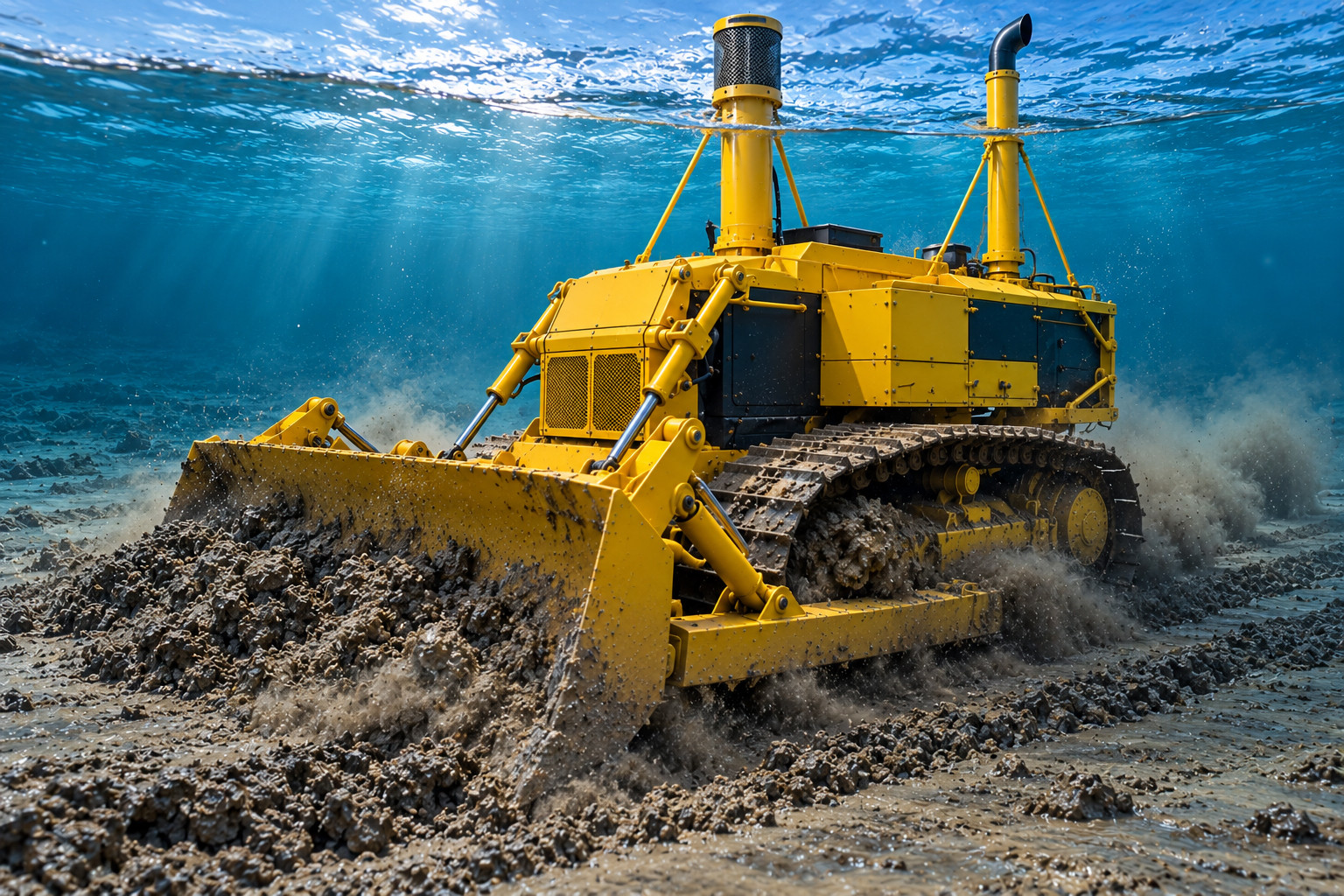
When a bulldozer is submerged, it experiences buoyancy.
According to Archimedes' principle, an object immersed in water experiences an upward force equal to the weight of the water it displaces.
That means an underwater bulldozer has a lower apparent weight than it does on land.
The machine hasn't lost any mass, but the upward force of the water reduces the force pressing its tracks against the ground.
This matters because bulldozers depend on traction to push material.Less normal force on the tracks can mean less available traction, depending on the ground conditions.
Engineers therefore need to consider the machine's submerged weight, balance, ground pressure, and track performance when designing underwater earthmoving equipment.
A bulldozer that performs exceptionally well on dry ground may behave very differently when submerged.
Can an Underwater Bulldozer Push Mud?
Yes, but pushing underwater sediment isn't necessarily the same as pushing dry soil.
Submerged material can range from loose silt and sand to dense clay, gravel, and rock.
The behaviour of that material depends on factors such as particle size, compaction, water content, and the forces acting on it.
A bulldozer blade pushing loose sediment may disturb the bottom and create a cloud of suspended particles.
In some conditions, that cloud can dramatically reduce underwater visibility.
Dense or cohesive material may require considerable cutting force, while extremely soft sediment may offer poor traction.
Water also introduces resistance to the movement of the machine and blade.
Although slow-moving earthmoving equipment generally experiences less hydrodynamic resistance than fast-moving objects, the effects still need to be considered.
The operator must balance blade depth, travel speed, traction, and the amount of material being pushed.
And just as with conventional dozing, attempting to push too much material at once can cause the tracks to slip or the machine to stall.
Why Didn't Underwater Bulldozers Become Common?
Considering what these machines could accomplish, it's reasonable to wonder why underwater bulldozers aren't seen on construction sites around the world.
The answer comes down to practicality.
Building a machine capable of surviving underwater is expensive. Maintaining it is also challenging.
Saltwater accelerates corrosion, while sediment and abrasive particles can damage exposed components.
Every seal, connection, and mechanical system must be designed with the operating environment in mind.
There are also logistical challenges.
An underwater bulldozer must be transported to the worksite, lowered into the water, monitored during operation, and eventually recovered.
If something breaks down on the bottom, even a relatively minor repair can become a major undertaking.
Specialized dredging equipment, long-reach excavators, and marine construction systems can often perform similar work without requiring an entire bulldozer to operate underwater.
For many projects, those alternatives are more economical and easier to maintain.
As a result, underwater bulldozers have remained highly specialized machines rather than becoming a common category of construction equipment.
Are Underwater Bulldozers Still Used Today?
The engineering concept hasn't disappeared, but the technology has evolved.
Today, remotely operated underwater machines can perform a variety of construction, excavation, trenching, and seabed preparation tasks.
Some are tracked vehicles equipped with cutting tools, excavation systems, or specialized attachments.
Others are designed for offshore pipeline installation, subsea cable burial, or seabed intervention.
Unlike the original underwater bulldozers that relied on elevated air intake and exhaust arrangements, some modern subsea machines receive power from the surface through an umbilical cable or use hydraulic and electrical systems designed for underwater operation.
These machines may work at depths far beyond those achievable by early diesel-powered underwater dozers.
However, not every tracked underwater construction machine is technically a bulldozer.
Many are better classified as subsea trenchers, excavation crawlers, or remotely operated vehicles.
The underlying idea remains similar: take powerful earthmoving or excavation equipment directly to the underwater worksite rather than attempting to perform every operation from above.
The Bulldozer That Went Where Bulldozers Weren't Supposed to Go
The Komatsu D155W is a reminder that heavy equipment engineering has never been limited to conventional jobsites.
When engineers encountered the challenge of moving earth underwater, they didn't simply build a bigger dredge.
They explored an entirely different solution.
They took the fundamental design of a crawler bulldozer, protected its critical systems, developed a way for its engine to operate while submerged, and created a method of controlling it remotely.
The result was one of the most unusual bulldozers ever developed.
It wasn't intended to replace every dredge or marine excavator. It was designed to solve specific problems in an exceptionally challenging environment.
And that's what makes the machine so fascinating.
Most bulldozers are built to move mountains. This one was built to move the ground beneath the water.
Additional Facts About the Komatsu DI55W:
| Introduced | 1971–1972 |
| Weight on land | 43,000 kg (94,800 lb) |
| Apparent weight underwater | 27,000 kg (59,500 lb |
| Maximum working depth | 7 m (23 ft) |
| Production | 36 machines |
| Control system | Radio remote control |
Explore more unusual machinery, engineering innovations, and fascinating equipment stories in Iron Insights at HeavyEquipment.com.
