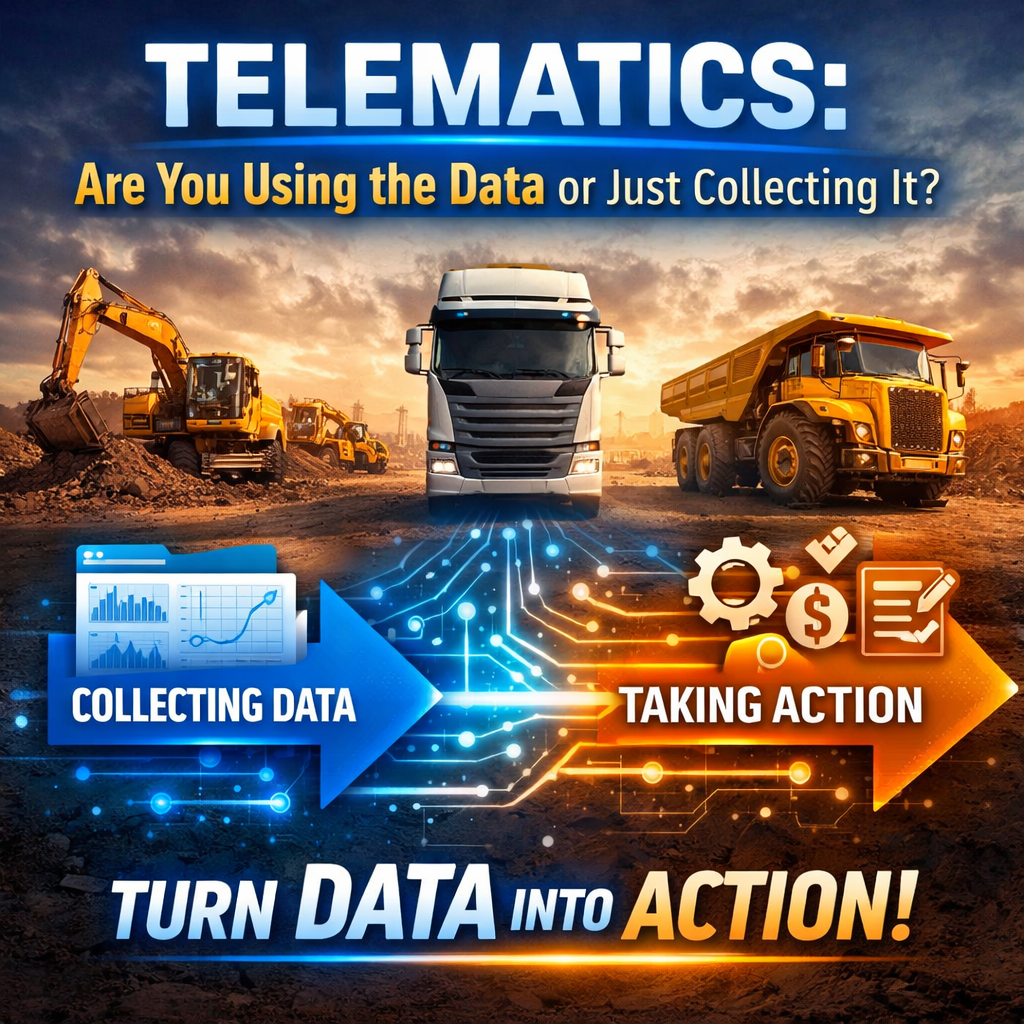
Telematics: Are You Using the Data or Just Collecting It?
In today’s heavy equipment and fleet management world, telematics has moved from being a “nice-to-have” to a must-have. These systems collect mountains of data—from engine hours and fuel consumption to machine location and operator behavior. But here’s the key question: are you using this data, or are you just collecting it?
The Data Explosion
Modern telematics systems can track everything. GPS location, idle times, fuel usage, maintenance alerts, operator habits—the list goes on. For many fleet managers, this results in dashboards full of numbers and graphs. It looks impressive, but if you’re not turning these numbers into actionable insights, it’s essentially digital clutter.
Using Data to Drive Decisions
The real value of telematics comes when data informs decisions. Examples include:
- Maintenance Optimization: Predictive maintenance schedules reduce downtime by addressing issues before they become failures.
- Fuel Management: Monitoring fuel consumption helps identify inefficient equipment or operators, potentially saving thousands annually.
- Operator Training: Telematics can highlight risky habits like harsh braking, excessive idling, or unauthorized use. Training targeted at these behaviors increases safety and productivity.
- Fleet Utilization: By seeing which machines are underused or overused, you can redistribute resources for maximum efficiency.
From Collection to Action
Collecting data is easy. The hard part is analysis and action. Start by defining key metrics for your operation. Ask yourself:
- Which data points impact our bottom line the most?
- What patterns indicate inefficiencies or risks?
- How can insights improve operations, safety, or costs?
Once you identify actionable metrics, set up regular reviews and integrate insights into daily decision-making. The goal is to make telematics a tool that guides decisions, not just records history.
Avoid the Data Trap
The danger lies in assuming that more data automatically equals better results. Without a plan for action, telematics can become a false sense of control—numbers on a screen that don’t translate to tangible improvements. Focus on the data that matters and use it to drive measurable results.
Bottom Line
Telematics is a powerful tool—but only if it’s used actively. Collecting data is just the first step. The real advantage comes from turning data into insights, insights into decisions, and decisions into results.
Ask yourself today: are you leveraging your telematics system, or are you letting valuable data sit idle?