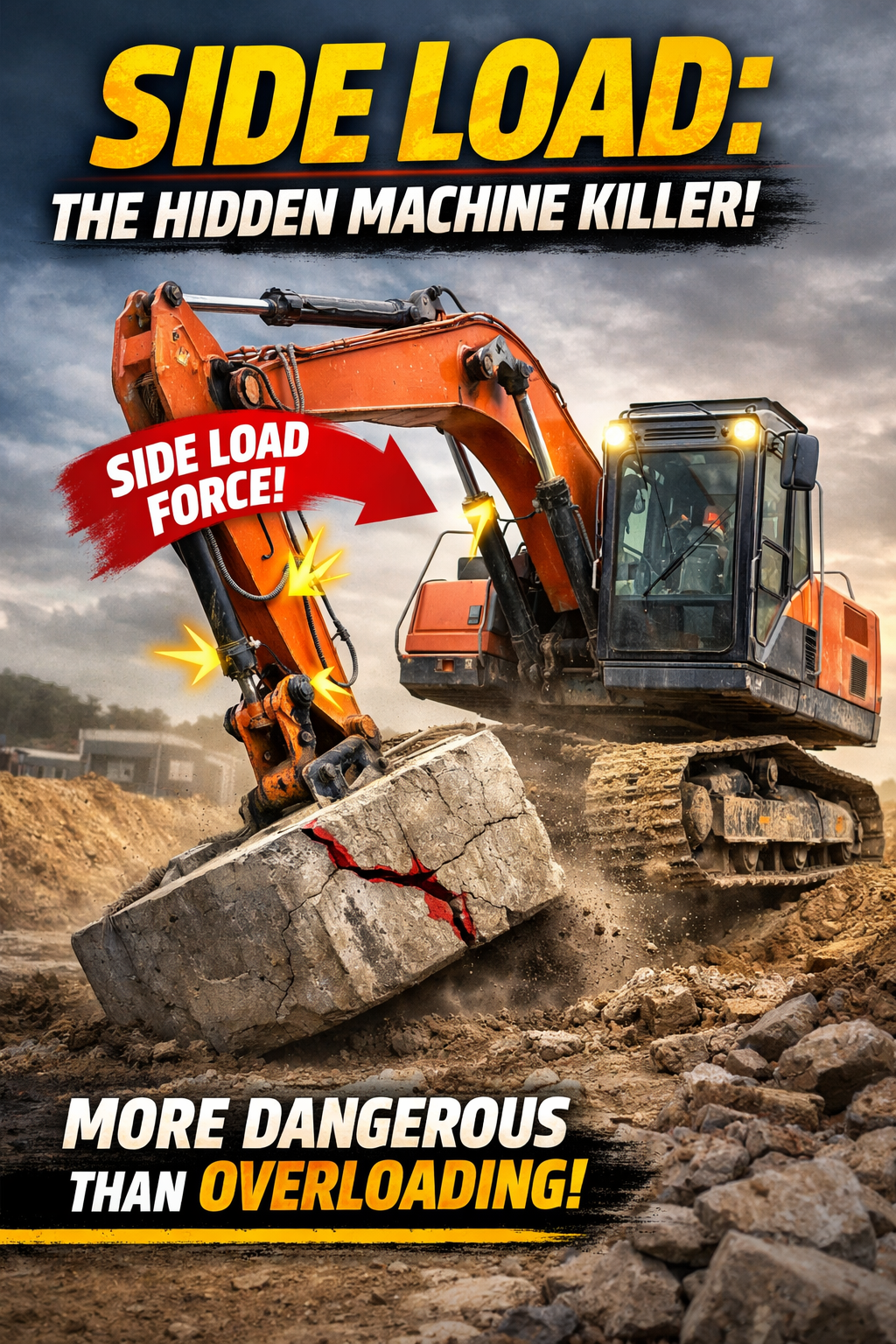
Side Load: The Force That Breaks More Machines Than Overloading
When it comes to heavy equipment, operators often worry about exceeding weight limits. Overloading is a clear and visible danger—machines groan under the extra weight, hydraulic systems strain, and structural damage is easy to spot. But there’s a quieter, stealthier killer in the world of machinery: side load.
What Is Side Load?
Side load occurs when force is applied to a machine or attachment in a direction it wasn’t designed to handle. Unlike lifting straight up or pushing forward—movements machines are built to endure—side loads put stress on pins, bushings, booms, and frames in ways that cause uneven wear and eventual failure.
Think of it like carrying a heavy box while twisting your wrist. The weight isn’t too much, but the angle makes your joints ache. On machines, those “aches” become cracks, bends, and broken parts.
Why Side Load Is So Destructive
- Pins and Bushings Wear Unevenly
Pins are designed to rotate in line with the force applied. Side loads push them sideways, causing uneven wear that quickly leads to slop in the joints. Once pins start wobbling, the load shifts further off-axis, accelerating the damage. - Booms and Arms Are Vulnerable
Excavator booms, loader arms, and similar components are engineered for vertical and longitudinal stress. A heavy side impact can twist these structures, leading to cracks in welds, fractures in the metal, and hydraulic misalignment. - Attachments Take the Hit
Buckets, grapples, and hammers experience side load when the operator digs or swings improperly. Even if the machine feels strong, repeated side stress will shorten the attachment’s life, and sudden overloads can break it instantly. - Hidden Cumulative Damage
Overloading is obvious, but side load is sneaky. A machine can appear fine while pins slowly wear, frames develop micro-cracks, and cylinders start binding—until a catastrophic failure occurs.
Common Situations That Cause Side Load
- Digging along a slope without adjusting the machine’s position
- Swinging a bucket or grapple while extended too far
- Using a backhoe or loader attachment at an angle instead of straight on
- Lifting loads off-center or dragging them sideways
How to Protect Your Machine
- Position Correctly – Always approach your load straight-on. Align the machine so the boom, arm, or attachment moves along its intended axis.
- Use Proper Techniques – Swing gradually, avoid jerky side movements, and keep loads close to the machine when lifting or lowering.
- Inspect Pins and Bushings Regularly – Uneven wear is a warning sign. Replace worn parts before they lead to bigger damage.
- Train Operators – Awareness is key. Operators who understand side load are less likely to damage equipment unintentionally.
Overloading gets the blame because it’s dramatic, but side load quietly wrecks more machines over time. Understanding the hidden forces acting on your equipment—and operating to minimize them—can save tens of thousands of dollars in repairs and extend the life of your machinery.
Machines are built tough, but they’re not invincible. Avoid side load, and your equipment will thank you with years of reliable service.