Rare Construction Equipment Brochures: The Hidden Treasures Every Collector Should Know About
Before YouTube, online spec sheets, and digital product launches, manufacturers relied on beautifully designed printed brochures to showcase their latest machines. These brochures weren't simply advertisements—they were works of art packed with technical specifications, colorful illustrations, operating features, and aspirational photography.
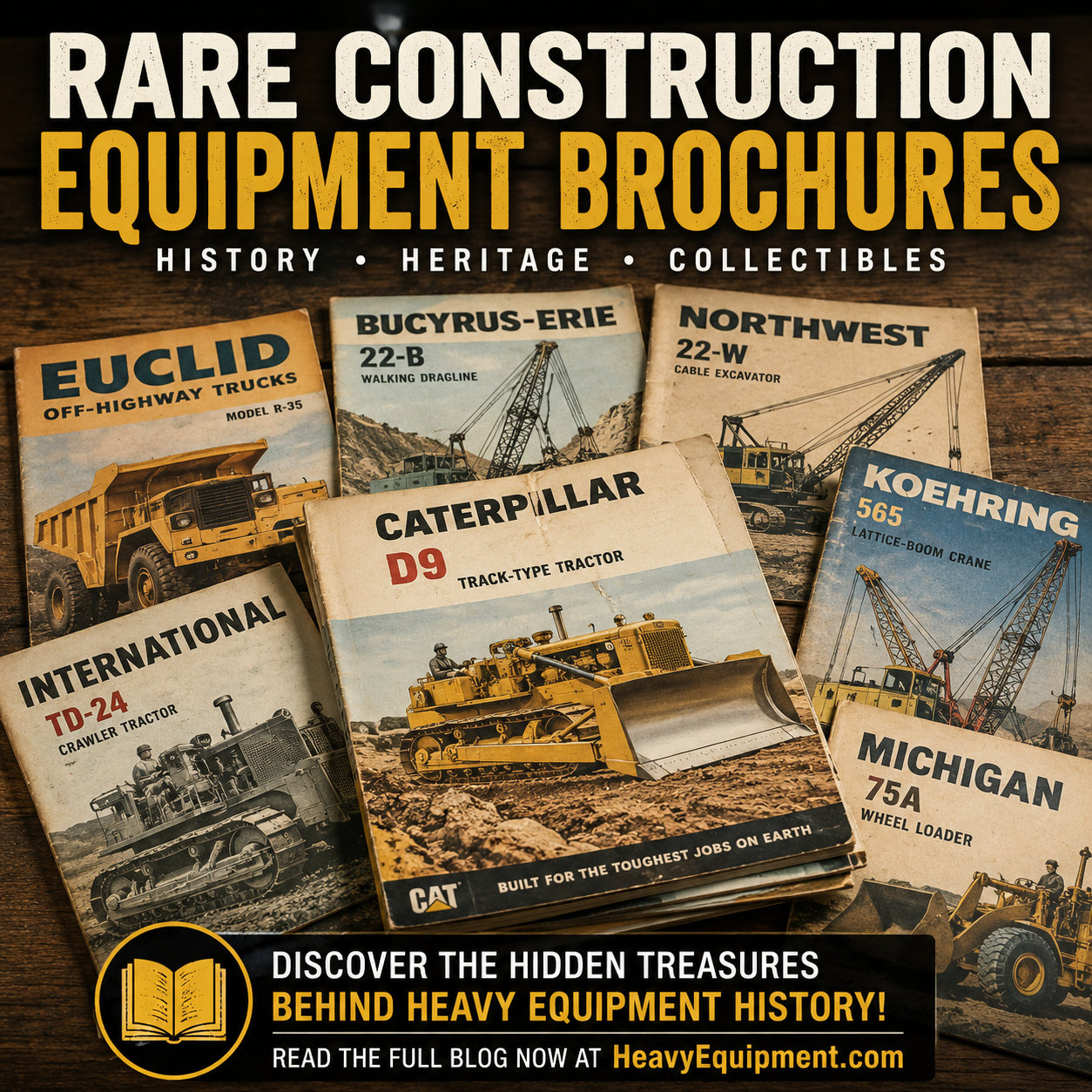
Today, rare construction equipment brochures have become highly collectible. Whether you're fascinated by vintage Caterpillar bulldozers, classic Euclid haulers, forgotten cable excavators, or the earliest hydraulic machines, original brochures offer an authentic glimpse into heavy equipment history.
For collectors, they can be just as exciting as owning a scale model—or in some cases, even the actual machine.
Why Construction Equipment Brochures Are So Collectible
Unlike operator's manuals, brochures were designed to sell machines. Manufacturers invested heavily in photography, artwork, and premium printing.
Many brochures included:
- Full-color machine photography
- Factory illustrations
- Technical specifications
- Optional attachments
- Performance charts
- Historical company branding
- Dealer information
- Original pricing promotions
Because they were often discarded after sales campaigns ended, surviving copies—especially those in excellent condition—can be surprisingly scarce.
The Golden Era of Equipment Brochures
Many collectors consider the 1950s through the 1980s to be the golden age of construction equipment brochures.
During this period manufacturers competed fiercely, producing increasingly elaborate promotional materials featuring dramatic jobsite photography and bold graphic design.
Some of the most desirable brands include:
- Caterpillar
- International Harvester
- Euclid
- Bucyrus-Erie
- Northwest Engineering
- Koehring
- Link-Belt
- Lima
- P&H
- Michigan
- Allis-Chalmers
- Wabco
- Terex
- Clark-Michigan
- Case
- John Deere
- Fiat-Allis
- O&K
- Liebherr
- Komatsu
Many brochures featured machines that are now extremely rare themselves.
What Makes a Brochure Valuable?
Not every old brochure is valuable.
Collectors generally look for several important characteristics.
Excellent Condition
Sharp corners, bright colors, and minimal folds dramatically increase value.
Brochures with writing, torn pages, missing inserts, or water damage are worth considerably less.
Rare Machines
Machines produced in limited numbers often have equally scarce literature.
Examples include:
- Prototype machines
- Experimental models
- Early hydraulic excavators
- Giant mining equipment
- Specialty forestry equipment
- Military engineering equipment
Complete Technical Inserts
Many brochures originally included:
- Fold-out specification sheets
- Option catalogs
- Price lists
- Dealer supplements
- Performance charts
Finding complete examples is much harder than locating brochures missing these inserts.
Original Printing
Collectors strongly prefer original period brochures over modern reproductions.
Original paper quality, printing methods, and even aging characteristics help authenticate vintage literature.
Some of the Most Sought-After Brochures
While values constantly change, collectors frequently search for brochures featuring:
- Caterpillar D9 and D10 bulldozers
- Bucyrus-Erie walking draglines
- Euclid off-highway trucks
- Terex Titan materials
- Northwest cable excavators
- International TD crawler tractors
- Michigan wheel loaders
- Wabco scrapers
- Koehring lattice boom cranes
- Early Komatsu export models
Limited dealer-only publications can be especially valuable.
Where Collectors Find Rare Brochures
Finding original brochures is part of the fun.
Common sources include:
Estate Sales
Former contractors often kept decades of equipment literature stored in filing cabinets or shop offices.
Farm Auctions
Old machinery dealerships sometimes liquidate literature collections alongside equipment.
Online Auctions
Many rare brochures appear individually or in lots.
Searching by model number often produces better results than searching only by manufacturer.
Swap Meets
Construction equipment shows and antique machinery events frequently feature literature vendors.
Former Dealerships
When dealerships close or remodel, old filing cabinets sometimes contain forgotten promotional materials.
How to Store Your Collection
Paper collectibles are surprisingly fragile.
To preserve brochures for decades:
- Store them flat whenever possible.
- Use acid-free archival sleeves.
- Avoid direct sunlight.
- Maintain stable humidity.
- Never laminate originals.
- Handle with clean, dry hands.
Many collectors organize brochures by manufacturer, machine type, or production decade.
Archival binders make browsing easy while protecting delicate paper.
Digitizing Your Collection
Scanning brochures creates a backup in case originals become damaged.
High-resolution scans also make it easier to:
- Read fine print
- Zoom into specifications
- Share images online
- Compare revisions between printings
- Preserve aging documents
A quality flatbed scanner is one of the best investments for serious collectors.
More Than Just Advertising
Construction equipment brochures capture moments in industrial history.
They preserve forgotten paint schemes, discontinued logos, optional attachments, factory photography, and engineering innovations that may no longer exist anywhere else.
For restorers, they're invaluable references.
For historians, they're primary source documents.
For collectors, they're affordable pieces of heavy equipment history that don't require a lowboy trailer or a large storage yard.
Whether you're hunting a pristine Caterpillar brochure from the 1960s or searching for an obscure dragline catalog from a long-defunct manufacturer, every brochure tells the story of how the construction industry evolved—and reminds us that sometimes the rarest machines aren't the ones made of steel, but the paper that introduced them to the world.