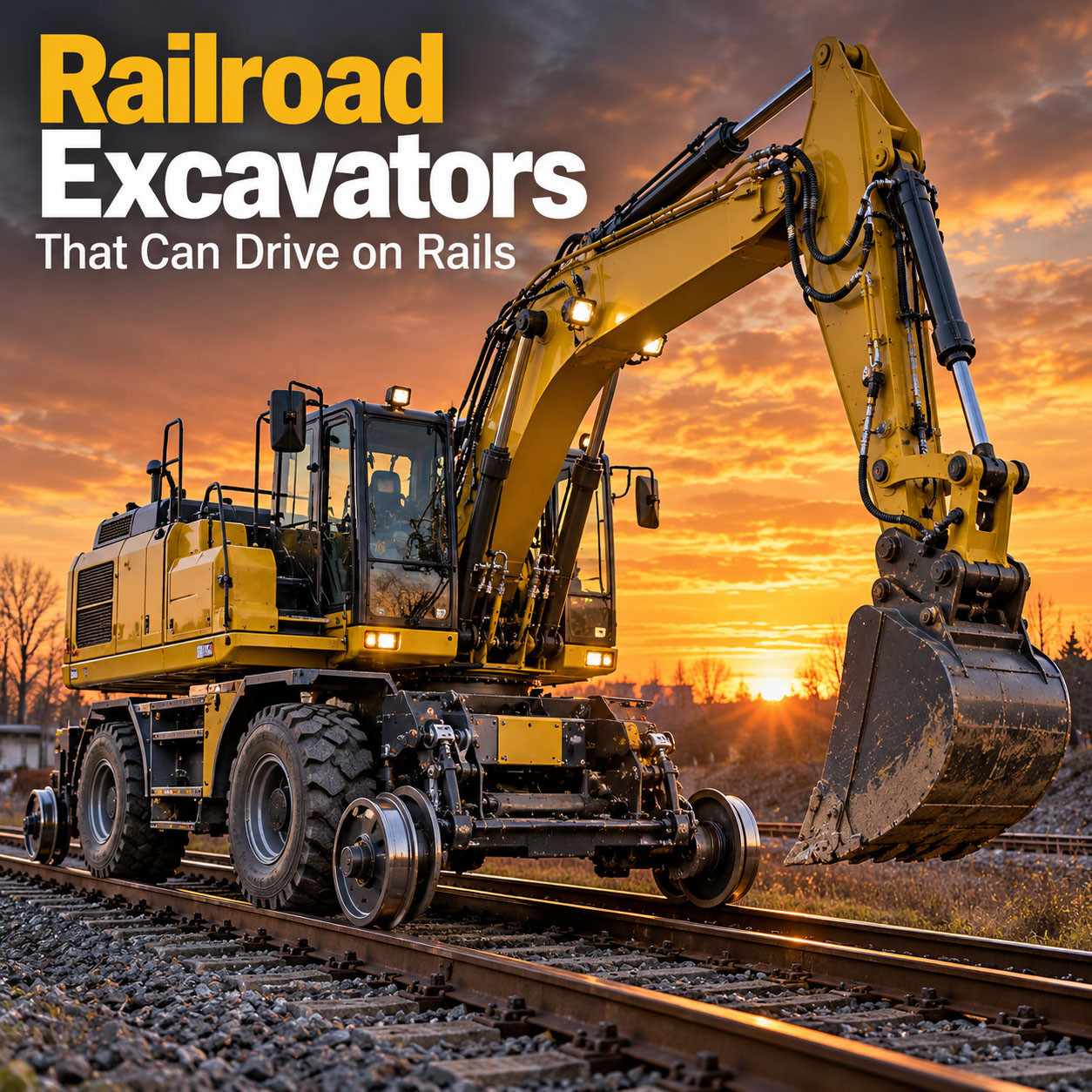
Railroad Excavators That Can Drive on Rails
At first glance, it looks like an excavator that has somehow wandered onto a railway track. Look closer, though, and you'll notice something unusual beneath the machine: steel railway wheels.
These specialized machines are known as road-rail excavators, rail-road excavators, or sometimes hi-rail excavators. They combine the digging, lifting and attachment capabilities of a conventional excavator with equipment that allows them to travel directly along railway tracks.
That seemingly simple modification turns an already versatile machine into a specialized tool for maintaining railway infrastructure.
An Excavator With Two Ways to Travel
A road-rail excavator generally retains the rubber tires or tracks it would normally use around a construction site. The major difference is the addition of retractable rail-wheel assemblies.
When the excavator needs to enter the railway, the operator positions the machine over the rails and lowers the steel guide wheels onto the track. Depending on the machine's design, its regular tires may continue providing propulsion while the rail wheels guide it, or the rail equipment may incorporate its own drive system.
When the rail work is finished, the rail wheels can be raised again, allowing the excavator to leave the track and operate much more like a conventional construction machine.
That ability is extremely valuable because railway maintenance crews aren't always working somewhere conveniently accessible by road.
Why Not Just Use a Regular Excavator?
A standard excavator can work beside railway tracks, but moving it any significant distance along the railway presents a problem.
Railways may pass through forests, steep cuts, bridges, industrial areas and other locations where there simply isn't a suitable road running alongside the track.
A road-rail machine can enter the railway at an appropriate access point and travel along the rails to reach the work area.
It can also move between multiple work locations along a railway without repeatedly loading the excavator onto a trailer.
They're Much More Than Digging Machines
Digging is only one reason to put an excavator on railway wheels.
The hydraulic system and boom make the excavator an extremely adaptable platform. Depending on the machine and attachment, a road-rail excavator may be used for jobs such as:
• Moving railway ties and sections of rail
• Handling ballast
• Cleaning drainage ditches
• Clearing vegetation
• Excavating around railway infrastructure
• Lifting and positioning materials
• Installing or removing track components
• Supporting bridge and culvert maintenance
• Handling specialized railway attachments
Instead of building a completely different machine for every maintenance task, rail contractors can use the excavator's hydraulic system to power a wide variety of tools.
Getting Onto the Track Is a Precision Job
Driving onto railway tracks isn't as simple as approaching them and dropping the rail wheels.
The machine must be properly aligned with the rails before the rail gear is lowered. The operator also has to work within the machine's specific procedures for engaging the rail system and transitioning between road and rail operation.
Once engaged, the railway wheels keep the machine aligned with the track.
This creates an unusual sight: a machine capable of maneuvering freely around a construction site suddenly becomes constrained to two narrow steel rails.
Stability Becomes More Complicated
Excavators already have carefully defined lifting limits. Put one on railway equipment and the situation becomes even more specialized.
Boom position, load weight, working radius and machine orientation can all affect stability. Rail-wheel assemblies and railway operating conditions introduce additional considerations.
Some specialized road-rail excavators incorporate systems designed specifically for railway work, including load monitoring, travel restrictions and other controls.
Operators therefore can't assume that a machine will behave exactly as it would while sitting on solid ground.
The manufacturer's rail-specific operating and lifting requirements matter.
What About Railway Brakes?
A construction machine operating on an active railway needs more than steel wheels.
Depending on its configuration and the railway system where it operates, road-rail equipment can incorporate specialized braking systems, warning equipment, lighting and other railway-specific features.
Machines may also have to meet particular railway or regulatory requirements before they're permitted onto the track.
This is one reason a road-rail excavator isn't simply a conventional excavator with homemade railway wheels bolted underneath it. The conversion affects how the machine travels, stops, handles loads and interacts with railway operations.
Attachments Make Them Even More Interesting
Perhaps the most fascinating thing about these excavators is how dramatically their role can change depending on what's attached to the boom.
Fit one with a bucket and it can excavate.
Install a grapple and it can handle ties or other materials.
Use specialized railway attachments and the same basic excavator can become part of a track maintenance operation.
Some machines can even tow or handle railway equipment under appropriate operating conditions.
The excavator becomes less of a single-purpose digging machine and more of a mobile hydraulic power unit that happens to have a boom.
Why Excavators Work So Well for Rail Maintenance
Railways present an unusual equipment challenge.
Maintenance crews need machines capable of lifting, digging, handling materials and powering attachments, but those machines also need to reach work sites spread across hundreds or thousands of kilometres of track.
An excavator already solves the first half of that problem.
Road-rail equipment solves the second.
Instead of designing an entirely new railway machine, manufacturers and specialist conversion companies can adapt a familiar construction platform for an environment where ordinary equipment struggles to travel.
A Construction Machine With a Second Identity
Road-rail excavators are a great example of how specialized heavy equipment doesn't always require inventing a completely new machine.
Start with one of the most versatile machines on a construction site. Add retractable railway running gear, specialized controls and railway-specific safety systems, and suddenly that excavator can travel where ordinary construction equipment cannot.
One minute it's driving across a work site.
The next, its rail wheels are lowered and it's travelling down a railway line.
For a machine originally designed to dig dirt, that's a pretty impressive second job.