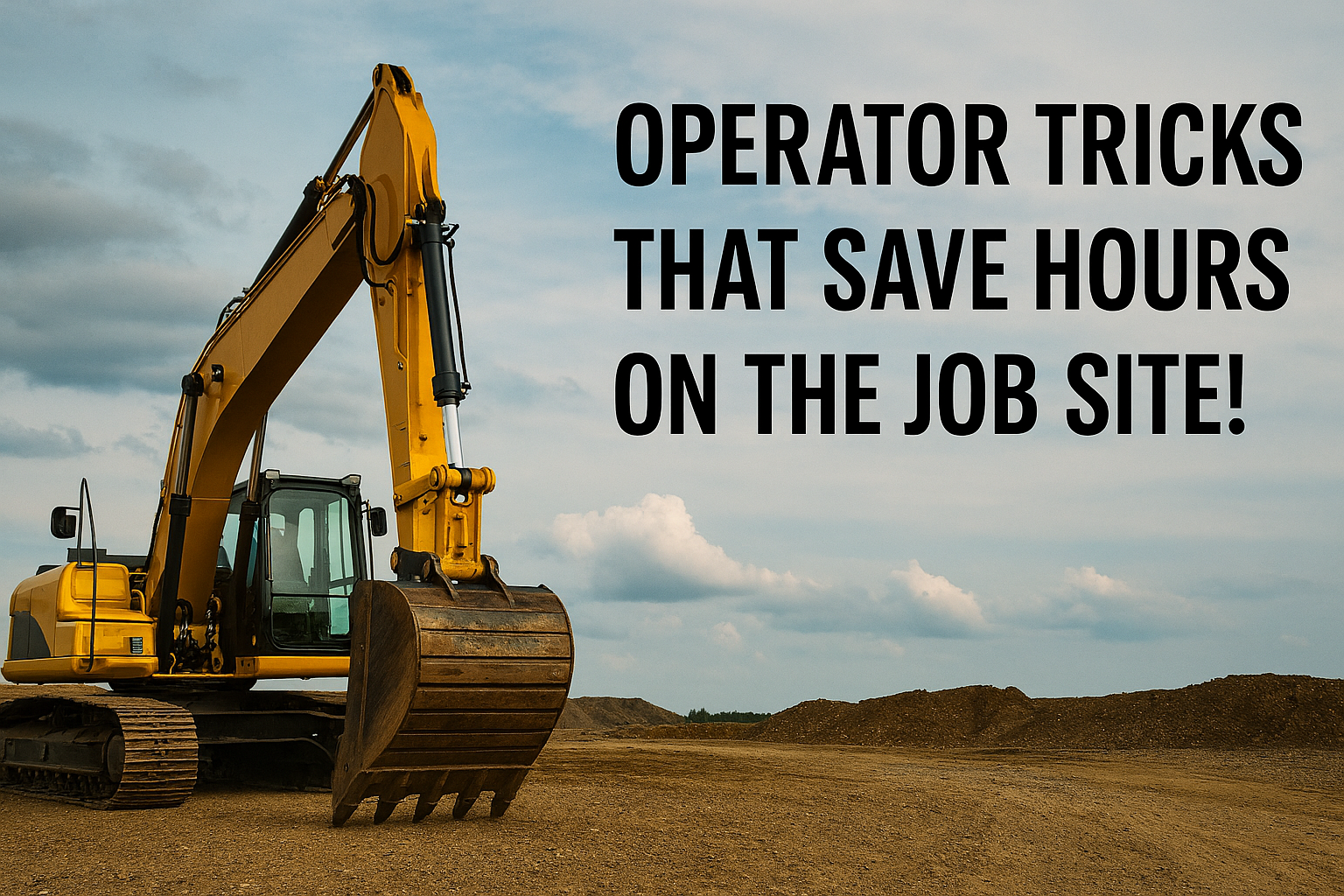
Operator Tricks and Shortcuts That Save Hours on the Job Site
Time is money on a job site, and experienced equipment operators know that every minute saved can have a significant impact on productivity and cost-efficiency. While proper training, safety, and maintenance are critical, mastering a few practical operator tricks and shortcuts can drastically improve workflow and reduce fatigue. Whether you’re running a bulldozer, excavator, or skid steer, these tips will help you work smarter, not harder.
Pre-Planning Your Path and Movements
Before even starting the engine, plan your workflow. Mark your digging areas, identify material drop zones, and visualize the sequence of operations. Taking a few minutes to plan your path can save hours of unnecessary movements, avoid rework, and prevent equipment from working in tight, inefficient spaces.
Pro tip: Use flags, cones, or spray paint to mark boundaries and key points. This visual guide helps reduce hesitation and improves accuracy.
Master the “Float” and “Lift” Techniques
Skilled operators use the machine’s natural movement to their advantage. For example, on an excavator or loader, letting the bucket or blade “float” across the surface reduces material spillage and increases efficiency. Similarly, learning to lift and swing in smooth arcs instead of stopping and starting repeatedly minimizes wear on hydraulics and tracks while speeding up operations.
Stack and Stage Materials Strategically
Instead of moving material in a disorganized fashion, stage it near the next step of the operation. For example, when backfilling a trench, pre-stack soil near the trench edge instead of waiting for it to be delivered in small loads. This reduces machine travel time and ensures a more continuous workflow.
Pro tip: Think several steps ahead. The best operators anticipate where materials will be needed and place them accordingly.
Leverage the Machine’s Full Range
Many operators underutilize their machine’s reach or lift capabilities. Fully extending a boom or blade at the right moment can cut down extra swings or repositioning. Understanding the exact limits of your equipment helps you avoid unnecessary adjustments and complete tasks faster.
Utilize Multi-Pass Techniques
Sometimes, it’s faster to take several controlled passes rather than trying to move a large amount in a single attempt. For example, on grading or spreading operations, breaking the task into smaller, precise passes reduces cleanup time, minimizes material spillage, and keeps surfaces level.
Optimize Cab Ergonomics and Controls
A comfortable operator is a productive operator. Adjust the seat, mirrors, and control sensitivities to reduce fatigue and improve precision. Many modern machines allow custom joystick settings or automated functions; learning and using these can save considerable time over the course of a day.
Quick Maintenance Checks on the Go
Preventative maintenance doesn’t have to be a full-stop event. Quick checks of fluid levels, track tension, and attachments before and during operations prevent breakdowns that can halt progress for hours. An operator who integrates these checks into the workflow ensures continuous operation.
Learn Site-Specific Shortcuts
Every job site has its quirks. Experienced operators notice shortcuts such as avoiding congested areas, using natural slopes for material movement, or utilizing other machines for assistance. Observing patterns on your site and adjusting your workflow accordingly can save significant time.
The best operator shortcuts are a combination of skill, foresight, and attention to detail.
While every job site is different, the principles of planning, efficiency, and smooth operation remain the same.
By mastering these tricks and continuously refining your workflow, you’ll save hours on the job site, reduce machine wear, and improve overall productivity.