Operator Assist & Semi-Autonomy – The Iron Learns to Think
The modern jobsite is evolving, and so is the iron that runs it. While heavy equipment has always been about brute strength, today’s machines are increasingly defined by their brains as much as their brawn. With advanced operator-assist features and semi-autonomous technology, machines are taking on more of the thinking—while still relying on skilled operators to guide the work.
3D Grade Control and Machine Guidance
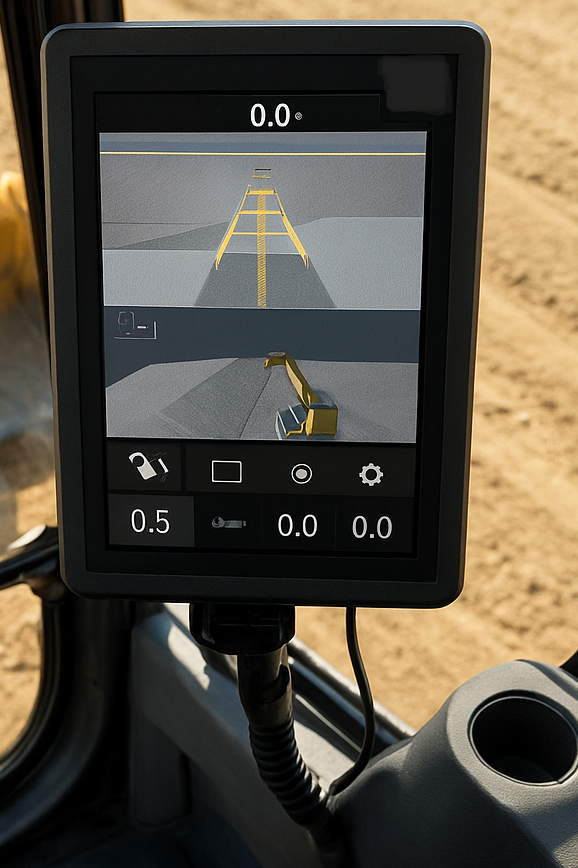
One of the most visible shifts in the industry is the rise of 3D grade control systems. Using GPS, laser, or total station technology, these systems compare the position of the machine’s blade or bucket to the design surface in real time.
Instead of relying solely on the operator’s eye and experience, the onboard system provides visual guidance—or even automatic blade adjustments—to ensure precision cuts. The benefits are clear: fewer passes, reduced rework, and material savings. In short, the machine “knows” where it is and where it needs to be, cutting guesswork and boosting efficiency.
Collision Detection and Operator Fatigue Monitoring
Safety has always been a top priority in heavy equipment, and assistive technologies are now stepping in to help. Collision detection systems use cameras, radar, and ultrasonic sensors to alert operators to hazards around the machine—be it a coworker, another machine, or an obstacle on the jobsite.
Equally important is monitoring the human side of the operation. Fatigue detection systems use cab-mounted sensors to track eye movement, head position, and even heart rate. If signs of drowsiness are detected, the system can issue alerts or even limit machine functions. These technologies are designed to keep both operators and jobsites safe, reducing accidents caused by one of the most common risk factors: human error.
The Path Toward Fully Autonomous Earthmoving
So where does this technology lead? Many see these operator-assist features as stepping stones to full autonomy. Already, mining operations are testing fleets of driverless haul trucks that follow mapped routes and work around the clock without breaks. In construction, semi-autonomous dozers and excavators are capable of digging, grading, and trenching with minimal operator input.
The vision of fully autonomous earthmoving isn’t just about replacing operators—it’s about optimizing productivity, improving safety, and handling repetitive or hazardous tasks more efficiently. Human operators will still play a critical role, especially in complex jobs that require judgment and adaptability. But as machines continue to “learn,” the line between operator and assistant will keep shifting.
Heavy equipment is no longer just iron and hydraulics—it’s becoming iron and intelligence. From 3D grade control to fatigue monitoring, today’s machines are learning to think, helping operators work smarter, safer, and more efficiently. The future may not be fully autonomous just yet, but it’s clear that tomorrow’s iron will have as much computing power as horsepower.