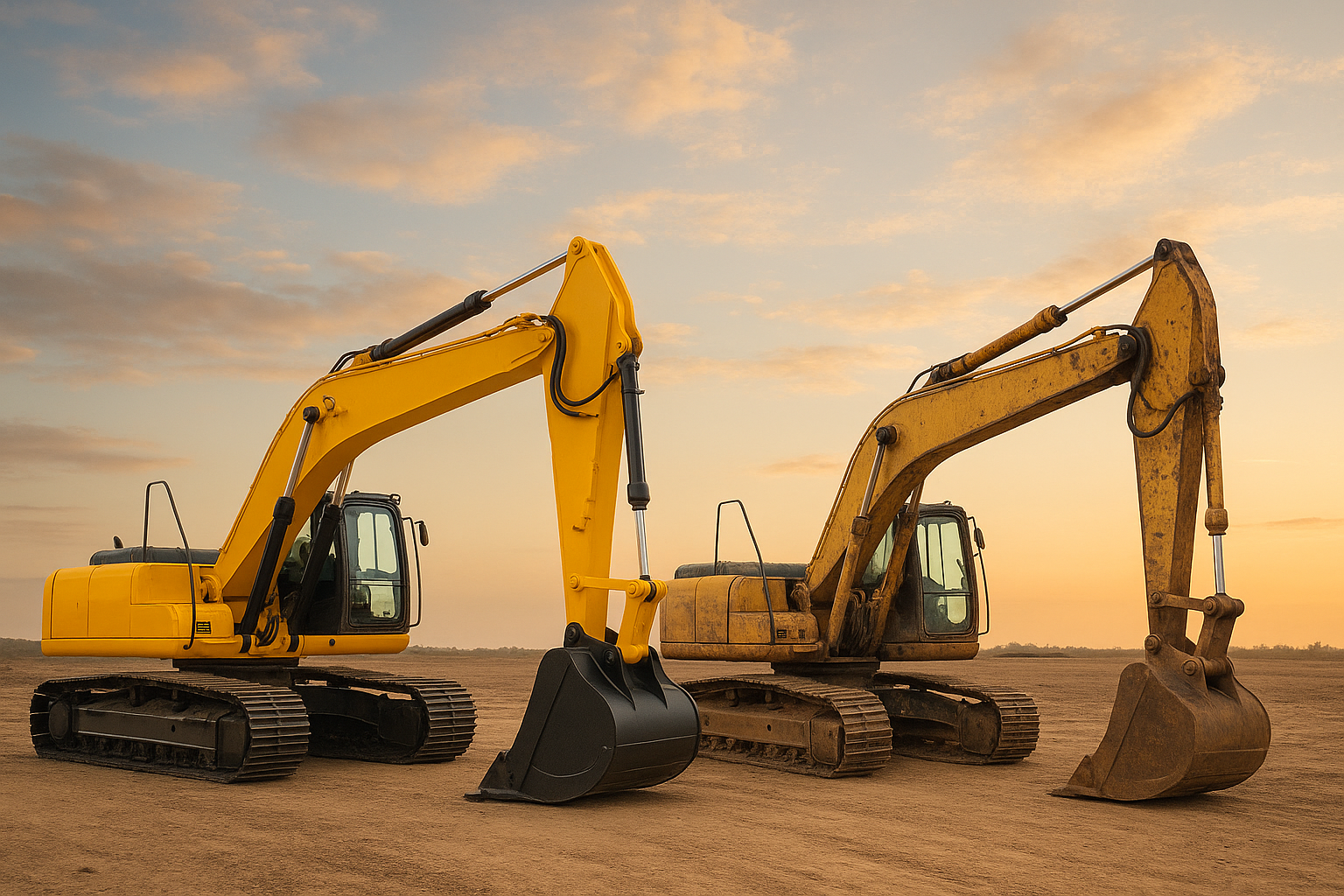
New vs. Used Machines: When Each One Makes More Financial Sense
For equipment owners, fleet managers, and iron enthusiasts, one question comes up again and again:
Should I buy new, or is a used machine the smarter move?
The truth is, both options can be financially sound—but only when matched to the right job, budget, and long-term plan. Below is a breakdown that helps you decide which investment makes the most sense for your operation.
____________________________________________________________________________________
When Buying NEW Makes More Financial Sense
1. You Need Maximum Uptime
A brand-new machine comes with:
• Zero previous wear
• Factory warranty
• Predictable service life
• Less risk of unexpected downtime
If your projects run on tight schedules, or downtime penalties are high, new machines pay for themselves through reliability alone.
____________________________________________________________________________________
2. You’re Working in High-Performance or High-Precision Applications
Jobs that demand:
• Tight tolerances
• Fast cycle times
• Maximum hydraulic efficiency
• Heavy lifting at full reach
…benefit from the latest engineering improvements. Manufacturers upgrade hydraulics, pumps, emissions systems, and control software every cycle—so new machines often deliver significantly better performance.
____________________________________________________________________________________
3. You Want Better Fuel Efficiency
Fuel is one of the largest lifetime operating costs.
Newer models often include:
• Advanced engine management
• Load-sensing hydraulics
• Auto-idle features
• Eco or smart modes
Over thousands of hours, these efficiencies can save tens of thousands of dollars.
____________________________________________________________________________________
4. You Plan to Keep the Machine Long-Term
If you’re building a fleet you’ll run for 8–12 years, a new machine:
• Provides the longest service window
• Offers the most predictable lifecycle cost
• Maintains value better over time
Long-term owners often get the best ROI from buying new.
____________________________________________________________________________________
When Buying USED Makes More Financial Sense
1. You Have Short-Term or Low-Hour Needs
If the machine’s role is:
• Seasonal
• Part-time
• Backup unit
• Limited to a specific task
…a lightly used machine gives you all the capability at a fraction of the cost.
____________________________________________________________________________________
2. Your Budget Needs a Lower Upfront Investment
Used equipment avoids the biggest cost hit: initial depreciation.
The moment a machine is sold new, it loses a significant percentage of value—but you skip that hit entirely when buying used.
This makes used especially attractive if cash flow matters.
____________________________________________________________________________________
3. You Know the Machine’s Service History
A well-documented used machine is a goldmine.
If you can verify:
• Maintenance logs
• Original hours
• Repair history
• Ownership chain
…you reduce your risk dramatically.
Some of the best used purchases are dealer-certified machines serviced by pros since day one.
____________________________________________________________________________________
4. Your Work Doesn’t Push Machines to the Limit
For lighter applications like:
• Landscaping
• Utility work
• Small property jobs
• Snow removal
• Agricultural tasks
…a used unit often performs just as well as a brand-new one—without the price tag.
____________________________________________________________________________________
New vs. Used: Quick Comparison
|
Factor |
New Machine |
Used Machine |
|
Upfront Cost |
High |
Low-Moderate |
|
Lifetime Value |
Strong |
Good if well-maintained |
|
Reliability |
Highest |
Varies by condition |
|
Downtime Risk |
Low |
Medium |
|
Fuel Efficiency |
Best |
Older engines = higher fuel |
| Ideal For | Long-term fleets, high-performance work | Short-term use, tight budgets, lighter workloads |
____________________________________________________________________________________
The Bottom Line
There’s no one-size-fits-all answer.
New machines make sense when uptime, performance, and long-term value matter most.
Used machines win when cost control, short-term needs, or lower-intensity work take priority.
In the end, the smartest decision is the one that fits your job mix, budget, and business goals—not just the sticker price.