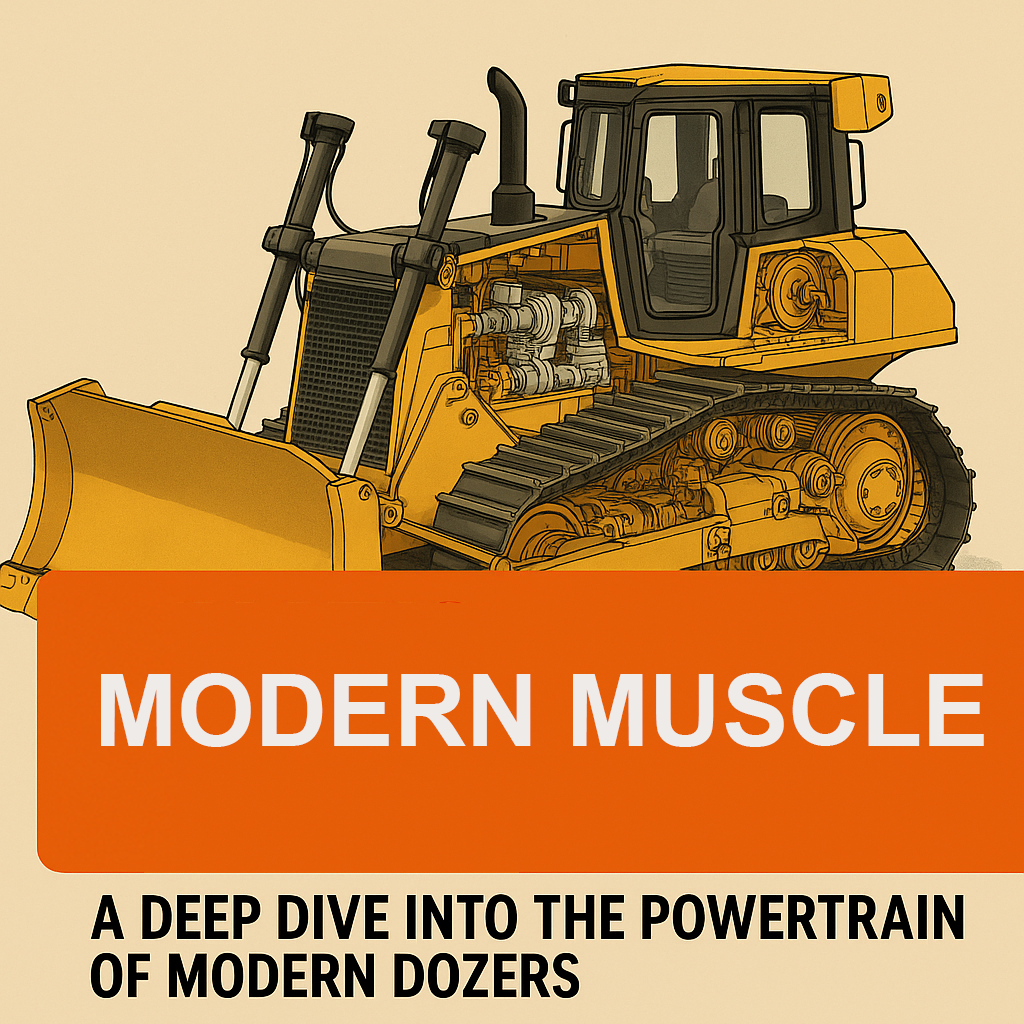
Modern Muscle: A Deep Dive Into the Powertrain of Modern Dozers
To the untrained eye, a bulldozer is just brute force on tracks—pushing dirt, climbing slopes, and muscling its way through jobsites without flinching. But for heavy some of us, there's a deeper appreciation for what makes these machines tick. Beneath the thick steel and rugged design lies the beating heart of any dozer: the powertrain.
Let’s lift the hood and take a closer look at what drives these beasts—and how the technology behind modern dozers has evolved into a precise, powerful, and increasingly intelligent system.
The Powertrain: More Than Just an Engine
When people talk about dozer power, they often go straight to the engine. And sure, the engine is a big deal—it generates the raw horsepower needed to move tons of earth. But the powertrain is the full system that turns that power into actual motion, and it includes:
- The transmission
- Torque converter or hydrostatic drive
- Final drives
- Tracks and undercarriage
- Control and monitoring systems
Each part plays a crucial role in translating energy into productivity, and the choices manufacturers make can dramatically affect how a machine feels and performs in the dirt.
Transmission Tech: Mechanical vs. Hydrostatic
One of the biggest evolutions in dozer design has been the shift from mechanical drive to hydrostatic transmission (HST).
Mechanical Drive:
This traditional setup uses a torque converter and planetary transmission, directing power through a gearbox to the tracks. Mechanical drives are generally:
- Better for high-speed, long pushes
- Simpler in design, often easier to repair in the field
- Known for being tough and reliable in harsh environments
Hydrostatic Drive:
Hydrostatic systems use hydraulic pumps and motors to deliver power with precision. They offer:
- Seamless speed changes and better maneuverability
- Independent track control (great for fine grading and turning under load)
- Improved fuel efficiency through smart power management
Take a look at the Caterpillar D6 XE—it uses an electric drive system that blends traditional mechanical durability with advanced efficiency. Meanwhile, Komatsu’s D61EXi-24 uses HST and integrated machine control for pinpoint grading with minimal operator input.
Final Drives: Where Torque Hits the Ground
Final drives multiply torque and deliver it to the tracks. In today’s machines, sealed and lubricated final drives help extend life and reduce maintenance. Some models, like Liebherr’s PR 776, feature split drivetrain layouts that balance load across both sides of the machine, increasing reliability and reducing wear on individual components.
For operators, this translates into less downtime and more consistent pushing power over the long haul.
Smarter Systems, Smarter Operators
One of the most exciting developments in modern dozer powertrains is the integration of digital intelligence.
GPS-guided blade controls, load sensing hydraulics, and onboard diagnostics now work in tandem with the powertrain to:
- Prevent overloading the system
- Optimize fuel use by matching power output to task demand
- Alert operators or fleet managers to upcoming maintenance needs
Machines like the John Deere 850L give real-time feedback on grade, load, and engine performance—helping newer operators push like veterans.
Maintenance Insights: What to Watch
Powertrain issues can bring a productive day to a grinding halt. For those who wrench on their own equipment or just love shop talk, here are common trouble spots to monitor:
- Track slippage or misalignment—often a sign of final drive or undercarriage issues
- Sluggish response or power loss—could be hydraulic contamination in HST systems
- Unusual vibrations—may indicate internal gear or bearing problems
- Overheating transmissions—a warning that fluid levels or cooling systems need attention
Regular fluid sampling and inspections go a long way toward keeping the beast alive and well.
The Muscle Behind the Blade
For all their brute strength, modern bulldozers are marvels of engineering finesse. The powertrain is where muscle meets method—where raw horsepower is tamed, channeled, and unleashed with precision.
Whether you're running one, wrenching on one, or just admiring from afar, understanding what’s happening under the hood adds a whole new layer of appreciation for these iron giants.
So next time you see a dozer carving out a road or reshaping the earth, remember: it’s not just brute force. It’s a perfectly tuned symphony of mechanical and hydraulic engineering, all working in harmony to move the world—one push at a time.