Hydraulic Power Explained: Why Flow Matters Just as Much as Pressure
When operators talk about machine power, the conversation often centers on horsepower or hydraulic pressure. While both are important, one equally critical factor is often overlooked: hydraulic flow. Understanding how flow and pressure work together helps explain why two machines with similar specs can perform very differently in real-world applications.
Pressure vs. Flow: The Core Difference
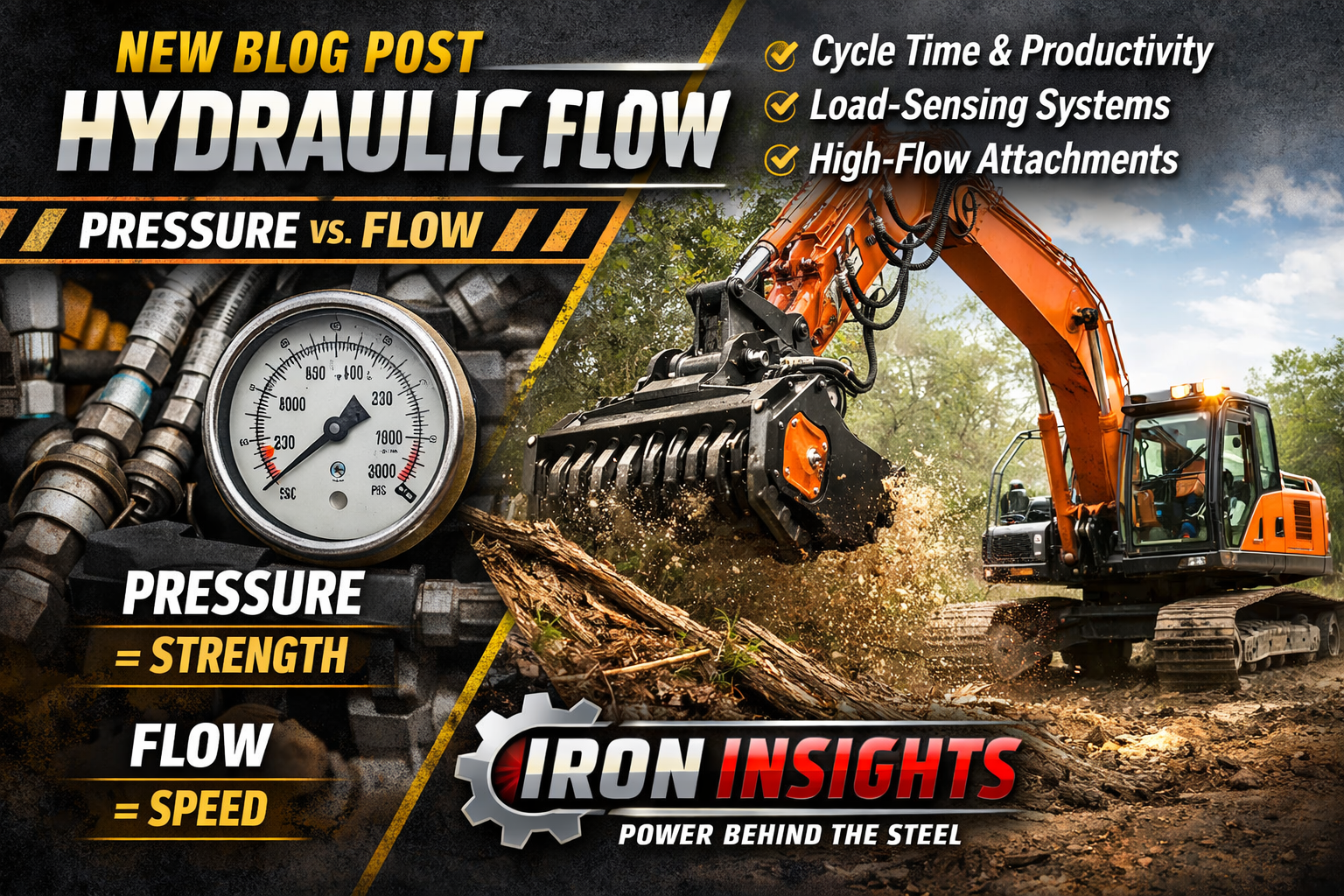
Hydraulic pressure (measured in PSI or bar) is the force available in the system. It determines how much load a cylinder or motor can handle—think lifting power or breakout force. Flow, measured in gallons per minute (GPM) or liters per minute (LPM), determines how fast that force is applied.
A simple way to think about it:
- Pressure = strength
- Flow = speed
You can have all the pressure in the world, but without sufficient flow, machine movements will be slow and inefficient. Conversely, high flow without adequate pressure won’t provide the muscle needed to dig, lift, or push under load.
Why Flow Impacts Cycle Times
Cycle time is where flow really shows its value. Excavators, loaders, and dozers rely on fast, repeatable movements to stay productive. Higher hydraulic flow allows cylinders to extend and retract faster, reducing the time it takes to complete each cycle.
This is why larger machines—or high-production variants of the same model—often feature higher-capacity hydraulic pumps. The added flow doesn’t just make the machine feel more responsive; it directly increases material moved per hour.
Load-Sensing and Variable Displacement Pumps
Modern equipment uses load-sensing, variable displacement pumps to balance flow and pressure efficiently. These systems adjust pump output based on demand, delivering only the flow required at a given moment.
Benefits include:
- Reduced fuel consumption
- Less heat generation
- Improved component life
- Smoother multi-function operation
This is especially noticeable when performing combined movements, such as tracking while swinging and lifting on an excavator. Without sufficient flow management, one function would “steal” power from another.
Attachments: The Flow Demand Multiplier
High-flow attachments—mulchers, cold planers, trenchers, and large augers—place massive demands on hydraulic systems. Two machines with identical operating weights may perform very differently with the same attachment if one offers higher auxiliary flow.
This is why manufacturers often list standard flow and high-flow auxiliary options. Matching attachment requirements to machine flow capacity is critical to avoid sluggish performance or overheating.
Real-World Takeaway
When evaluating heavy equipment, don’t focus solely on horsepower or maximum pressure ratings. Look closely at:
- Hydraulic pump flow rates
- Auxiliary hydraulic capacity
- Whether the system is load-sensing
- Cooling capacity for sustained hydraulic work
Machines that strike the right balance between pressure and flow will not only feel more powerful—they’ll stay productive, efficient, and reliable over long shifts.
Understanding what’s happening beneath the steel makes you a better operator, buyer, and equipment enthusiast. Hydraulic flow may not get the spotlight, but on the jobsite, it often makes the difference between an average machine and a great one.