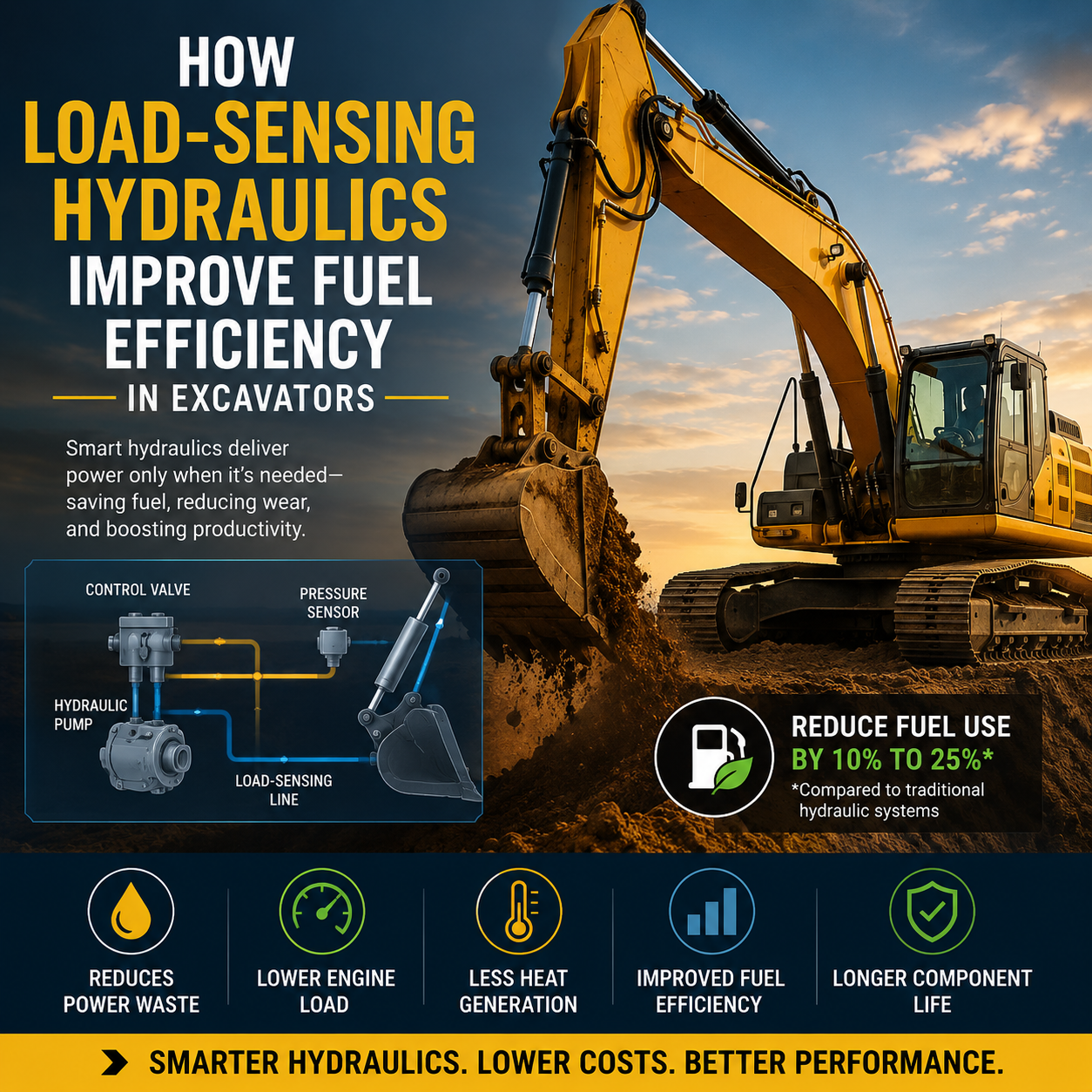
How Load-Sensing Hydraulics Improve Fuel Efficiency in Excavators
Fuel efficiency has become one of the most important performance factors in modern excavator design. With rising fuel costs and increased pressure to reduce emissions, operators and fleet managers are looking closely at every system that affects consumption. One of the biggest advancements in this area is load-sensing hydraulics.
These systems don’t just move oil—they intelligently match hydraulic output to real-time demand. That difference can significantly reduce wasted energy and improve overall machine efficiency.
What Are Load-Sensing Hydraulics?
Load-sensing hydraulics are systems that automatically adjust pump output based on the actual load being worked on.
In a traditional hydraulic system, the pump often delivers a constant flow regardless of whether full power is needed. That means excess hydraulic energy is frequently converted into heat and wasted.
A load-sensing system changes that by continuously monitoring pressure demands from the implement (boom, arm, bucket, or attachment) and adjusting flow and pressure accordingly.
In simple terms:
It delivers only what the machine needs—no more, no less.
How the System Works in an Excavator
In an excavator, multiple hydraulic functions may operate at once—lifting, swinging, digging, and grading. Load-sensing hydraulics use a feedback loop between:
- Hydraulic pump
- Control valves
- Workload pressure sensors
When you move a joystick, the system reads the resistance (load pressure) and adjusts pump displacement in real time.
If the operator is performing a light task like grading, the system reduces flow and pressure. If digging into hard clay or rock, it increases output instantly.
This dynamic adjustment is what drives fuel savings.
Key Fuel Efficiency Benefits
1. Reduced Power Waste
Because the pump only delivers the required hydraulic flow, less engine power is wasted driving unnecessary oil circulation.
2. Lower Engine Load
With less constant hydraulic demand, the engine doesn’t need to run as hard, reducing fuel consumption and wear.
3. Less Heat Generation
Wasted hydraulic energy typically becomes heat. Load-sensing systems reduce this, which also lowers cooling system demand.
4. Improved Idle Efficiency
Even during partial operation or low-demand tasks, the system scales down output instead of running at full capacity.
5. Better Matching of Power to Task
Operators get smoother, more precise control without needing to “over-rev” the machine to maintain performance.
Real-World Fuel Savings
Depending on machine size, application, and operator habits, load-sensing hydraulics can reduce fuel consumption by approximately 10% to 25% compared to older fixed-displacement systems.
The biggest gains are typically seen in:
- Trenching
- Utility work
- Light material handling
- Mixed-duty cycles with frequent load changes
Heavy, constant-load applications may see smaller but still meaningful improvements.
Productivity Benefits Beyond Fuel
Fuel savings are only part of the story. Load-sensing hydraulics also improve:
Smoother Operation
Operators experience more predictable response from controls, reducing fatigue and improving precision.
Component Longevity
Less constant high-pressure operation reduces stress on pumps, hoses, and seals.
Reduced Maintenance Costs
Lower heat and pressure cycling can extend service intervals and reduce breakdown risk.
Why It Matters for Modern Job Sites
Modern construction projects often involve tight budgets, fuel tracking, and emissions compliance. Load-sensing hydraulics help contractors meet these demands without sacrificing productivity.
They also pair well with other efficiency technologies such as:
- Eco modes
- Automatic engine idle systems
- Hybrid hydraulic assist systems
Together, these systems are reshaping how excavators balance power and efficiency.
Load-sensing hydraulics represent a major step forward in excavator engineering. By delivering hydraulic power only when and where it’s needed, they reduce wasted energy, cut fuel costs, and improve machine responsiveness.
For operators and fleet owners, the result is simple:
More work per gallon of fuel, and less wear on the machine over time.
If you’re evaluating newer excavators or upgrading equipment, load-sensing technology is one of the most impactful features to look for in long-term operating efficiency.