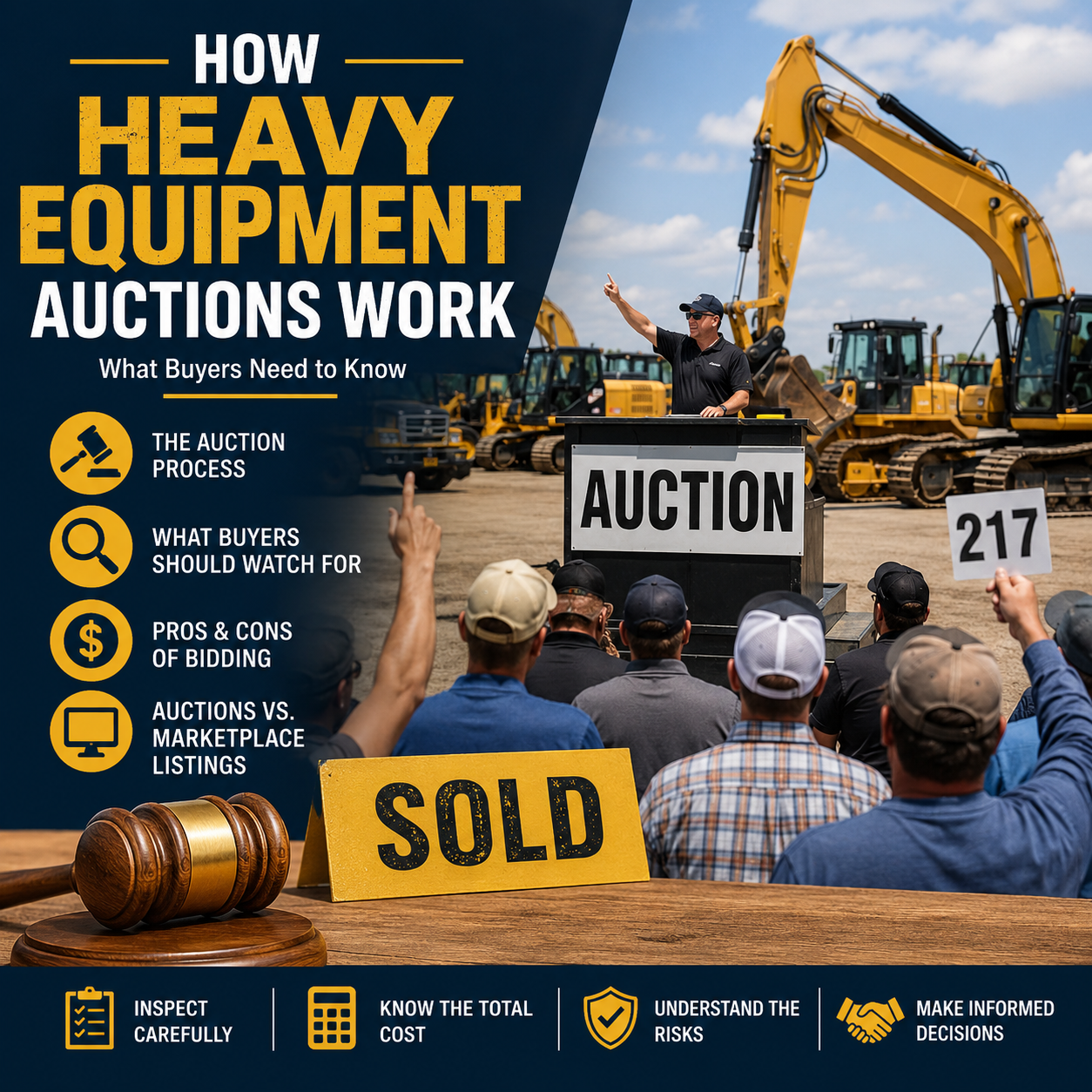
How Do Heavy Equipment Auctions Work?
Heavy equipment auctions have become a popular way for contractors, farmers, trucking companies, and equipment dealers to buy and sell machinery quickly. From excavators and dozers to skid steers and semi trucks, auctions can move a lot of iron in a short amount of time.
But how exactly do heavy equipment auctions work, and are they always the best option?
If you are new to buying equipment, understanding the auction process can help you avoid surprises and make smarter purchasing decisions.
What Is a Heavy Equipment Auction?
A heavy equipment auction is an event where machinery is sold to the highest bidder. Auctions may happen in person at a physical yard, online through bidding platforms, or as a combination of both.
Common items sold at heavy equipment auctions include:
- Excavators
- Bulldozers
- Wheel loaders
- Graders
- Skid steers
- Agricultural equipment
- Semi trucks and trailers
- Attachments and tools
Sellers use auctions to move equipment quickly, while buyers often attend looking for deals or hard-to-find machines.
How the Auction Process Works
While every auction company operates a little differently, the general process is usually similar.
1. Equipment Is Consigned
The process begins when equipment owners send machines to the auction company. This is called consigning equipment.
The auction company lists the machines, photographs them, and prepares them for sale. Some sellers use auctions because they want a fast sale or are clearing out fleets.
2. Buyers Research Equipment
Before bidding starts, buyers typically inspect the equipment online or in person.
Auction listings may include:
- Photos
- Hours
- Serial numbers
- Basic condition reports
- Videos
- Maintenance history (sometimes)
However, auction equipment is often sold “as-is, where-is,” meaning there may be limited guarantees.
That is why experienced buyers usually inspect equipment carefully before bidding.
3. Bidding Begins
Once the auction starts, buyers place bids against one another. The highest bidder wins when the auction closes.
There are several common auction formats:
Live Auctions
An auctioneer conducts bidding in real time at a physical location.
Online Auctions
Bidders participate remotely using a website or app.
Timed Auctions
Bidding stays open for a set period, and the highest bid at the end wins.
Reserve vs. No-Reserve Auctions
- Reserve auctions allow the seller to reject bids below a minimum price.
- No-reserve auctions guarantee the equipment will sell regardless of the final bid.
What Buyers Should Watch Out For
Heavy equipment auctions can offer opportunities, but there are also risks buyers should understand.
Limited Inspection Time
Buyers may only get a short window to inspect machines before bidding.
Competitive Bidding
It is easy to get caught up in bidding wars and spend more than planned.
Transportation Costs
Winning the bid is only part of the expense. Buyers also need to arrange transportation, insurance, and possible repairs.
No Negotiation Afterward
Unlike marketplace listings, auctions generally do not allow back-and-forth negotiation once bidding closes.
Auctions vs. Marketplace Listings
Auctions are only one way to buy equipment. Many buyers and sellers prefer equipment marketplaces because they offer more flexibility and time for decision-making.
With marketplace listings, buyers can often:
- Compare multiple machines side by side
- Contact sellers directly
- Ask questions before committing
- Negotiate pricing
- Arrange inspections more comfortably
- Browse equipment anytime without bidding pressure
For sellers, marketplaces can also provide longer exposure to targeted buyers who are actively searching for specific equipment.
Are Heavy Equipment Auctions Worth It?
The answer depends on your goals.
Auctions can work well for:
- Fast equipment turnover
- Liquidation sales
- Buyers comfortable with risk
- Experienced equipment evaluators
However, many buyers prefer the transparency and flexibility of traditional equipment marketplaces when making major purchasing decisions.
For high-value machines, taking the time to compare listings, research sellers, and negotiate directly can often lead to a more confident purchase.
Heavy equipment auctions are a major part of the construction and agriculture industries, and they can move a huge amount of machinery quickly.
Still, auctions are not the only option. For many buyers and sellers, online equipment marketplaces provide a more controlled and flexible buying experience without the pressure of competitive bidding.
Whether you choose an auction or a marketplace, the key is doing your research, understanding the equipment, and knowing the total cost before making a purchase.
Every successful operation starts with a vision—and the right tools to make it happen. Whether you’re adding another piece of iron, expanding your services, or preparing for bigger jobs, business financing options can help turn opportunity into progress.