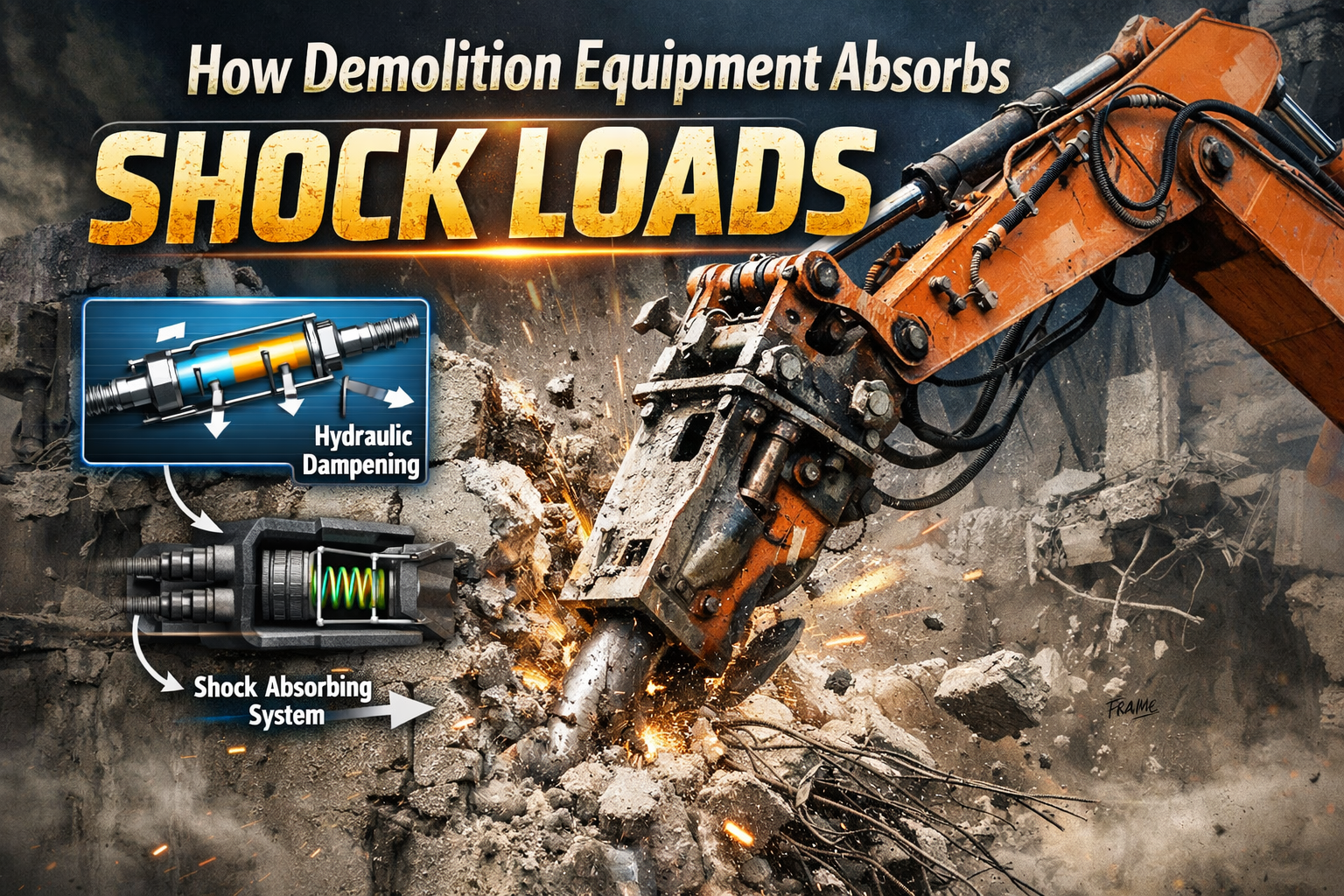
How Demolition Equipment Absorbs Shock Loads
Demolition work is not for the faint of heart—or the fragile of machinery. Every time a concrete wall comes crashing down or a steel beam is torn from a structure, the equipment used to do the job experiences extreme forces known as shock loads. Understanding how demolition machines handle these forces is key to both safety and equipment longevity.
What Are Shock Loads?
Shock loads are sudden, high-intensity forces that occur when a machine makes abrupt contact with a structure. Unlike steady, continuous loads, shock loads hit fast and hard, often exceeding the machine’s normal operating stress levels. For example, when a hydraulic excavator equipped with a concrete pulverizer bites into reinforced concrete, the resistance from the material generates an immediate, intense force back into the machine’s arm and hydraulics.
Designing for Impact
Demolition equipment is specially designed to survive and even thrive under shock loads. Here are some of the key features:
Heavy-Duty Frames and Structures
The core of any demolition machine is its reinforced frame. Thick steel plates, strategic gussets, and stress-relief designs help the machine absorb and redistribute impact forces without bending or cracking. Unlike standard construction machines, demolition equipment frames are optimized for repetitive, high-impact events rather than just lifting or digging.
Shock-Absorbing Attachments
Attachments like hydraulic breakers, pulverizers, and shears are built with impact-mitigating features. Some have internal damping systems, while others rely on flexible mounting points that allow a small degree of controlled movement. This prevents the shock from traveling directly to the excavator’s boom or hydraulic system, reducing wear and tear.
Advanced Hydraulics
Hydraulic systems on demolition machines are often overbuilt and pressure-compensated. Specialized valves and accumulators act like buffers, absorbing spikes in pressure caused by sudden impacts. This not only protects the hydraulic pumps and cylinders but also helps the operator maintain control during violent demolition actions.
Controlled Operator Techniques
Even the toughest machine can be damaged if shock loads are poorly managed. Skilled operators use techniques such as gradual engagement, pre-cracking, and strategic positioning to reduce peak forces. Proper technique allows the machine to absorb impacts in a controlled manner rather than taking the full brunt of the shock.
Why It Matters
Managing shock loads isn’t just about preventing catastrophic failure. It directly affects:
- Machine lifespan: Repeated unabsorbed shocks can lead to frame fatigue, hydraulic failures, and attachment breakage.
- Operator safety: Sudden jolts can destabilize the machine or throw the operator off balance.
- Efficiency: A machine that can handle shock loads smoothly works faster and with fewer interruptions.
Demolition machines are marvels of engineering, built not just to tear structures apart but to do so safely and efficiently. By understanding the forces at play and designing equipment to absorb shock loads, manufacturers ensure that operators can tackle even the toughest jobs without fear of breakdowns—or worse.