How Can You Tell If an Engine Has Been Abused Just by Looking at It?
For heavy equipment operators, mechanics, and enthusiasts, a quick glance at an engine can sometimes reveal a lot about how well it’s been treated—or abused. While you can’t always know the full story without running diagnostics or checking service records, there are several visual cues that can indicate trouble. Understanding these signs can save you from costly repairs or buying a machine that has been pushed beyond its limits.
Check for Excessive Oil Leaks
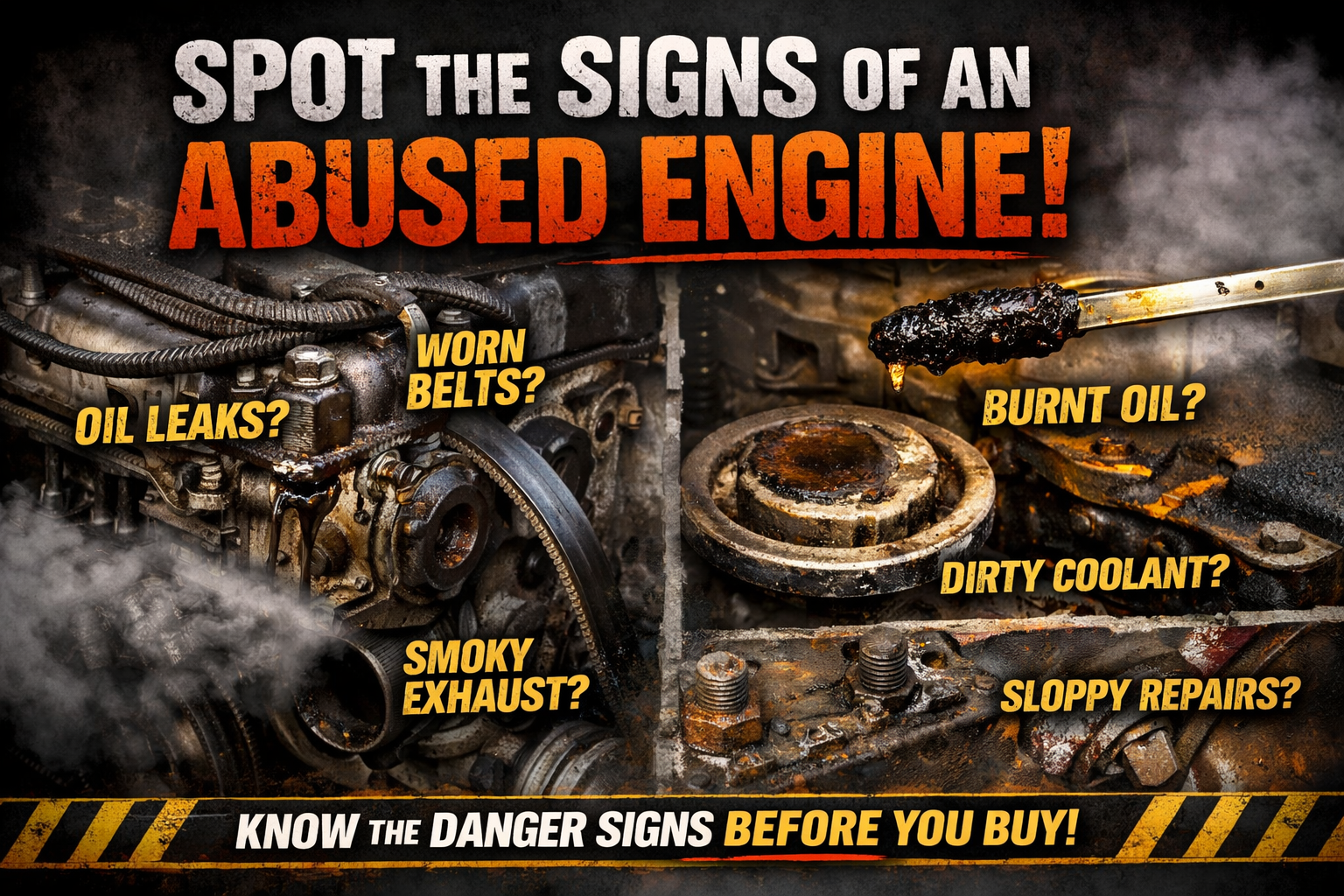
Oil leaks aren’t unusual in older engines, but their size and frequency matter. A few small drips can be normal, but thick, wet oil around gaskets, valve covers, or the oil pan may indicate poor maintenance or overfilled oil that has been left unchecked. Severe leaks often point to an engine that has been stressed or neglected.
Look at the Belts and Hoses
Cracked, frayed, or loose belts and hoses are often a sign that routine maintenance has been ignored. Engines that are abused tend to have these components replaced less frequently, so deterioration is more pronounced. Hoses that are bulging or soft may indicate overheating or poor coolant maintenance.
Examine the Exhaust
A quick look at the exhaust can reveal a lot about an engine’s internal condition. Black, sooty smoke might indicate an engine running too rich or burning excessive fuel. Blue smoke usually means oil is leaking into the combustion chamber—a classic sign of worn piston rings or valve seals. White smoke can indicate coolant entering the combustion chamber, often pointing to a blown head gasket.
Inspect for Overheating Damage
Engines that run hot too often develop telltale signs: warped or discolored metal, melted plastic components, or cracked engine mounts. Check the radiator, fan shroud, and nearby hoses for signs of heat damage. Overheating is a common result of abuse, like pushing an engine too hard under heavy loads without proper cooling.
Check for Dirty or Missing Parts
An engine that looks neglected on the outside often reflects neglect on the inside. Look for loose or missing bolts, corroded terminals, dirty air filters, or buildup on the intake and fuel system. A clean, well-maintained engine usually indicates regular attention, while a messy engine is a red flag.
Look at the Oil and Fluids
Even without removing parts, checking the oil and coolant can give clues. Oil that’s black, gritty, or smells burnt is a warning sign of poor lubrication or high operating temperatures. Coolant that’s rusty, sludgy, or has debris may indicate long-term neglect or internal corrosion.
Signs of Improper Repairs or Modifications
Abuse isn’t always about neglect; it can also be about improper use or “shortcuts.” Look for non-standard repairs, mismatched parts, or shoddy welding. These can indicate that the engine has been pushed beyond its design limits or maintained by someone cutting corners.
Final Thoughts
While a visual inspection can reveal a lot, it’s only part of the story. Combining what you see with service records, operating history, and diagnostic checks gives the most accurate picture of an engine’s health. Still, by knowing the signs of abuse, you can quickly separate engines that have been cared for from those that have been pushed to their limits—and avoid machines that may cause headaches down the road.