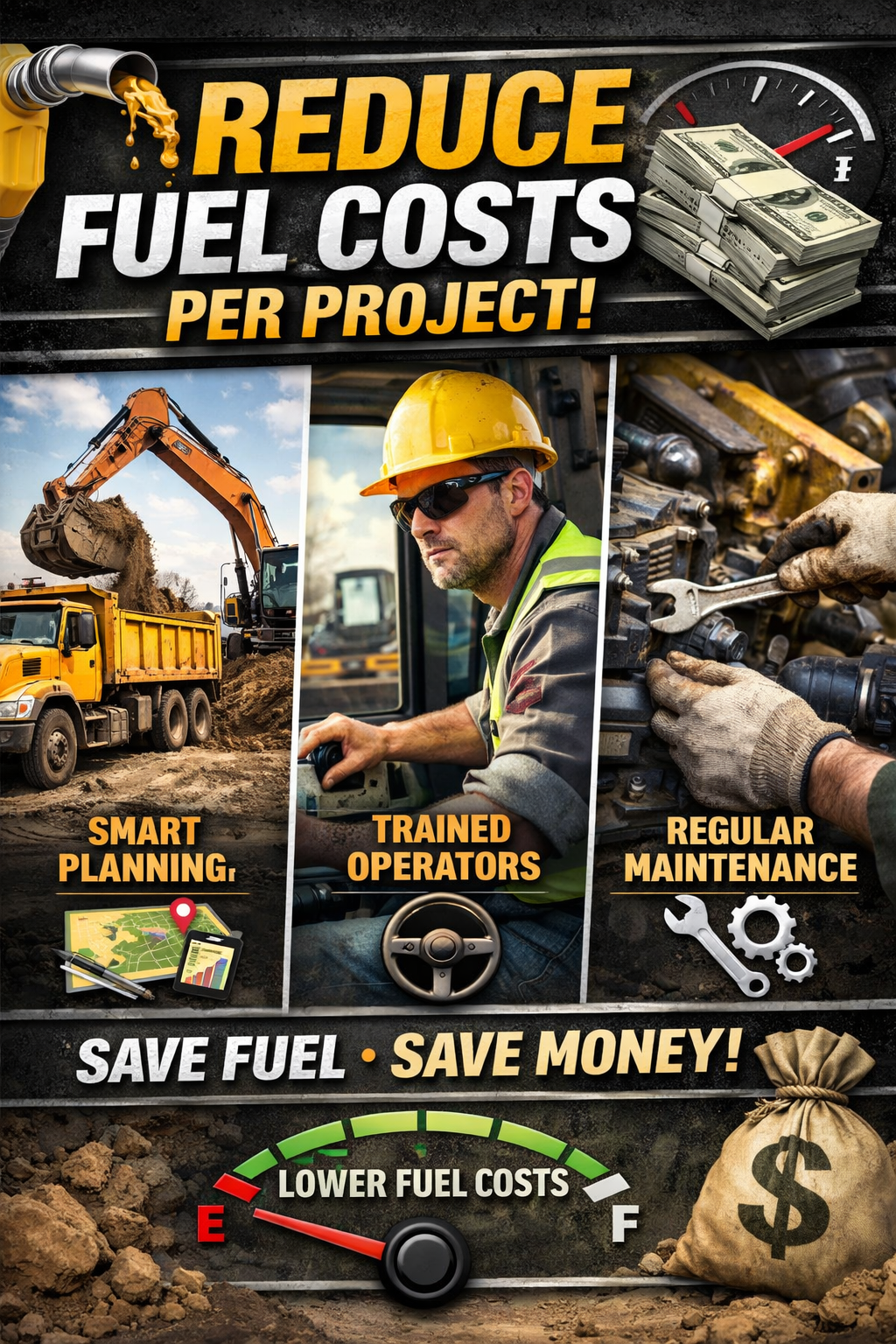
How Can I Reduce Fuel Costs Per Project?
Fuel is one of the largest variable expenses in any construction, forestry, or heavy equipment operation. While it’s impossible to eliminate fuel entirely, there are smart strategies you can implement to reduce consumption and costs on a per-project basis. Here’s a guide to help operators, managers, and project owners save money without sacrificing productivity.
1. Plan Your Projects Efficiently
Fuel waste often starts with inefficient project planning. Map out the worksite before equipment starts moving:
- Reduce unnecessary travel distances by positioning machines strategically.
- Group tasks to minimize idle machine movement.
- Coordinate equipment to avoid overlap or waiting time that burns fuel unnecessarily.
Even small adjustments in workflow can translate to significant fuel savings over the life of a project.
2. Maintain Equipment Properly
Well-maintained machines run more efficiently and consume less fuel. Key areas to focus on include:
- Regular engine servicing: Dirty filters or worn-out components increase fuel consumption.
- Tire and track maintenance: Properly inflated tires or tensioned tracks reduce rolling resistance.
- Hydraulic systems: Leaks or low hydraulic fluid can cause the engine to work harder.
Routine inspections and preventive maintenance may cost time but will save more on fuel in the long run.
3. Train Operators for Fuel-Efficient Practices
Operators play a huge role in fuel efficiency. Encourage habits such as:
- Using the correct gear and throttle for the task.
- Avoiding excessive idling—modern engines can handle short stops without restarting issues.
- Planning lifts and moves to minimize back-and-forth movements.
Even small changes in operator behavior can reduce fuel consumption by 10–20%.
4. Use Technology and Telemetry
Many modern machines come with onboard fuel tracking and telematics systems. These tools help you:
- Monitor fuel consumption in real time.
- Identify high-consumption machines or inefficient operator habits.
- Optimize project schedules to reduce unnecessary machine runtime.
Data-driven decisions allow you to target fuel savings where they matter most.
5. Optimize Load and Task Planning
Fuel efficiency improves when machines operate near their optimal capacity. Consider:
- Matching equipment size to the task—oversized machines burn more fuel than necessary.
- Avoiding partial loads when possible; moving more material per pass reduces trips.
- Sequencing work to minimize starts, stops, and idling.
Smart task planning can reduce both fuel use and wear on your equipment.
6. Consider Alternative Fuels or Hybrid Options
Some operations benefit from alternative fuels or hybrid machines:
- Biodiesel blends can reduce overall fuel costs in certain regions.
- Hybrid or electric models for specific tasks offer lower per-hour fuel consumption.
Even if you can’t switch all equipment, using alternative options where possible can make a difference over multiple projects.
Conclusion
Reducing fuel costs per project isn’t about a single trick—it’s a combination of planning, maintenance, operator training, and smart use of technology. By focusing on efficiency at every step, you can lower your fuel bills, extend the life of your machines, and make your projects more profitable.