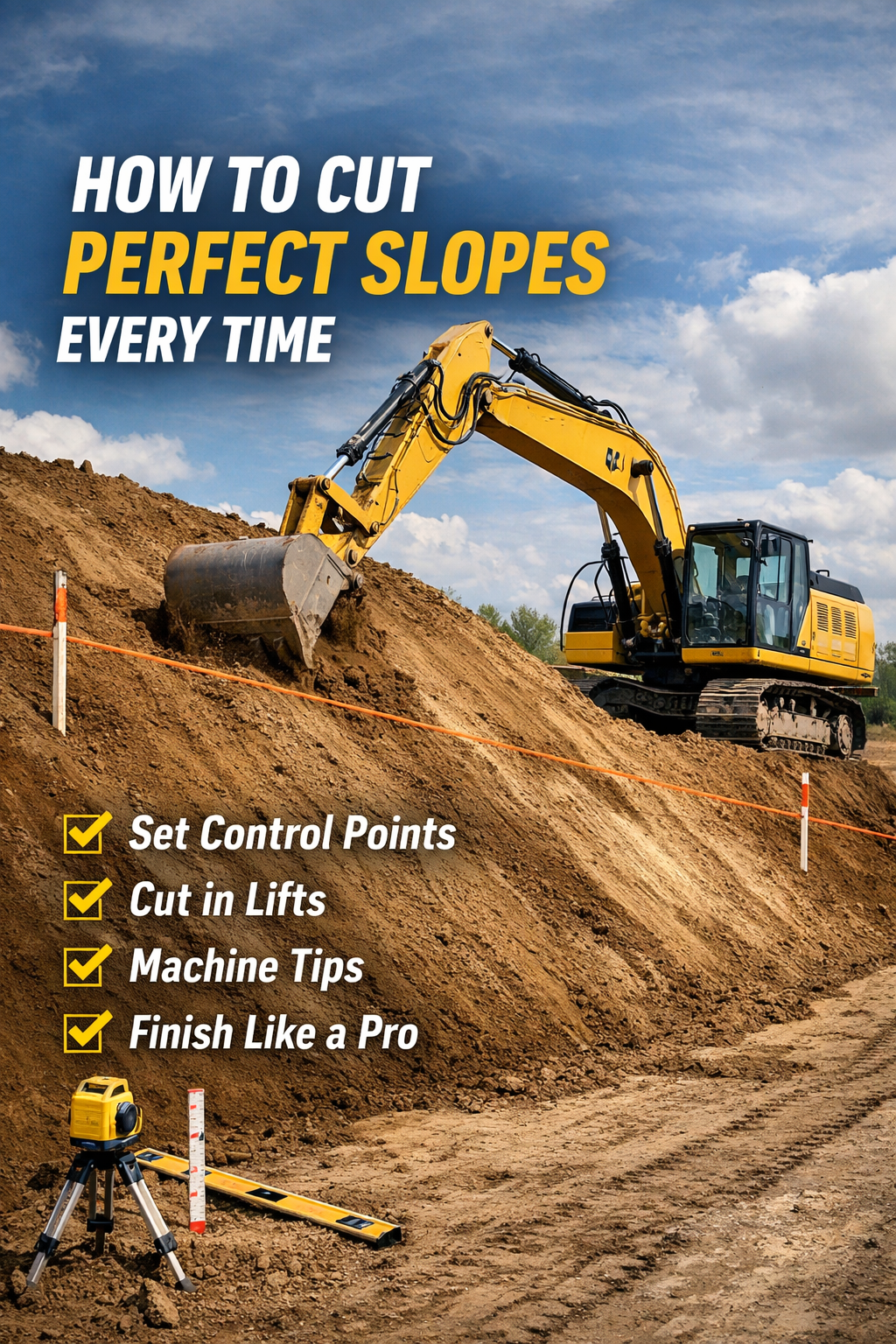
How to Cut Perfect Slopes Every Time
The Dirt Desk - Q&A
How Can I Cut Perfect Slopes Every Time
Whether you’re shaping a ditch, building a pad, cutting a road base, or grading for drainage, clean, consistent slopes separate the pros from the guessers. A perfect slope isn’t luck — it’s method.
Here’s how to cut perfect slopes every time.
Start With the Right Plan (Know Your Ratio)
Before you move a single bucket of dirt, know your target slope ratio.
- 2:1 slope = 2 feet horizontal for every 1 foot vertical
- 3:1 slope = 3 feet horizontal for every 1 foot vertical
- ¼" per foot = common drainage fall for flatwork
If you’re not clear on the design grade, you’re already behind.
Pro tip: Write the slope ratio on the inside of your cab or on your job notes so you’re not second-guessing mid-cut.
Set Control Points First
Perfect slopes start with reference.
- Set grade stakes at the top and bottom
- Use a laser level or GPS if available
- Paint your cut lines
- Establish a clear starting elevation
Without control points, you’re just eyeballing it — and that leads to waves and bellies.
Cut in Lifts, Not All at Once
Trying to take the full cut in one pass almost always creates overcuts and undercuts.
Instead:
- Rough cut slightly high
- Check grade
- Trim down in controlled passes
It’s faster to shave material off than to bring it back.
Use the Machine to Your Advantage
Different machines handle slopes differently:
- Excavator: Excellent for ditch slopes and tight control. Use smooth bucket control and avoid jerky stick movements.
- Dozer: Great for long, consistent slopes. Keep steady track pressure and avoid oversteering.
- Motor grader: Ideal for finishing passes on road slopes and long banks.
Keep your movements slow and deliberate. Smooth hydraulics = smooth slopes.
Watch Your Sight Line
One of the biggest mistakes operators make is staring at the bucket.
Instead:
- Look ahead of your cutting edge
- Focus on the horizon line
- Check alignment with your reference stakes
Your eyes should guide the machine — not chase the metal.
Maintain Consistent Machine Position
For consistent slope angle:
- Keep your machine square to the slope
- Avoid drifting tracks or wheels downhill
- Don’t constantly adjust body position unless necessary
Small changes in machine angle create big changes in slope face.
Finish With a Clean Trim Pass
The final pass is where craftsmanship shows.
- Light pressure
- Minimal correction
- Long, steady pulls
- No sudden stops
On soil, avoid overworking the face. On clay, be mindful of smearing. On sandy material, compact as needed to prevent sloughing.
Check Drainage Before You Leave
A slope isn’t perfect if water won’t move properly.
Before calling it done:
- Check fall direction
- Ensure no low pockets
- Confirm tie-ins at the top and bottom
Water exposes bad grading fast.
Technology Helps — But Skill Wins
GPS grade control is powerful, but it won’t fix poor technique. The best operators use tech as a guide, not a crutch.
If you can cut it clean without electronics, you’ll be unstoppable when you turn them on.
Practice on Small Projects
The fastest way to improve:
- Cut a practice ditch on scrap ground
- Set your own stakes
- Check yourself with a level
- Repeat until it’s second nature
Repetition builds feel. Feel builds precision.
Perfect slopes come down to three things:
- Clear grade control
- Smooth machine control
- Patience on the finish
Rush the cut, and you’ll fight it all day. Take your time, work methodically, and your slopes will look sharp, drain correctly, and pass inspection the first time.