How Are Traffic Cones Made?
Traffic cones are a familiar sight on roads, construction sites and work zones, where they help guide traffic, mark hazards and separate people and equipment from moving vehicles. Traffic cones are designed to be durable enough to handle impacts, weather and repeated handling.
Most modern traffic cones are made from flexible plastic, such as PVC or other thermoplastic materials. Their bright orange color and reflective features are designed to make them highly visible during the day and at night. Many cones also use a heavier rubber or plastic base to provide stability.
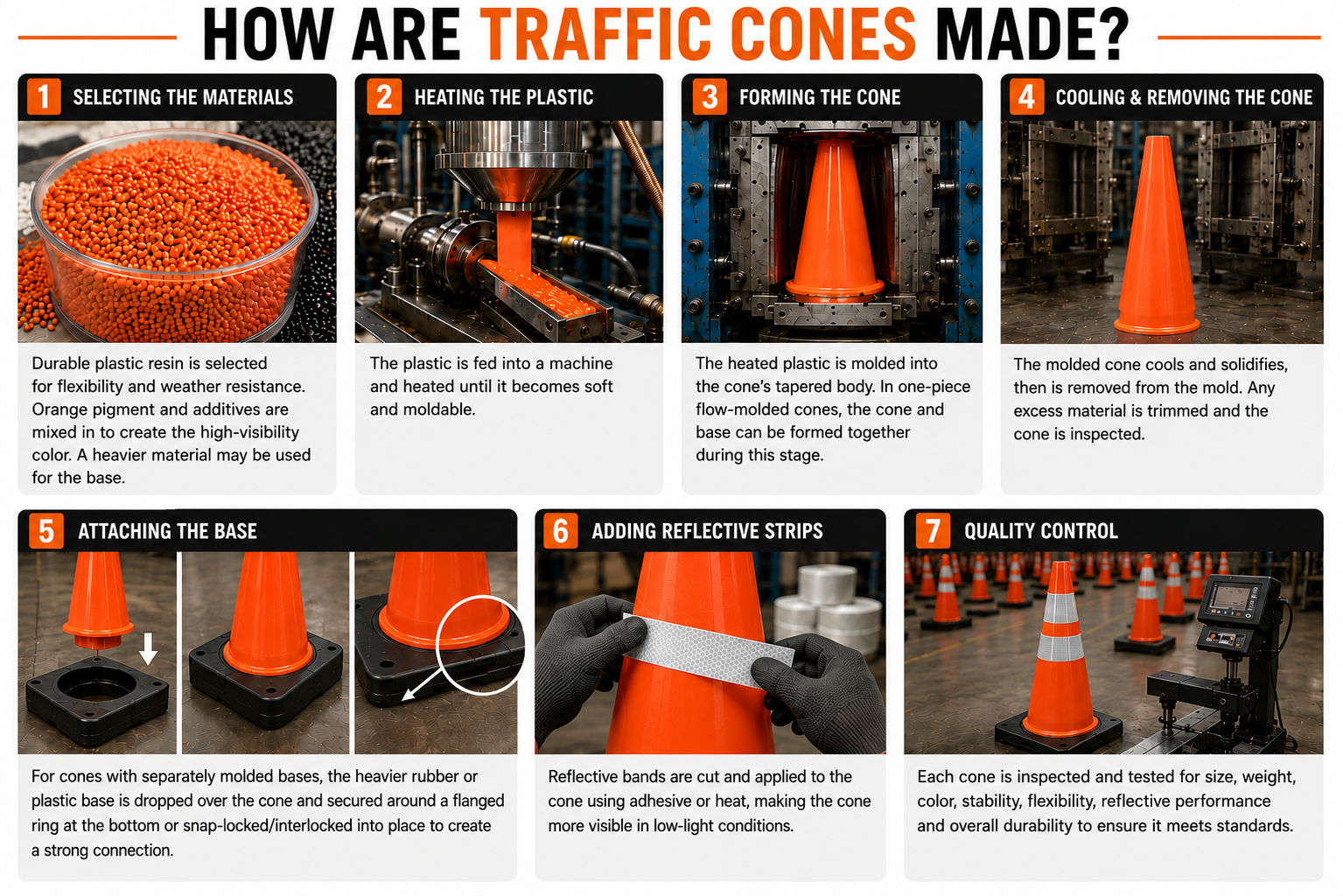
Step 1: Selecting the Materials
The manufacturing process starts with selecting the materials. The cone body typically uses a flexible plastic resin chosen for its durability, flexibility and resistance to weather and impacts.
Color additives are mixed with the plastic to create the familiar high-visibility orange color. Depending on the design, a heavier material such as rubber or rigid plastic may be selected separately for the base.
Step 2: Heating the Plastic
The plastic resin is fed into a machine that heats it until it becomes soft and moldable.
Thermoplastics are well suited to this process because they can be heated and shaped without undergoing a permanent chemical change. Once the material reaches the proper temperature, it is ready to be formed into the cone.
Step 3: Forming the Cone
The heated plastic is molded into the traffic cone's tapered body.
The mold gives the cone its shape and can create features that help provide strength while allowing the body to remain flexible. The amount of material and molding conditions are carefully controlled to produce cones with consistent dimensions and wall thickness.
Not all traffic cones are made from separate cone and base components. In some one-piece flow-molded designs, the top and bottom are formed together during the molding process.
Step 4: Cooling and Removing the Cone
After molding, the plastic must cool and solidify enough to retain its shape.
Once the cone has cooled, it is removed from the mold. Any excess plastic or flashing left from the molding process can then be trimmed away.
The molded cone is inspected for consistency before moving to the next stage of production.
Step 5: Attaching the Base
For traffic cones that use a separately manufactured base, the base is added after the cone body has been formed and cooled.
The base is typically wider and heavier than the cone body, giving the finished cone a broad, stable footprint. It may be made from rubber or a rigid plastic designed to withstand repeated contact with pavement, impacts and handling.
Depending on the design, the base can be dropped over the bottom of the cone and secured around a flanged ring or snap-locked and interlocked into a slot at the bottom of the cone. This creates a strong connection while allowing the flexible cone body to perform as intended.
One-piece flow-molded cones do not require this separate assembly step because the cone and base are formed together.
Step 6: Adding Reflective Strips
Many traffic cones have reflective bands that make them easier to see at night and in low-light conditions.
The reflective material is cut into strips and applied around the cone. Depending on the design, the strips may be attached with adhesive, heat or another bonding method.
The reflective material is designed to return light toward its source, making the cone more visible when illuminated by vehicle headlights or work lights.
Step 7: Quality Control
Before traffic cones are finished, they undergo quality-control inspections to identify defects and verify that they meet the manufacturer's specifications.
Checks may include:
• Overall dimensions and weight
• Color and visibility
• Base stability
• Flexibility and impact resistance
• Reflective strip placement and performance
• Surface defects
• Material consistency
Some cones may also undergo tests that simulate exposure to sunlight, temperature changes, impacts and repeated handling.
Why Are Traffic Cones So Flexible?
Flexibility is one of the most important characteristics of a modern traffic cone. A cone needs to withstand being bumped, knocked over and sometimes driven over without easily cracking or breaking.
Rather than resisting every impact with rigid material, the cone can bend and deform before returning toward its original shape. This helps make the cone more durable while reducing the potential for damage when a vehicle comes into contact with it.
The heavier base complements that flexibility by helping the cone remain upright during normal use while allowing the body to flex when struck.
From Plastic to Work-Zone Safety
Traffic cones may be small compared with the heavy equipment found on a construction site, but they play an important role in keeping work zones organized and visible.
Their bright color, reflective bands, flexible construction and stable bases are all designed to make hazards and changing traffic patterns easier to see.
Whether the cone and base are molded as one piece or assembled from separate components, each cone is designed to be durable and ready for the demands of work zones.
The next time you see a line of traffic cones around a construction site or roadwork area, you'll know there is more to how they are made than meets the eye.