How Are Stump Grinders Made?
Stump grinders are built to turn stubborn tree stumps into wood chips and sawdust. The attachment combines a heavy-duty steel frame, a powerful cutting wheel, hydraulic components and hardened, carbide-tipped cutting teeth to handle demanding grinding work.
While designs vary by manufacturer, most stump grinders follow a similar manufacturing process.
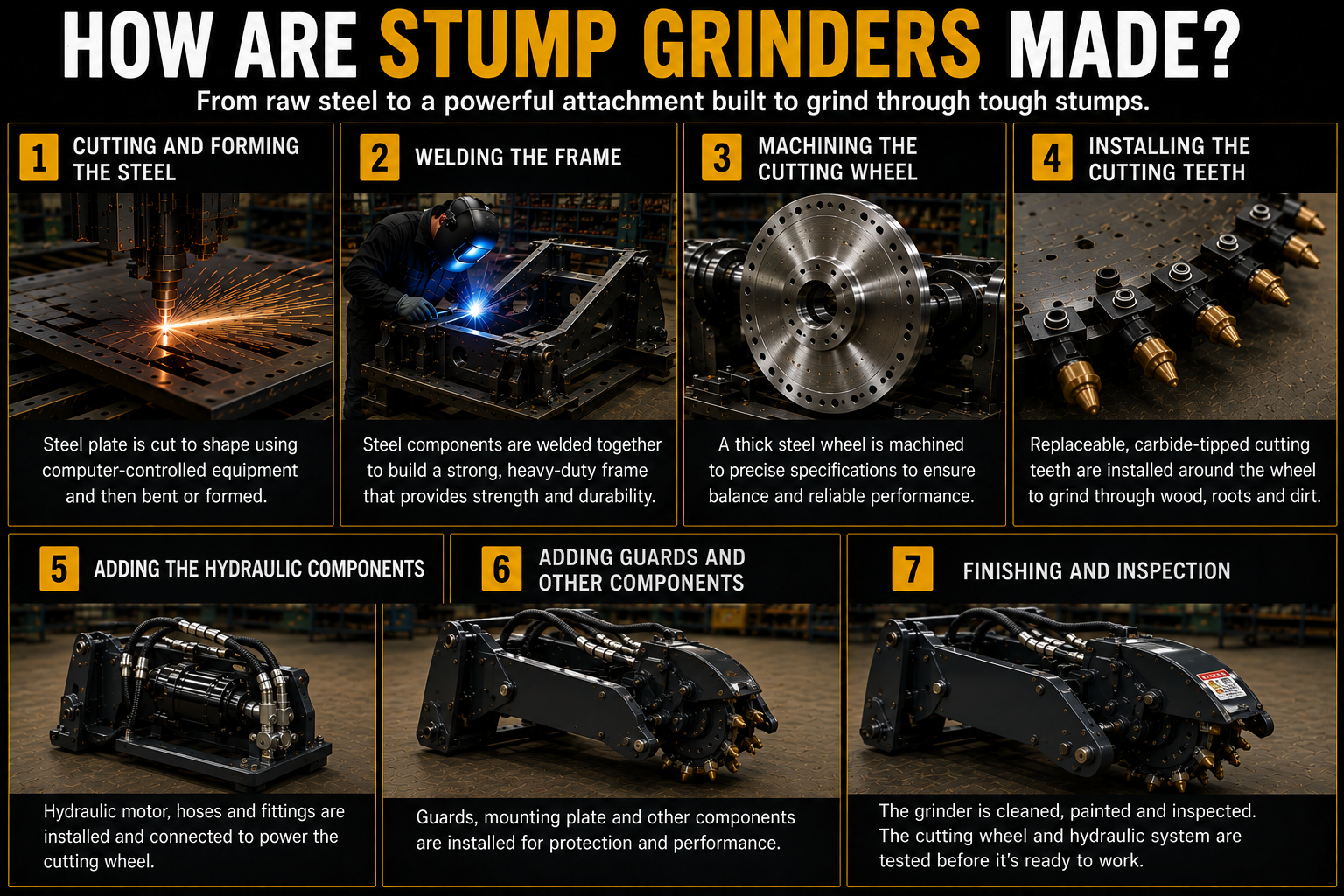
1. Cutting and Forming the Steel
The process starts with steel plate and other structural components that will form the grinder's frame, housing and protective guards.
Computer-controlled cutting equipment cuts the steel into specific shapes. Some components are then bent or formed to create the required angles and contours needed for the attachment.
2. Welding the Frame
The cut steel pieces are positioned in fixtures to ensure they line up correctly before welding.
Workers weld the components together to create the main frame. Additional braces and reinforcement are added where needed to withstand the forces generated while grinding stumps.
3. Machining the Cutting Wheel
The cutting wheel is one of the stump grinder's most important components.
A thick steel wheel is machined to precise specifications and prepared for the cutting teeth that will be installed around its perimeter. Because the wheel rotates at high speed, its construction and balance are critical to the attachment's operation.
4. Installing the Cutting Teeth
Replaceable cutting teeth are installed around the edge of the wheel. Many stump grinder designs use carbide-tipped teeth, which are built to withstand repeated contact with wood, roots and dirt.
The teeth are positioned around the wheel to create the cutting pattern needed to grind through the stump and clear material from the grinding area. Their design and arrangement can vary depending on the grinder.
5. Adding the Hydraulic Components
Hydraulic power drives the cutting wheel.
A hydraulic motor, along with hoses, fittings and other components, is installed on the attachment and connected to the hydraulic system. The motor transfers hydraulic power to the cutting wheel, while hoses and fittings provide the connections needed to operate the system.
Connections and hose routing are checked before the grinder moves on to final assembly.
6. Adding Guards and Other Components
Protective guards and housings are installed around the cutting wheel and other moving components. These components help protect the grinder's internal parts and help contain material produced during grinding.
Depending on the model, the attachment may also receive a mounting plate, skid shoes, cylinders, controls and other components.
7. Finishing and Inspection
Once assembly is complete, the stump grinder is cleaned and receives its protective paint or coating.
The finished attachment is then inspected for proper welds, fasteners, hydraulic connections and component installation. The cutting wheel and hydraulic system may also be tested before the grinder leaves the factory.
From the steel frame to the cutting wheel and carbide-tipped teeth, each component comes together to create an attachment capable of grinding large stumps down to wood chips.