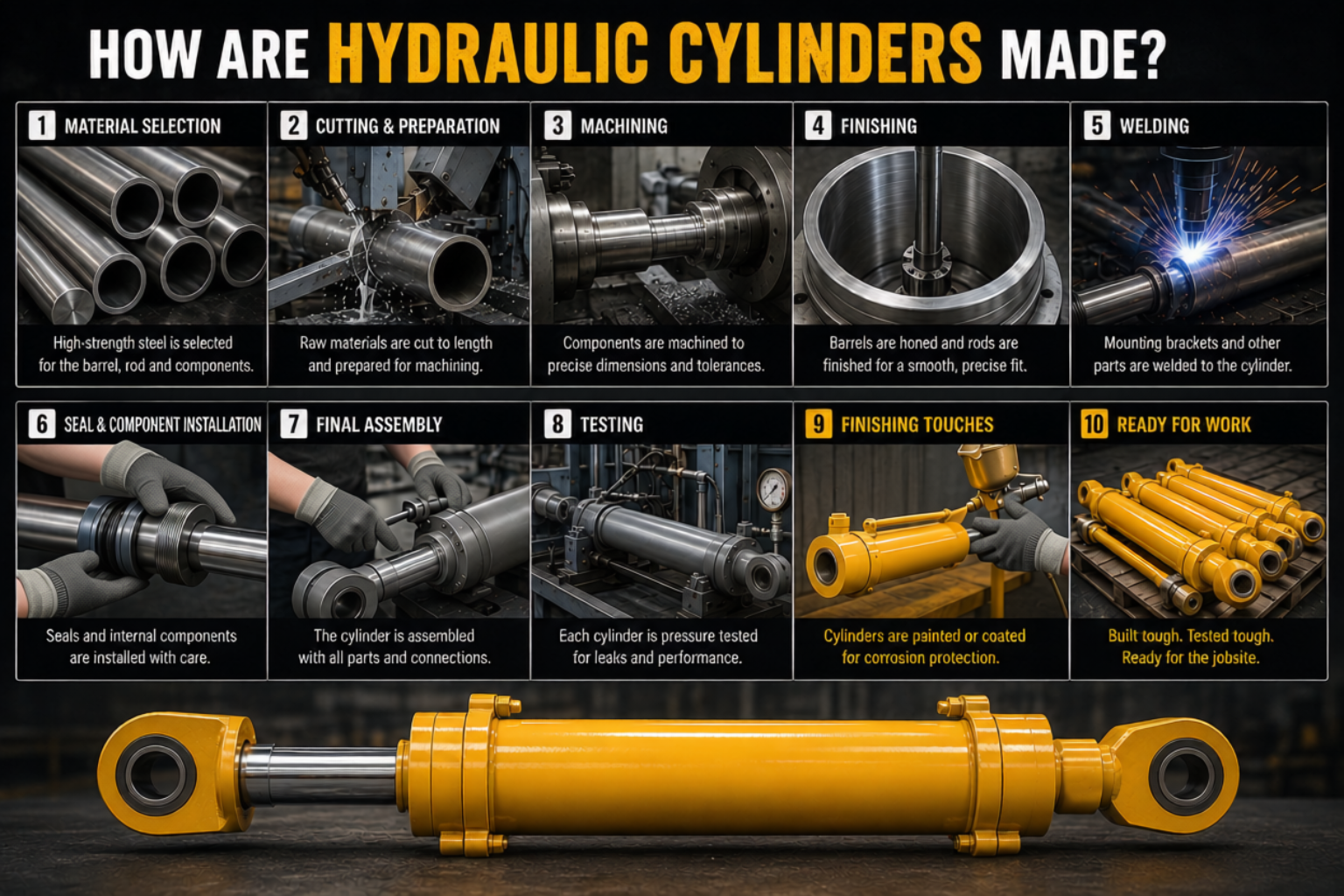
How Are Hydraulic Cylinders Made?
Hydraulic cylinders are some of the hardest-working components on heavy equipment. They power the movement of excavator booms, loader arms, dump beds, dozer blades and countless other attachments. Despite their relatively simple appearance, these components are carefully engineered and manufactured to withstand high pressures, heavy loads and demanding working conditions.
So, how are hydraulic cylinders made?
The journey from raw steel to a finished hydraulic cylinder involves numerous manufacturing and assembly stages. Each plays an important role in producing a component built for demanding jobsites.
What Is a Hydraulic Cylinder?
Before looking at how hydraulic cylinders are made, it helps to understand what they do.
A hydraulic cylinder converts hydraulic energy into linear mechanical force. Pressurized hydraulic fluid enters one side of the cylinder, pushing a piston and rod in a straight line. By controlling the direction and flow of the fluid, the cylinder can extend or retract.
A typical hydraulic cylinder consists of several major components, including:
- Cylinder barrel: The main tube that houses the piston.
- Piston: Moves inside the barrel and separates the two sides of the hydraulic chamber.
- Piston rod: Connects the piston to the equipment or attachment being moved.
- Rod and piston seals: Help prevent hydraulic fluid from leaking and keep contaminants out.
- Head and cap: Close off the cylinder and help support the rod and internal components.
The exact design varies depending on the application. A small cylinder used on a compact machine will have different requirements than a massive cylinder operating the boom of a large excavator.
Step 1: Selecting the Materials
The manufacturing process starts with selecting materials that can handle the forces placed on the cylinder.
Steel is commonly used for the cylinder barrel and piston rod because of its strength and durability. The materials selected depend on the cylinder's intended application, operating pressure and expected workload.
The piston rod may require additional surface treatments to improve its resistance to wear, corrosion and damage. The cylinder barrel also needs to have a carefully finished internal surface so the piston and seals can move smoothly.
Step 2: Cutting and Preparing the Components
Once the raw materials are selected, steel tubes, bars and other components are cut to the required dimensions.
The cylinder barrel must be prepared to precise specifications because its internal dimensions directly affect how the piston and seals operate. The piston rod is also cut to length before moving on to machining.
At this stage, manufacturers may also prepare the components that will eventually become mounting brackets, clevises or other connection points.
Step 3: Machining the Cylinder Parts
Precision machining is one of the most important stages in hydraulic cylinder production.
Computer-controlled machines can be used to shape components to exact specifications. The piston rod may be turned and machined to create the required diameter, threads and connection points. Other components, including pistons, heads and caps, are also machined to fit together correctly.
The tolerances are often extremely tight. Even small imperfections can affect the cylinder's performance, contribute to seal wear or increase the risk of hydraulic fluid leaks.
Step 4: Finishing
The cylinder barrel and piston rod both receive precision finishing to ensure smooth operation and long service life.
The inside of the barrel is honed to remove small imperfections and create a smooth surface that allows the piston and seals to move freely while maintaining hydraulic pressure. The piston rod is also finished and may receive protective coatings or surface treatments to improve durability and corrosion resistance.
These finishing processes reduce friction and wear while helping the cylinder withstand demanding conditions such as mud, dust, water and other harsh jobsite environments.
Step 5: Welding
Many hydraulic cylinders require welding during the manufacturing process.
Mounting components, such as clevises and brackets, may be welded to the cylinder barrel or other parts of the assembly. Welding must be performed carefully because these connection points can experience significant forces while the cylinder is operating.
After welding, components may undergo inspection to ensure the welds meet the required quality standards.
Step 6: Installing Seals and Internal Components
Once the major components are machined and finished, the cylinder can be assembled.
The piston is fitted with seals and installed inside the cylinder barrel. The piston rod is connected to the piston, and additional seals are installed around the rod and other connection points.
These seals are critical to the cylinder's operation. They help keep hydraulic fluid inside the cylinder while preventing dirt, water and other contaminants from entering.
A damaged or improperly installed seal can quickly lead to leaks and reduced performance.
Step 7: Final Assembly
The remaining components are installed to complete the hydraulic cylinder.
The cylinder head, cap and other components are secured in place. Depending on the design, the cylinder may be held together using threaded components, retaining rings or other methods.
The mounting points are also checked to make sure they are correctly positioned and ready to connect the cylinder to the machine.
Step 8: Testing the Hydraulic Cylinder
Testing is a critical part of the manufacturing process.
Finished cylinders may be tested for leaks, pressure performance and proper operation. Manufacturers can pressurize the cylinder and cycle it through its range of motion to verify that it extends and retracts correctly.
Testing can help identify problems with seals, connections or other components before the cylinder reaches the customer.
Step 9: Final Finishing Touches
After a hydraulic cylinder passes testing, it receives its final finishing touches before shipment.
Many cylinders are cleaned, painted or coated to help protect them from corrosion and harsh working environments. Depending on the application, manufacturers may also apply identification labels, serial numbers and other markings for traceability and maintenance purposes.
These protective finishes help extend the service life of the cylinder while giving it the durable exterior needed for demanding jobsite conditions.
Step 10: Ready for Work
Once the finishing process is complete, the hydraulic cylinder is ready for delivery.
Before leaving the factory, cylinders may undergo a final visual inspection to verify that they meet quality standards and are free of cosmetic or shipping damage. They are then packaged and shipped to equipment manufacturers or aftermarket suppliers, where they will eventually become part of excavators, loaders, dozers and many other types of heavy equipment.
Built for the Jobsite
From the boom of an excavator to the bucket of a wheel loader, hydraulic cylinders are essential to the operation of heavy equipment. Although they may look like simple components, every cylinder is the result of careful engineering, precision manufacturing and rigorous testing.
From selecting high-strength materials to machining, assembly, testing and final finishing, each step helps ensure the cylinder can withstand demanding jobsites and deliver reliable performance for years to come.
The next time you see a hydraulic cylinder extending or retracting, remember the precision and craftsmanship behind the component powering that movement.