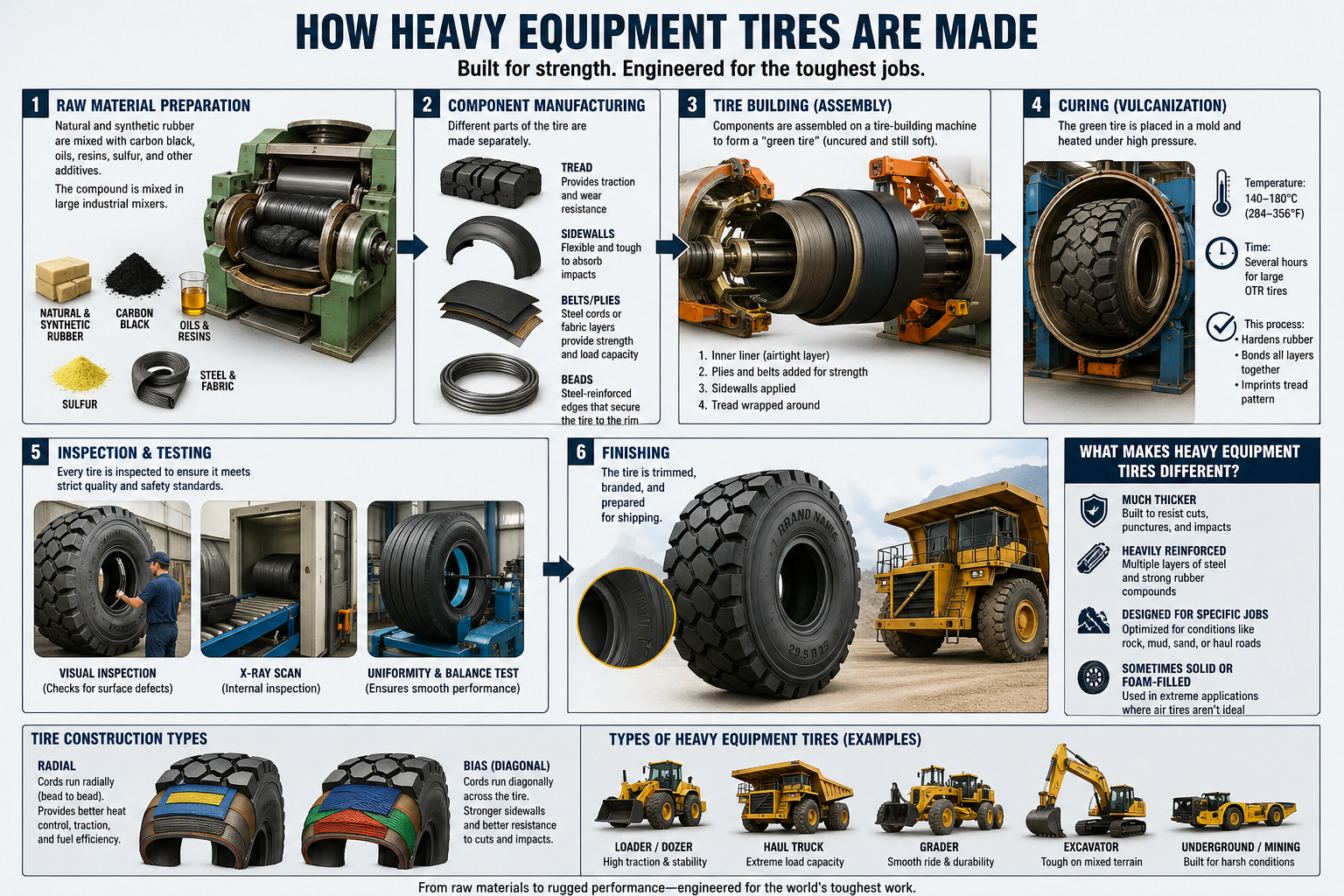
How Are Heavy Equipment Tires Made?
Heavy equipment tires (like those used on loaders, haul trucks, graders, and excavators) are built to handle extreme loads, rough terrain, and long operating hours, so their manufacturing process is more complex and heavy-duty than standard vehicle tires. Here’s how they’re typically made:
1. Raw Material Preparation
The main ingredient is natural and synthetic rubber, blended with:
- Carbon black (adds strength and wear resistance)
- Oils and resins (for flexibility)
- Sulfur (for vulcanization)
- Steel and fabric (for reinforcement)
These materials are mixed in large industrial mixers to create different rubber compounds for different parts of the tire (tread, sidewall, inner layers).
2. Component Manufacturing
The tire isn’t made in one piece—it’s built from layers:
- Tread: Thick, durable outer layer designed for traction and wear
- Sidewalls: Flexible but tough to absorb impacts
- Beads: Steel-reinforced edges that lock the tire onto the rim
- Belts/plies: Layers of steel cords or fabric for strength and load capacity
Each component is shaped separately using extrusion or calendaring machines.
3. Tire Building (Assembly)
A tire-building machine assembles all components:
- Inner liner is laid down first (airtight layer)
- Plies and belts are added for structure
- Sidewalls are applied
- Tread is wrapped around the outside
At this stage, the tire is called a “green tire” (uncured and still soft).
4. Curing (Vulcanization)
The green tire is placed in a mold and heated under high pressure.
- Temperatures: ~140–180°C
- Time: can be several hours for large off-the-road (OTR) tires
This process:
- Hardens the rubber
- Bonds all layers together
- Imprints the tread pattern
This is where the tire gets its final strength and shape.
5. Inspection & Testing
Each tire is inspected for defects:
- Visual checks
- X-ray scans (for internal flaws)
- Uniformity and balance testing
For massive mining or construction tires, additional stress testing may be done.
6. Finishing
- Excess rubber is trimmed
- Branding and markings are finalized
- Tires are prepared for shipping
What Makes Heavy Equipment Tires Different?
Compared to passenger car tires, these are:
- Much thicker (to resist cuts and punctures)
- Heavily reinforced (often with multiple steel layers)
- Designed for specific jobs (mud, rock, sand, etc.)
- Sometimes solid or foam-filled instead of air-filled
Whether they're supporting a wheel loader on a construction site or a haul truck at a mining operation, heavy equipment tires are built to withstand extreme conditions. Their combination of advanced materials, layered construction, and extensive testing helps ensure the durability, traction, and reliability operators depend on every day.