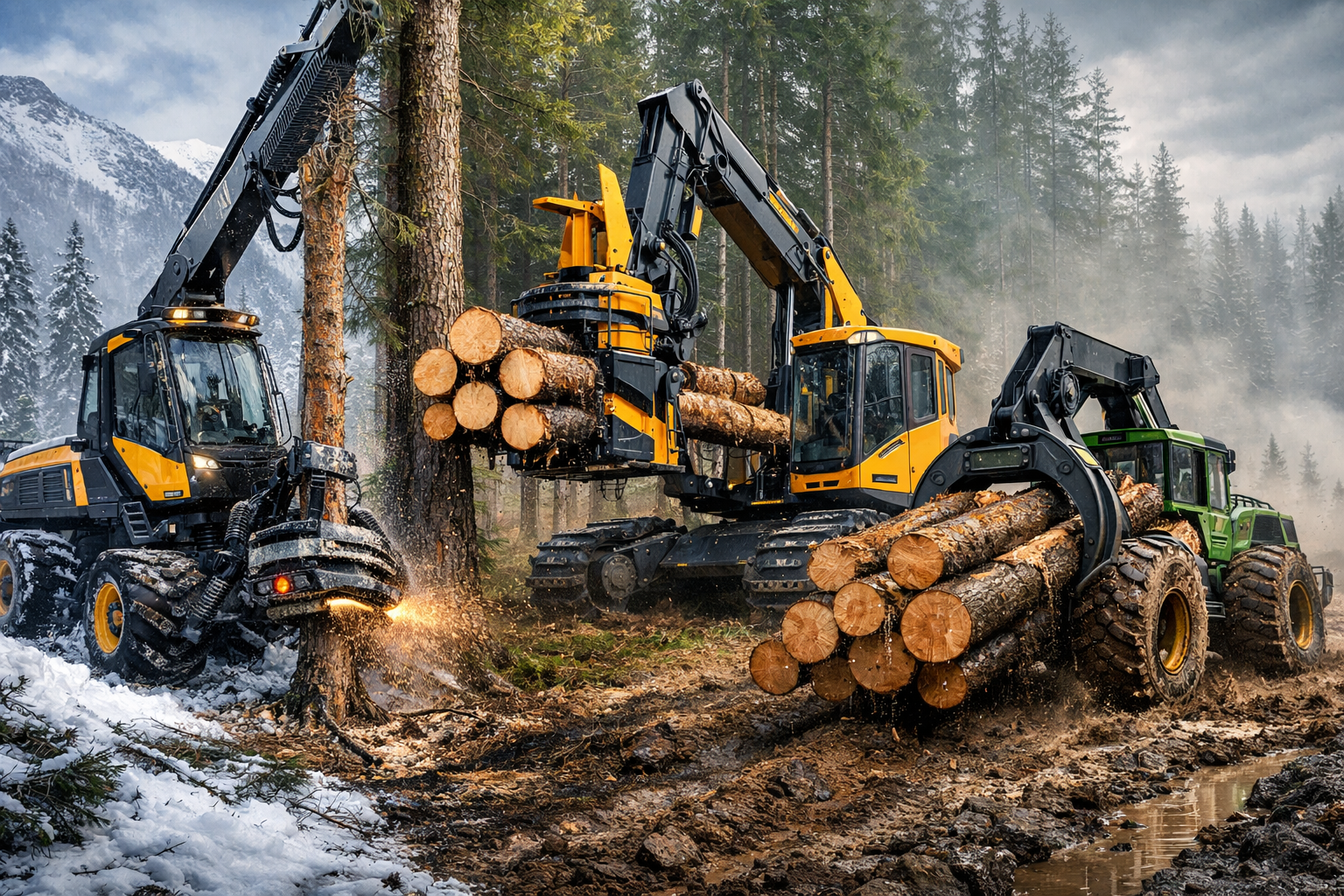
High-Tech Harvesters: How Modern Forestry Equipment Works in Extreme Conditions
Forestry is no ordinary industry. Operating in dense forests, uneven terrain, and often extreme weather, forestry professionals rely on machines that are as tough and versatile as they are precise. Modern forestry equipment—like tree harvesters, feller bunchers, and grapple skidders—has evolved into high-tech powerhouses, blending raw strength with cutting-edge technology. Let’s explore how these machines tackle the challenges of extreme conditions and keep the timber industry moving.
Tree Harvesters: Precision Meets Power
Tree harvesters are the ultimate multi-taskers in the forest. These machines can fell, delimb, and cut trees to length, all in one pass. What makes modern harvesters remarkable is how they combine brute force with advanced control systems.
- Hydraulic Efficiency: Modern harvesters use powerful hydraulic systems that deliver smooth, precise movements. Operators can control the felling head with incredible accuracy, even on steep slopes or uneven ground.
- Computerized Control: Many harvesters are equipped with onboard computers that measure tree diameter, log length, and volume in real time. This not only improves efficiency but also ensures optimal use of every log.
- Extreme Terrain Adaptation: With tracks or wide, low-pressure tires, harvesters maintain stability and traction in muddy, snowy, or rocky conditions. Some even have automatic leveling systems to compensate for uneven terrain.
Feller Bunchers: Speed and Safety in Harsh Environments
Feller bunchers specialize in cutting and gathering trees quickly. They’re especially useful in large-scale logging operations or when working in dense forests.
- Cutting Heads: The cutting head is mounted on a boom and can rotate, extend, and tilt, allowing the operator to reach difficult angles without repositioning the machine constantly.
- Operator Safety: Modern cabins are designed to protect operators from falling debris, with reinforced glass, roll-over protection, and climate control for extreme heat or cold.
- Automation Features: Many machines now include semi-automatic felling modes, reducing fatigue and increasing consistency—essential when working long shifts in challenging conditions.
Grapple Skidders: Moving Logs Through the Toughest Terrain
Once trees are felled, grapple skidders take over. These machines drag—or “skid”—logs from the cutting site to a landing area, often over rough, slippery, or steep terrain.
- Articulated Steering: Many skidders feature articulated frames, allowing them to maneuver around obstacles like rocks, stumps, and uneven terrain.
- High Traction Systems: Tracks, dual tires, and differential locks give skidders the grip needed to move heavy logs in mud, snow, or soft soil.
- Hydraulic Grapples: The hydraulic grapple arm can lift and hold multiple logs at once, improving efficiency and reducing trips across challenging terrain.
Technology That Keeps Machines Running in Extremes
Beyond raw mechanical strength, forestry equipment thrives in extreme conditions thanks to technological innovations:
- Telematics: Real-time monitoring of engine health, fuel consumption, and maintenance needs keeps machines running reliably, even in remote locations.
- Climate-Resilient Components: Special lubricants, sealed electronics, and reinforced hydraulics ensure performance in freezing winters or blazing summers.
- Operator Assistance Systems: GPS, tilt sensors, and load monitoring systems help operators maintain safety and efficiency, reducing the risk of accidents or equipment damage.
The Future of Forestry Equipment
As forestry operations become more automated and data-driven, expect even smarter machines. Some harvesters already use AI to identify tree species and optimize cutting patterns. Remote-controlled or semi-autonomous machines are making it possible to work in areas too dangerous for humans.
In the end, modern forestry equipment is a blend of raw power, precision engineering, and cutting-edge technology. Whether navigating snow-covered slopes, muddy lowlands, or dense forests, these machines prove that even the harshest conditions can be tamed—one tree at a time.