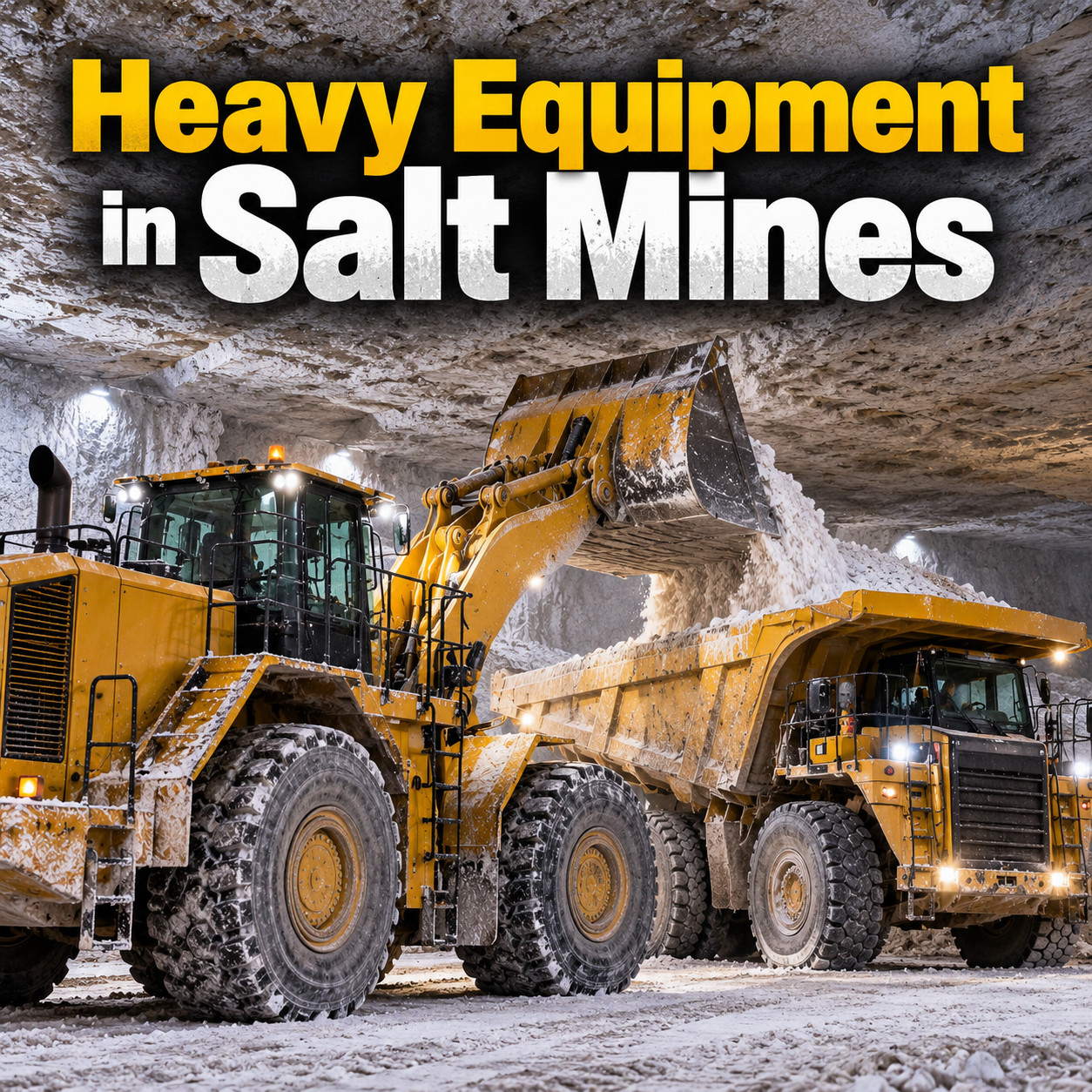
Heavy Equipment in Salt Mines
Heavy equipment is built to work in some punishing environments. Mud, dust, extreme temperatures, vibration and heavy loads are all part of the job. But salt mines introduce a different kind of enemy—one that can quietly attack a machine even while it appears to be sitting still.
For loaders, haul trucks, excavators, drilling equipment and support vehicles working around salt, corrosion isn't simply a cosmetic problem. Salt can accelerate deterioration of electrical systems, fasteners, hydraulic components, cooling systems and structural steel. Keeping equipment alive in this environment requires an unusually aggressive approach to maintenance.
Why Is Salt So Hard on Heavy Equipment?
Salt itself becomes particularly troublesome when moisture is present. Salts dissolved in water create an electrolyte that helps electrochemical corrosion occur more readily on exposed metals.
That means a machine doesn't necessarily need to be dripping wet to have problems. Humidity, condensation, wash water and moisture carried into a mine can combine with salt deposits on the machine.
Once salty material works its way into seams, connectors and difficult-to-clean areas, corrosion can continue in places an operator may never see during a normal walk-around.
And salt dust gets almost everywhere.
Electrical Systems Can Become a Major Weak Point
Modern heavy equipment relies heavily on electronics. Sensors, wiring harnesses, control modules, connectors and communication networks are found throughout the machine.
Salt contamination combined with moisture can cause corrosion at electrical connections. Over time, increased electrical resistance or damaged contacts can create intermittent faults that are notoriously difficult to diagnose.
A machine might develop sensor errors, starting problems, lighting issues or communication faults without an obvious mechanical failure.
Sealed connectors help, but seals aren't perfect forever. Age, vibration, improper servicing and physical damage can eventually provide contamination with a path inside.
In a salt environment, a small damaged connector seal can become a much bigger maintenance issue than it would be on a typical construction site.
Fasteners Can Become a Battle of Their Own
A bolt that would normally come apart without much trouble can become a serious challenge after prolonged exposure to a corrosive environment.
Threads can corrode. Bolt heads can deteriorate. Components that were originally separate can become extremely difficult to disassemble.
This matters because corrosion can turn an otherwise routine repair into a much larger job.
Instead of simply removing a component, a technician may find themselves fighting seized hardware, damaged threads and fasteners that need to be cut, heated or replaced.
Protective coatings and appropriate anti-seize compounds can therefore play an important role in equipment maintenance—but they need to be selected and applied according to manufacturer recommendations, particularly where fastener torque is critical.
Hydraulic Components Aren't Immune
The hydraulic oil may be safely contained inside the system, but many hydraulic components have external surfaces exposed to the environment.
Cylinder rods deserve particular attention.
When a hydraulic cylinder retracts, its rod passes through the rod seal and wiper assembly. Damage, corrosion or contamination around this area can shorten seal life and potentially contribute to leakage or contamination problems.
Hose fittings, clamps, tubing, brackets and other exposed components can also suffer corrosion.
A tiny hydraulic leak is already undesirable. Add salt contamination around the fitting and the surrounding hardware can deteriorate considerably faster.
Cooling Systems Have Their Own Problems
Radiators, charge-air coolers, oil coolers and air-conditioning condensers depend on thin metal fins and unrestricted airflow.
Unfortunately, those thin components don't have much material to sacrifice to corrosion.
Salt dust can also accumulate in cooling packages. If airflow becomes restricted, the machine may begin running hotter even if the cooling system itself is functioning properly.
Cleaning becomes essential—but it must be done correctly. Aggressive pressure washing can bend cooling fins, damage electrical components or force contaminants into places they shouldn't be.
The goal isn't simply to make the machine look clean. It's to remove corrosive deposits without causing another problem in the process.
What About the Machine's Frame and Structure?
Heavy equipment frames are substantial pieces of steel, but they aren't invincible.
Paint chips, scratches, worn areas and damaged coatings expose bare metal. Salt and moisture can then attack those areas.
The most concerning locations aren't always the obvious ones.
Corrosion can develop around seams, brackets, mounting points, cavities and places where material collects and remains trapped. These areas may retain contamination long after exposed surfaces have been cleaned.
For equipment expected to remain in service for years, maintaining protective coatings can become an important part of preserving the machine itself.
Underground Salt Mines Add Another Twist
An underground salt mine can actually be surprisingly dry compared with many other underground environments. That matters because moisture is a major ingredient in conventional corrosion.
But "dry" doesn't mean the equipment is protected.
Machines can still encounter moisture from maintenance activities, condensation, water intrusion or other parts of the operation. Salt dust can accumulate on equipment and wait for moisture to arrive.
Conditions can also vary dramatically between different mines and even between areas of the same operation.
The combination of salt contamination and occasional moisture is what makes careful equipment management so important.
Washing Equipment Isn't as Simple as It Sounds
The obvious solution might seem to be washing the machine constantly.
But water introduces the very moisture that helps salt become more corrosive.
That doesn't mean equipment shouldn't be cleaned. It means cleaning practices need to be deliberate.
Salt deposits should be removed rather than simply redistributed into seams and cavities. Equipment also needs an opportunity to dry, and electrical components, bearings and other sensitive areas shouldn't be blasted indiscriminately with high-pressure water.
Maintenance crews working in these environments often have to think about where the salt is going, not just whether the visible surface looks clean.
Preventive Maintenance Becomes Extremely Important
In a normal environment, a small patch of damaged paint or a slightly corroded connector might remain a minor issue for quite some time.
In a salt environment, ignoring it can be much more expensive.
Maintenance programs may place additional emphasis on:
• Frequent cleaning and inspection
• Electrical connectors and harnesses
• Protective coatings and corrosion inhibitors
• Hydraulic cylinder rods and fittings
• Cooling packages
• Battery terminals and grounds
• Fasteners and mounting hardware
• Frame seams and material traps
• Brake, steering and other safety-critical components
• Repairing chipped or damaged coatings before corrosion spreads
The exact maintenance requirements depend on the machine, mine conditions and manufacturer's recommendations, but the principle is the same: stop corrosion while it's small.
The Used Equipment Question
Salt-mine equipment also presents an interesting question for used-equipment buyers.
Hours alone don't tell the entire story.
A machine with relatively low operating hours may have spent those hours in an unusually corrosive environment. Buyers evaluating equipment that has worked around salt may want to look beyond the hour meter and inspect electrical connections, structural areas, hydraulic fittings, cooling components and hidden corrosion points particularly carefully.
Service history can be extremely valuable.
Evidence that the machine received regular cleaning, corrosion protection and preventive maintenance may tell you far more than its appearance after somebody has given it a fresh coat of paint.
A Different Kind of Harsh Environment
When people imagine brutal working conditions for heavy equipment, they often picture rock quarries, frozen mines, muddy construction sites or scorching deserts.
A salt mine can look relatively tame by comparison.
But the threat is different.
Instead of one dramatic impact or overload damaging the machine, salt can work slowly—attacking connections, hardware, coatings and exposed metal day after day.
Keeping equipment operating reliably in that environment becomes a constant contest between contamination and maintenance.
And in a salt mine, the machine that looks cleanest isn't necessarily the best maintained.
It's the machine whose hidden places have been looked after too.