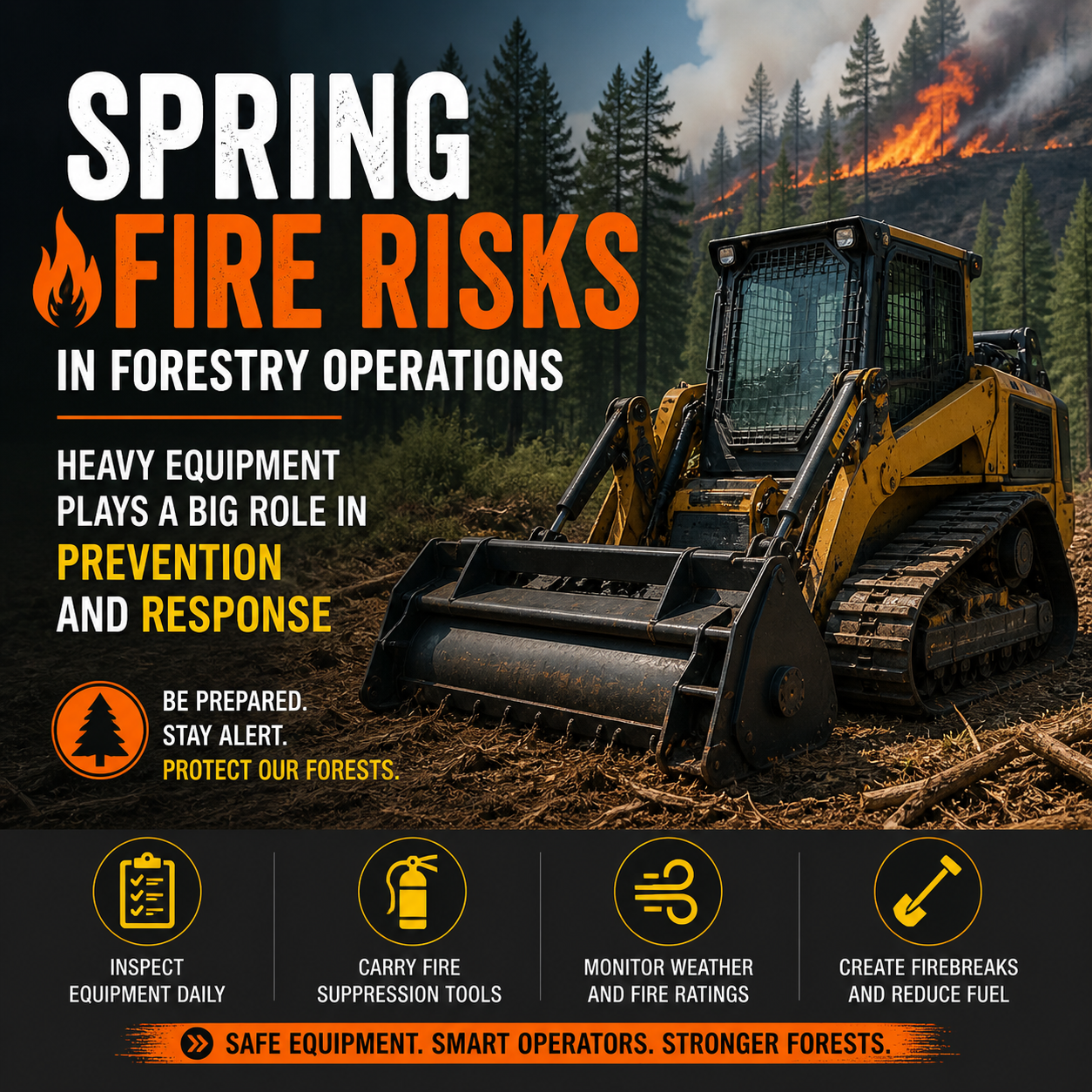
Heavy Equipment and Fire Safety in Forestry Work
Spring is often welcomed as a season of renewal, but for forestry operations, land managers, and rural communities, it also marks the beginning of a heightened wildfire risk period. As snow melts and temperatures rise, dry vegetation, wind patterns, and increased human activity combine to create conditions where fires can ignite and spread quickly. Heavy equipment plays a critical role in both prevention and response—but it also introduces its own set of risks that operators must manage carefully.
Why Spring Increases Forestry Fire Risk
After winter, forests and grasslands often contain a large amount of dry organic material—dead leaves, branches, and dormant vegetation. This “fuel load” becomes highly combustible once it dries out under early spring sun and wind.
Several key factors contribute to elevated fire risk:
- Rapid drying of vegetation: Even if the ground looks damp, surface fuels can dry quickly on warm, windy days.
- Wind variability: Spring winds can shift rapidly, pushing small fires into larger, uncontrolled events.
- Human activity: Construction, land clearing, and forestry operations increase significantly in spring.
- Equipment use: Machinery operating in dry brush can produce sparks or heat ignition sources.
In many regions, spring marks the start of official fire season alerts, and restrictions on equipment use may begin depending on conditions.
The Role of Heavy Equipment in Fire Risk
Heavy equipment is essential in forestry and land management—but it can also be an ignition source if not properly maintained or operated.
Common risk factors include:
- Hot exhaust systems contacting dry vegetation
- Metal-on-stone or metal-on-metal sparks
- Hydraulic leaks near hot components
- Electrical faults in aging machinery
- Dry debris buildup around engines and undercarriages
Machines such as excavators, feller bunchers, skidders, bulldozers, and mulchers are especially relevant because they operate directly in dense vegetation where fuel loads are high.
Fire Prevention Practices for Operators
Reducing fire risk starts with preparation and awareness. Operators working in forestry environments should follow strict prevention protocols, especially in spring conditions.
1. Daily Equipment Inspection
Before operating, check for:
- Leaking fluids
- Loose wiring
- Debris buildup near hot engine parts
- Damaged exhaust components
2. Clean Equipment Regularly
Dry grass, pine needles, and wood chips can accumulate quickly. Regular cleaning of:
- Engine compartments
- Undercarriages
- Exhaust areas
can significantly reduce ignition risk.
3. Carry Fire Suppression Tools
Many forestry operations require equipment to carry:
- Fire extinguishers (properly rated and charged)
- Water tanks or sprayers
- Shovels or hand tools for fire breaks
4. Use Spark Arrestors
Properly maintained spark arrestors help prevent hot particles from escaping exhaust systems—a key requirement in many regulated forestry zones.
5. Monitor Weather and Fire Ratings
Operators should be aware of:
- Fire danger levels issued by local authorities
- Wind warnings
- Temperature spikes and dry spells
On high-risk days, operations may need to pause entirely.
Heavy Equipment in Fire Response and Mitigation
While machinery can contribute to ignition risk, it is also one of the most important tools in wildfire prevention and suppression.
Creating Firebreaks
Bulldozers and excavators are used to clear vegetation and soil down to mineral earth, stopping fire spread.
Access Road Construction
Heavy equipment creates emergency access routes for firefighting crews in remote forest areas.
Fuel Reduction
Mulchers and grinders help reduce excess vegetation buildup, lowering long-term fire risk.
Fire Suppression Support
In active wildfire situations, equipment may assist in:
- Clearing containment lines
- Removing dangerous debris
- Supporting controlled burns
Balancing Productivity and Safety
Forestry work in spring requires a balance between operational efficiency and strict fire safety discipline. Delays due to fire precautions may feel inconvenient, but they are minor compared to the cost of uncontrolled wildfire damage.
Companies that invest in:
- Operator training
- Preventive maintenance
- Fire response readiness
tend to experience fewer shutdowns and safer job sites overall.
Spring is a critical transition period in forestry operations. As landscapes dry out and activity increases, the risk of fire rises alongside productivity demands. Heavy equipment operators sit at the center of this balance—capable of both preventing and unintentionally contributing to fire events.
With proper maintenance, awareness, and adherence to fire safety protocols, heavy equipment remains one of the most powerful tools not just for forestry work, but for protecting forests themselves.