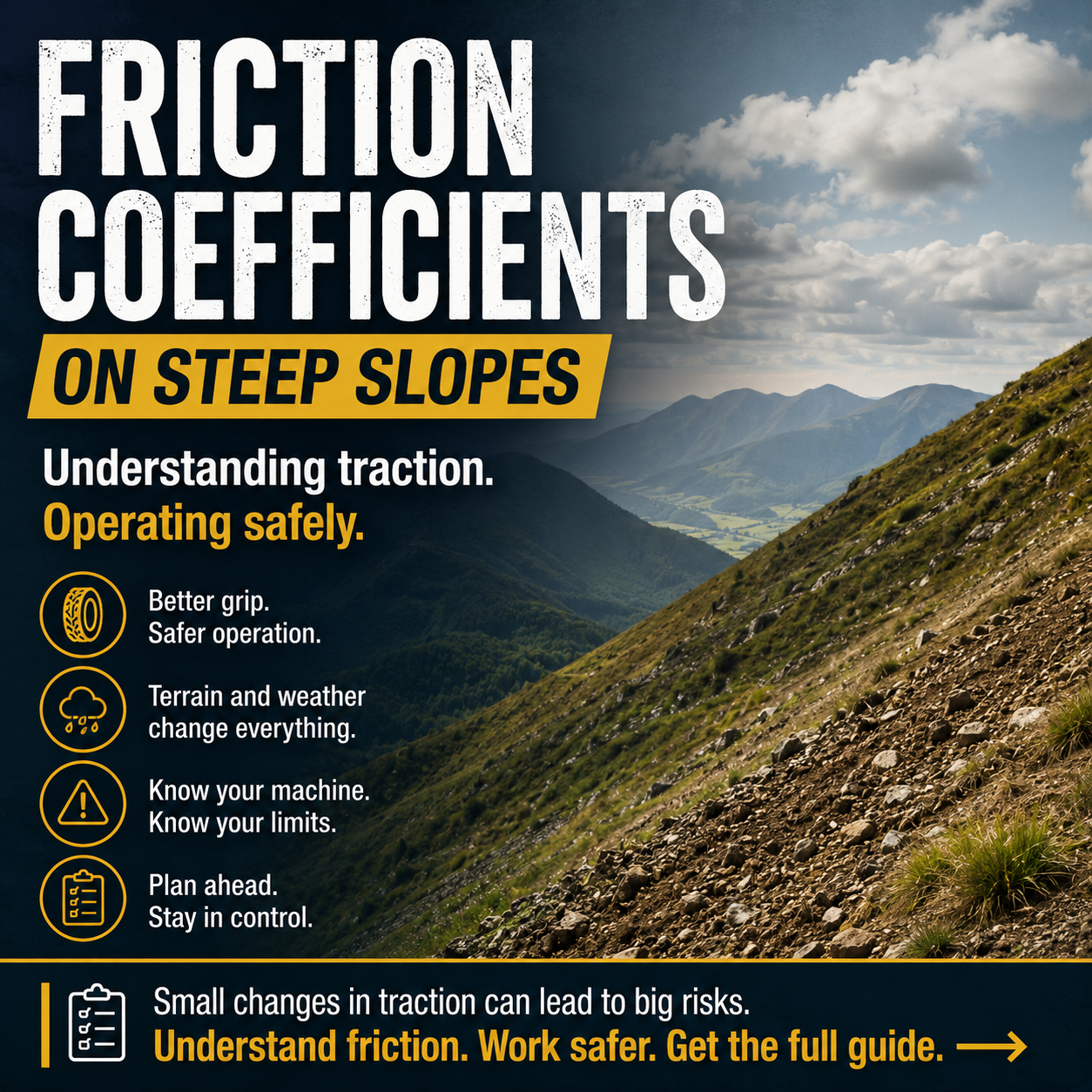
Friction Coefficients on Steep Slopes: What Every Heavy Equipment Operator Should Know
Operating heavy equipment on steep slopes is one of the most challenging situations an operator can face. Whether you're grading a hillside, building a road, clearing land, or working in a quarry, traction is everything. While horsepower, hydraulics, and machine weight all play important roles, one often-overlooked factor can determine whether a machine climbs confidently or begins to slide: the friction coefficient.
The good news is that you don't need to be an engineer to understand it. A basic grasp of friction can help you make safer decisions and reduce the risk of accidents on the job site.
What Is a Friction Coefficient?
Think of the friction coefficient as a measurement of how well two surfaces grip each other.
In heavy equipment, those two surfaces are usually:
- Tires and the ground
- Tracks and the ground
The higher the friction coefficient, the better the machine can resist sliding. The lower it is, the easier the machine can lose traction.
You don't need to memorize numbers—just remember this simple rule:
- High friction = Better grip
- Low friction = More chance of slipping
Why It Matters on Slopes
Gravity is always pulling your machine downhill.
On flat ground, friction easily keeps the machine in place. As the slope gets steeper, gravity pulls harder, meaning your tires or tracks need more grip to keep moving safely.
If the available friction isn't enough, the machine can:
- Spin its tires or tracks
- Slide downhill
- Lose steering control
- Tip over if traction changes suddenly
That's why operators should always consider ground conditions—not just the steepness of the hill.
Different Surfaces Provide Different Grip
Not all terrain offers the same amount of traction.
Generally speaking:
Dry, Rough Ground
Dry ground, packed dirt, and rough rock usually provide excellent grip, making them some of the safest surfaces for working on slopes.
Wet Soil
Rain can dramatically reduce traction. Mud acts almost like a lubricant between the machine and the ground, making sliding much more likely.
Loose Gravel
Loose rock may seem solid, but individual stones can roll underneath tires or tracks, reducing available traction.
Snow and Ice
These provide some of the lowest friction you'll encounter. Even gentle slopes can become hazardous when surfaces are frozen.
Tracks vs. Tires
Many people assume tracked machines can climb anything.
While tracks generally provide more contact with the ground than tires, they are not immune to losing traction.
Tracked machines often perform better on:
- Soft soil
- Sand
- Mud
However, they can still slide on:
- Wet grass
- Smooth rock
- Ice
- Extremely steep slopes
Likewise, wheeled machines may perform surprisingly well on firm, dry ground but struggle when surfaces become loose or slippery.
Machine Weight Isn't Always an Advantage
It's easy to think that a heavier machine automatically has better traction.
Sometimes that's true—but only up to a point.
Extra weight increases the force pressing the tires or tracks into the ground, which can improve grip. However, if the surface itself is weak or slippery, additional weight may simply cause the machine to sink or slide.
In muddy conditions, a lighter machine may actually perform better than a heavier one.
Weather Can Change Everything
A hill that was perfectly safe yesterday may become dangerous overnight.
Keep an eye on conditions such as:
- Rain
- Snow
- Frost
- Ice
- Loose material from previous work
Even morning dew can reduce traction on grassy slopes.
Whenever conditions change, reassess the work area before continuing operations.
Practical Tips for Working on Steep Slopes
Understanding friction is useful, but applying it is even more important.
Here are several best practices:
- Walk the site before operating whenever possible.
- Stay within the manufacturer's recommended slope limits.
- Avoid sudden acceleration or braking.
- Turn gradually instead of making sharp steering inputs.
- Travel straight up or down slopes when appropriate for your machine and the manufacturer's recommendations.
- Keep attachments low to maintain stability.
- Watch for changing ground conditions throughout the day.
- If the machine begins to slide, avoid sudden corrections that could make the situation worse.
Know Your Machine's Limits
Every piece of equipment has published operating limits based on testing.
A bulldozer, skid steer, wheel loader, excavator, or articulated dump truck may all have very different safe operating angles.
Just because one machine handled a slope doesn't mean another can safely do the same job.
Always consult your operator's manual before working on challenging terrain.
The Bottom Line
You don’t have to be an engineer to understand friction coefficients or appreciate how they may affect your work when operating heavy equipment on steep slopes. Having a basic understanding of how surface conditions, traction, slope angle, and friction interact can help operators make better-informed decisions and recognize potential hazards.
However, no work on a steep slope should ever begin without an approved steep-slope plan in place, including the appropriate engineering assessment and an engineer’s stamp of approval.
Understanding the principles is valuable, but it is not a substitute for a professionally engineered plan, proper site assessment, and established safety procedures.